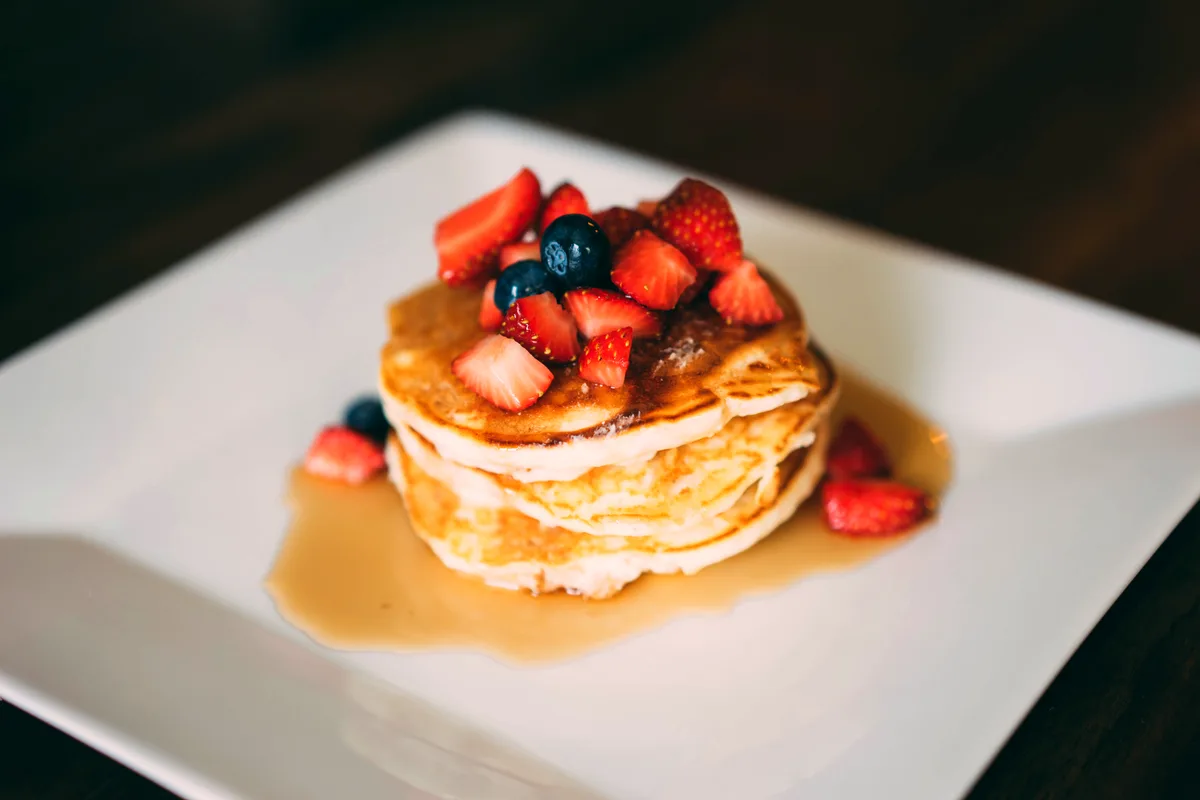
A short stack of tall, fluffy pancakes is the fastest way to make a morning feel like an occasion, and real buttermilk is what separates a good stack from a great one. It brings a gentle tang, reacts with the baking soda for extra lift, and gives the crumb a tenderness that plain milk never quite matches. These are golden at the edges, soft all the way through, and ready in about 25 minutes.
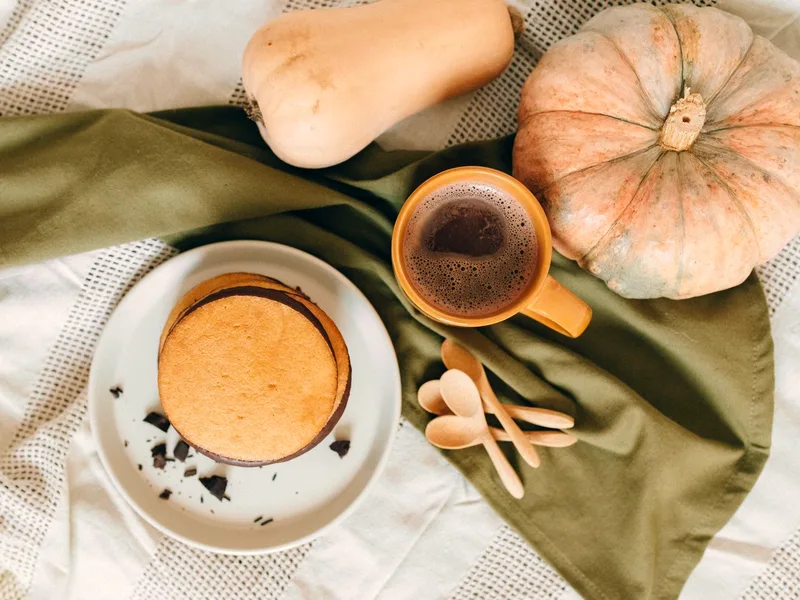
They live in our Breakfast collection next to our Fluffy Pumpkin Pancakes — the pumpkin stack is the fall spiced version; this is the year-round classic it was built on. The method is deliberately simple: dry bowl, wet bowl, one brief stir, a short rest, and a properly hot griddle. Almost everything that goes wrong with pancakes traces back to one of those steps being rushed.
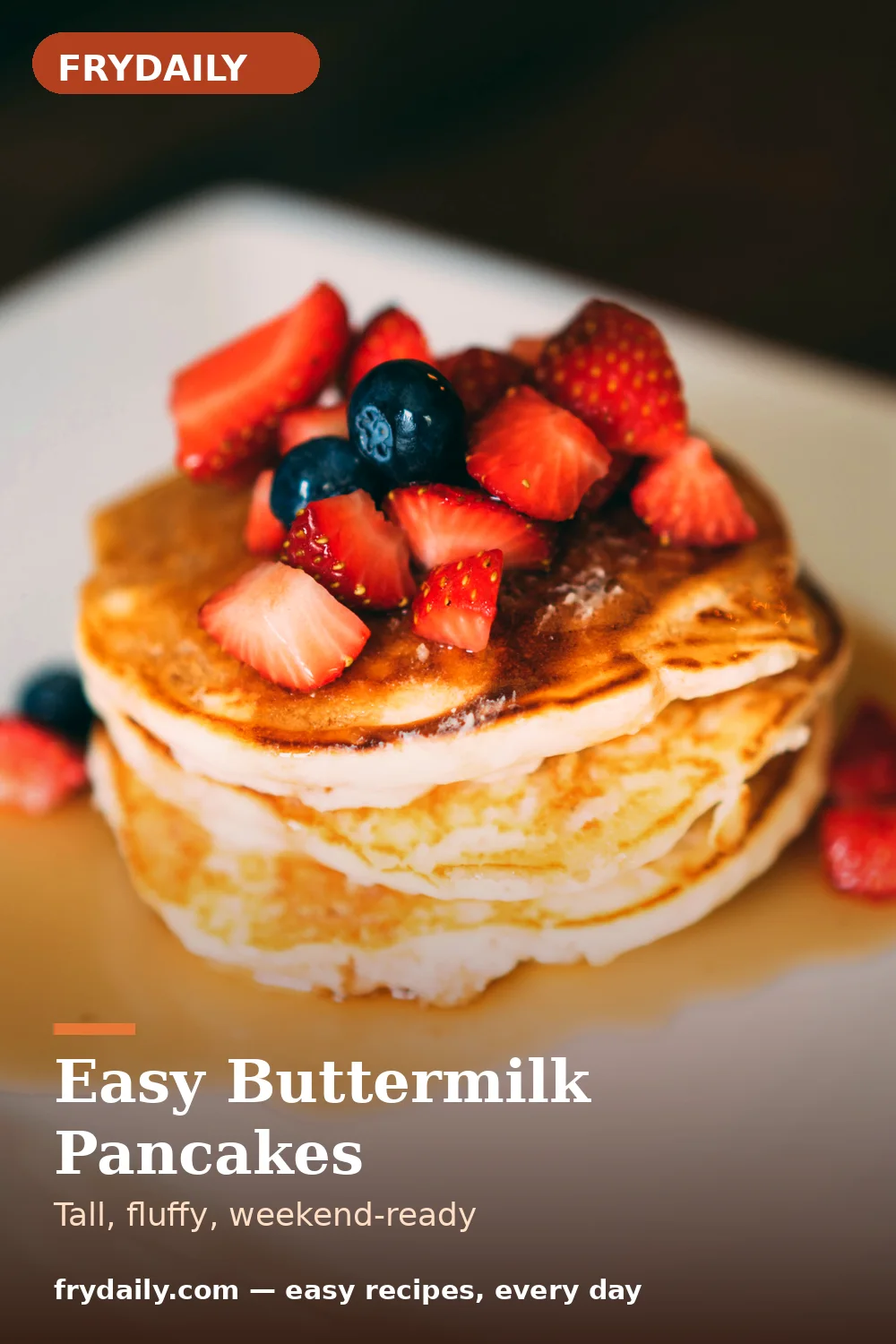
Serve them the way the photo promises: warm, stacked, with butter melting down the sides, maple syrup, and whatever berries are around. The batter also takes additions happily — blueberries folded in, a handful of chocolate chips, sliced banana — but make the plain version once first, because it is the benchmark every variation gets judged against.
Lumps are not the enemy — overmixing is
Pancake batter should be stirred just until the flour disappears, and it should still look lumpy. Every extra stir develops gluten, and gluten is what turns a tender pancake chewy and flat. Ten to twelve strokes with a whisk or spoon is usually enough; a few small lumps cook out completely on the griddle. The 10-minute rest after mixing matters just as much: the flour hydrates, the baking powder starts its work, and the batter thickens slightly, which is how you get a tall pancake instead of a thin, spreading one. Do not stir it again after the rest.
Heat first, then patience
A griddle at the right temperature cooks a pancake in about 2 minutes per side and colours it evenly golden. Too cool and the pancakes set pale and rubbery; too hot and the outside scorches before the middle cooks. Flick a few drops of water on the surface: they should dance and evaporate in a couple of seconds. Then flip once — when the surface is covered with bubbles that are just starting to pop and the edges look set — and resist pressing the pancake with the spatula, which squeezes out the air you worked to create.
Ingredients
- 2 cups all-purpose flour (250 g)
- 2 tablespoons granulated sugar (25 g)
- 2 teaspoons baking powder (8 g)
- 1/2 teaspoon baking soda (2.5 g)
- 3/4 teaspoon kosher salt (4.5 g)
- 2 cups buttermilk (480 ml), at room temperature
- 2 large eggs
- 3 tablespoons unsalted butter (42 g), melted, plus more for the pan and to serve
- 1 teaspoon vanilla extract (5 ml)
- Maple syrup and fresh berries, to serve
Amounts are for the yield below. US customary measures first, grams in brackets for scale users.
Step-by-step instructions
- Whisk the dry ingredients. In a large bowl, whisk the flour, sugar, baking powder, baking soda and salt together until evenly combined. Whisking here distributes the leaveners so every pancake rises the same — pockets of baking soda are what leave bitter, yellow spots.
- Whisk the wet ingredients. In a second bowl or large jug, whisk the buttermilk, eggs, melted butter and vanilla until smooth. Room-temperature buttermilk blends more evenly and keeps the melted butter from clumping into beads on contact.
- Combine with a light hand. Pour the wet mixture into the dry and stir with a whisk or spoon just until no dry flour remains — about 10 to 12 strokes. The batter will be thick and lumpy, and that is exactly right. Set it aside to rest for 10 minutes; do not stir it again.
- Heat the griddle. Set a griddle or large nonstick pan over medium heat until a few flicked water drops dance across the surface — roughly 350°F (177°C) if you use a thermometer. Brush lightly with butter. The first pancake is the cook's test: adjust the heat based on how it colours.
- Cook until bubbly, flip once. Pour about 1/3 cup (80 ml) of batter per pancake, spacing them so you can flip comfortably. Cook for about 2 minutes, until bubbles cover the surface and begin to pop and the edges look set, then flip once and cook 1 to 2 minutes more, until golden and springy. Repeat with the remaining batter, buttering the griddle lightly between batches.
- Stack and serve warm. Serve the pancakes in warm stacks with butter, maple syrup and fresh berries. To hold a full batch, keep finished pancakes in a single layer on a rack in a low oven at 250°F (120°C) for up to 20 minutes — stacked on a plate, they steam and soften.
Nutrition estimate
| Nutrient | Per serving |
|---|---|
| Calories | 392 kcal |
| Protein | 11 g |
| Carbohydrates | 56 g |
| Fat | 13 g |
| Saturated fat | 7 g |
| Sodium | 890 mg |
| Fiber | 2 g |
| Sugar | 13 g |
Nutrition figures are estimates calculated from standard ingredient data for the yield stated. Your actual values will vary with brands, substitutions and portion sizes — treat them as a guide, not a guarantee.
Storage & reheating
Leftover pancakes keep for up to 3 days in an airtight container in the refrigerator and reheat best in a toaster or a dry pan over medium heat, which brings the edges back — the microwave makes them soft. They freeze brilliantly for up to 2 months: cool completely, layer with parchment, and freeze in a sealed bag. Reheat from frozen in the toaster or a 350°F (177°C) oven for about 8 minutes. The raw batter does not store well, since the leaveners lose strength, so cook the full batch and freeze the extras instead.
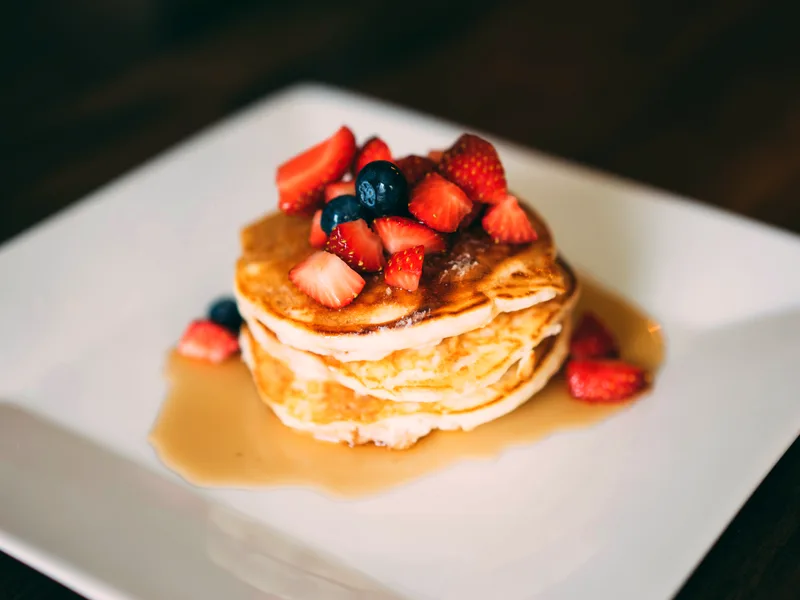
Easy Buttermilk Pancakes
Tall, fluffy, golden-edged — the buttermilk stack weekends are made for.
Ingredients
Tick ingredients off as you prep, and tap a step below to mark it done as you cook. Scaling adjusts the listed amounts - seasoning to taste stays your call.
Instructions
- Whisk the dry ingredients. In a large bowl, whisk the flour, sugar, baking powder, baking soda and salt together until evenly combined. Whisking here distributes the leaveners so every pancake rises the same — pockets of baking soda are what leave bitter, yellow spots.
- Whisk the wet ingredients. In a second bowl or large jug, whisk the buttermilk, eggs, melted butter and vanilla until smooth. Room-temperature buttermilk blends more evenly and keeps the melted butter from clumping into beads on contact.
- Combine with a light hand. Pour the wet mixture into the dry and stir with a whisk or spoon just until no dry flour remains — about 10 to 12 strokes. The batter will be thick and lumpy, and that is exactly right. Set it aside to rest for 10 minutes; do not stir it again.
- Heat the griddle. Set a griddle or large nonstick pan over medium heat until a few flicked water drops dance across the surface — roughly 350°F (177°C) if you use a thermometer. Brush lightly with butter. The first pancake is the cook's test: adjust the heat based on how it colours.
- Cook until bubbly, flip once. Pour about 1/3 cup (80 ml) of batter per pancake, spacing them so you can flip comfortably. Cook for about 2 minutes, until bubbles cover the surface and begin to pop and the edges look set, then flip once and cook 1 to 2 minutes more, until golden and springy. Repeat with the remaining batter, buttering the griddle lightly between batches.
- Stack and serve warm. Serve the pancakes in warm stacks with butter, maple syrup and fresh berries. To hold a full batch, keep finished pancakes in a single layer on a rack in a low oven at 250°F (120°C) for up to 20 minutes — stacked on a plate, they steam and soften.
Recipe by Ahsan ul Haq · FryDaily. Printing? This card is designed to print cleanly on its own.