Deviled eggs are the rare party food that is both the easiest thing on the table and the first thing to disappear. The formula is beautifully simple — firm whites, a filling whipped smooth with mayonnaise and mustard, a dusting of paprika — but the difference between a forgettable egg and a great one lives in small decisions: how the eggs are boiled so the yolks stay sunset-yellow instead of greying at the edges, how the filling is seasoned so it tastes bright rather than bland, and how smooth you get it before it goes back into the whites.
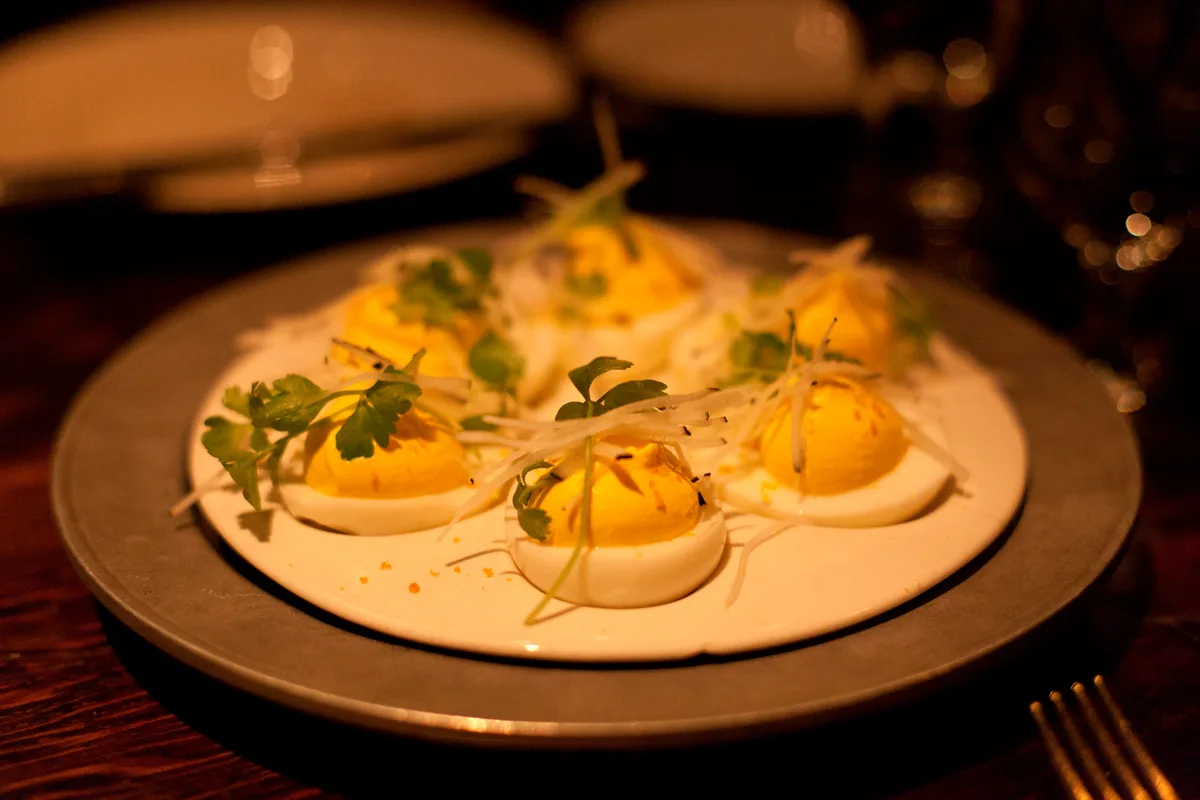
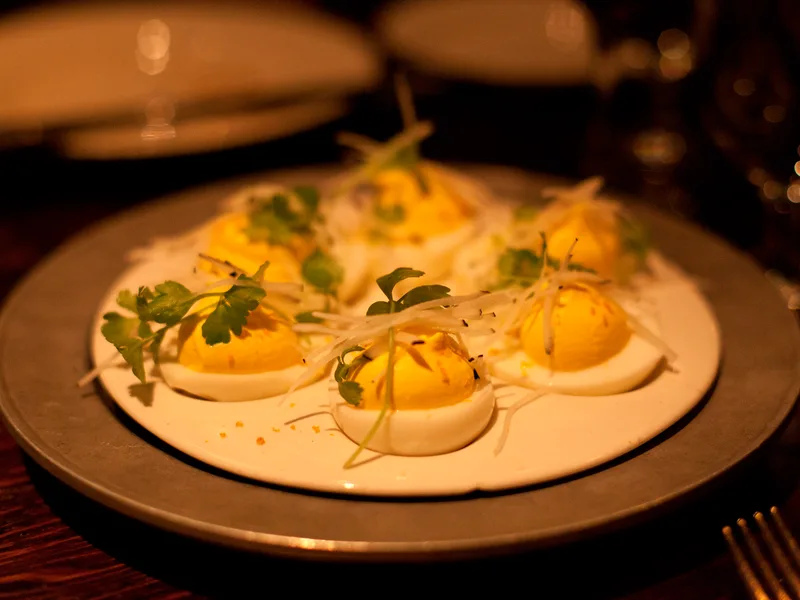
They anchor our Snacks & Sides collection for gatherings, next to Homemade Guacamole and Crispy Roasted Chickpeas — the three together cover creamy, crunchy and tangy in one spread. The plate in the photograph is the dressed-up restaurant version with parsley and a fine shaved garnish; at home, a paprika dusting and a snip of chives is the classic finish, and nobody has ever missed the tweezers work.
The recipe makes twelve halves from six eggs, which experience says is enough for about three people who are being honest with themselves. Double it for any gathering larger than a card game — the method scales perfectly, the eggs peel just as easily in a bigger pot, and leftover deviled eggs, should such a thing occur, are an excellent next-day lunch.
Yellow yolks are a timing decision
The grey-green ring that forms around an overcooked yolk is harmless, but it tastes faintly sulphurous and looks tired on the plate. The fix used here — off the heat, covered, timed — cooks the yolks through at a gentler temperature and stops them precisely, so the centres stay a deep, clean yellow. An ice bath does double duty: it halts the cooking the moment the timer ends, and the thermal shock helps the white release from the shell, which is why eggs peeled after an ice bath come away smooth instead of pitted.
Smooth filling, never gluey
Mash the yolks first, completely, before any mayonnaise goes in — a fork and thirty seconds of patience at this stage is what separates a silky filling from a lumpy one. A spoonful of the hot water the eggs cooked in, or a teaspoon of pickle brine, loosens the mixture to a pipeable consistency without dulling it the way extra mayonnaise can. If you are piping, a zip bag with the corner snipped gives the same swirled finish as a pastry bag and goes straight in the bin afterwards. Season assertively: a cold, plain yolk needs more salt and acid than you expect, and the filling should taste slightly too bold in the bowl, because the mild white around it will calm every bite.
Ingredients
- 6 large eggs
- 3 tablespoons mayonnaise (45 g)
- 1 teaspoon Dijon mustard (5 g)
- 1 teaspoon apple cider vinegar or pickle brine (5 ml)
- 1/4 teaspoon kosher salt (1.5 g), plus more to taste
- 1/8 teaspoon black pepper (0.4 g)
- 1/4 teaspoon smoked or sweet paprika (0.8 g), for dusting
- 1 tablespoon finely snipped chives or parsley (4 g), to serve
Amounts are for the yield below. US customary measures first, grams in brackets for scale users.
Step-by-step instructions
- Cook the eggs gently. Arrange the eggs in a single layer in a saucepan and cover with cold water by 1 inch (2.5 cm). Bring to a full boil over medium-high heat, then immediately take the pan off the heat, cover it, and let the eggs stand for 11 minutes. This off-heat method cooks the yolks through without the grey ring that a long hard boil paints around them.
- Ice bath and peel. Move the eggs straight into a bowl of ice water for at least 5 minutes — this stops the cooking and makes the shells release cleanly. Crack each egg all over on the counter, roll it gently to spider the shell, and peel under a thin stream of water, starting at the wider end where the air pocket sits. Pat the peeled eggs dry; a wet white makes the filling slide.
- Halve and harvest the yolks. Slice each egg in half lengthwise with a sharp knife, wiping the blade between eggs so the whites stay clean. Pop the yolks into a medium bowl and arrange the white halves on your serving plate, cut side up. If a white tears, chop it finely and stir it into the filling — nobody will ever know, and the cook gets to eat the evidence.
- Mash the filling smooth. Mash the yolks with a fork until they are a fine, even crumble with no lumps at all — this step decides the final texture, so do not rush it. Add the mayonnaise, mustard, vinegar and salt and pepper, and stir, then whisk, until the filling is completely smooth and pale. For a truly silky result, push the mixture through a fine sieve with the back of a spoon.
- Taste and adjust. Taste the filling on a spoon and correct it: it should be clearly tangy and well salted, a little bolder than seems right, because the plain white will soften every bite. If it is too thick to pipe, loosen it with a teaspoon of warm water or extra brine, a few drops at a time.
- Fill, dust and serve. Spoon the filling into a zip bag, snip a corner, and pipe generous swirls into each white — or simply spoon it in with two teaspoons for the homestyle look. Dust lightly with the paprika, scatter the chives, and serve within the hour, or cover and refrigerate for up to a day, dusting just before the plate goes out.
Nutrition estimate
| Nutrient | Per serving |
|---|---|
| Calories | 132 kcal |
| Protein | 6 g |
| Carbohydrates | 1 g |
| Fat | 11 g |
| Saturated fat | 3 g |
| Sodium | 210 mg |
| Fiber | 0 g |
| Sugar | 1 g |
Nutrition figures are estimates calculated from standard ingredient data for the yield stated. Your actual values will vary with brands, substitutions and portion sizes — treat them as a guide, not a guarantee.
Storage & reheating
Filled deviled eggs keep, covered, in the refrigerator for up to 2 days, though the whites slowly firm and the filling dulls at the edges — they are at their best within 24 hours. For make-ahead parties, store the whites and the filling separately (the filling in its piping bag) for up to 2 days and fill the morning of the event; the plate then tastes freshly made. Do not freeze deviled eggs: the whites turn rubbery and weep on thawing.
Easy Classic Deviled Eggs
Smooth, tangy, paprika-dusted — the party plate that always empties first.
Ingredients
Tick ingredients off as you prep, and tap a step below to mark it done as you cook. Scaling adjusts the listed amounts - seasoning to taste stays your call.
Instructions
- Cook the eggs gently. Arrange the eggs in a single layer in a saucepan and cover with cold water by 1 inch (2.5 cm). Bring to a full boil over medium-high heat, then immediately take the pan off the heat, cover it, and let the eggs stand for 11 minutes. This off-heat method cooks the yolks through without the grey ring that a long hard boil paints around them.
- Ice bath and peel. Move the eggs straight into a bowl of ice water for at least 5 minutes — this stops the cooking and makes the shells release cleanly. Crack each egg all over on the counter, roll it gently to spider the shell, and peel under a thin stream of water, starting at the wider end where the air pocket sits. Pat the peeled eggs dry; a wet white makes the filling slide.
- Halve and harvest the yolks. Slice each egg in half lengthwise with a sharp knife, wiping the blade between eggs so the whites stay clean. Pop the yolks into a medium bowl and arrange the white halves on your serving plate, cut side up. If a white tears, chop it finely and stir it into the filling — nobody will ever know, and the cook gets to eat the evidence.
- Mash the filling smooth. Mash the yolks with a fork until they are a fine, even crumble with no lumps at all — this step decides the final texture, so do not rush it. Add the mayonnaise, mustard, vinegar and salt and pepper, and stir, then whisk, until the filling is completely smooth and pale. For a truly silky result, push the mixture through a fine sieve with the back of a spoon.
- Taste and adjust. Taste the filling on a spoon and correct it: it should be clearly tangy and well salted, a little bolder than seems right, because the plain white will soften every bite. If it is too thick to pipe, loosen it with a teaspoon of warm water or extra brine, a few drops at a time.
- Fill, dust and serve. Spoon the filling into a zip bag, snip a corner, and pipe generous swirls into each white — or simply spoon it in with two teaspoons for the homestyle look. Dust lightly with the paprika, scatter the chives, and serve within the hour, or cover and refrigerate for up to a day, dusting just before the plate goes out.
Recipe by Ahsan ul Haq · FryDaily. Printing? This card is designed to print cleanly on its own.