Roasted butternut squash halves are the lowest-effort way to cook this squash well: halve it, oil it, roast it cut-side down until the flesh is scoop-tender and caramelised, and serve it straight from the skin or scooped into a bowl. There is no peeling, no cubing, and no tray of small pieces to watch — the squash is its own baking dish, and the oven does almost all the work in about fifty-five minutes.
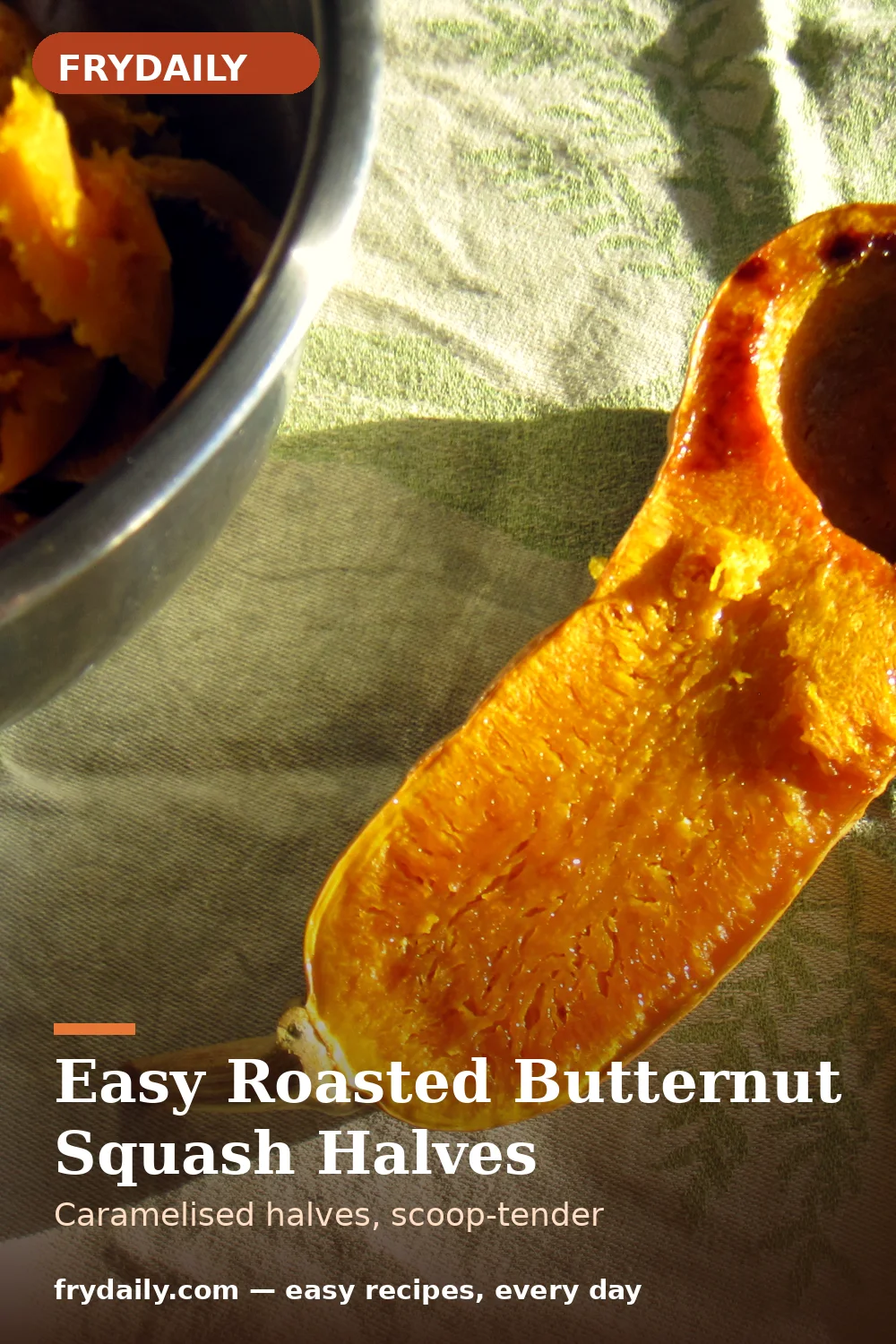
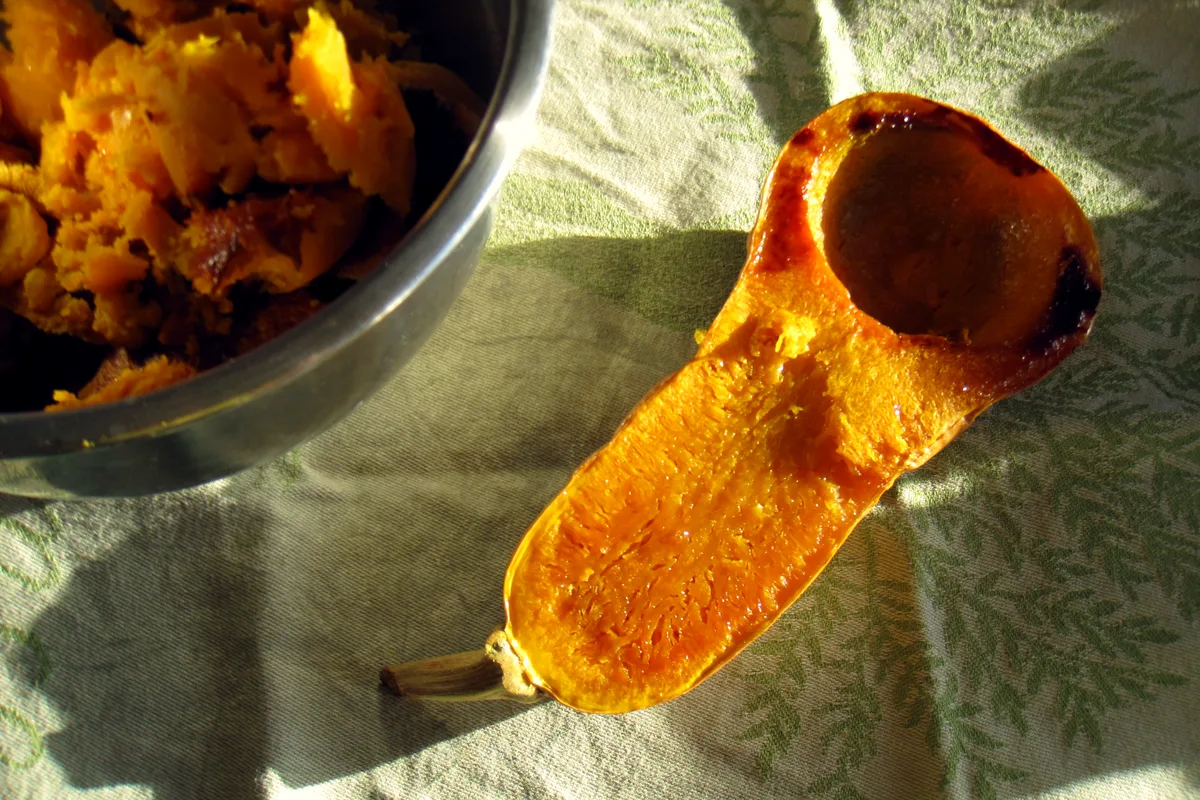
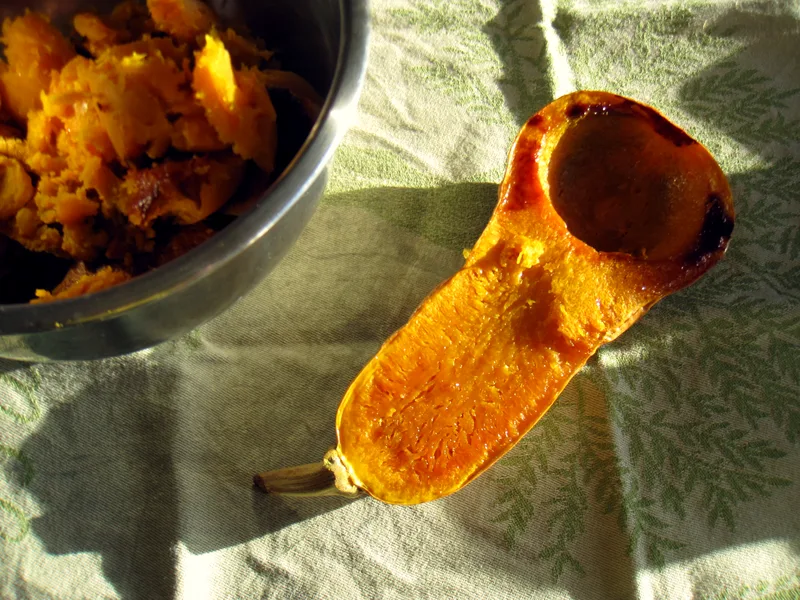
The photograph is the whole standard to aim for — a deep-orange half, browned at the rim, beside a bowl of scooped flesh that is soft enough to serve with a spoon but still holds its colour and sweetness. That result comes from one decision: roast the halves cut-side down. Trapped against the hot tray, the cut face caramelises instead of drying out, and the skin protects the flesh so it steams itself tender from the inside.
Serve it scooped into a warm bowl with butter and thyme, as part of our Snacks & Sides collection. It sits happily next to roast chicken or pork chops, and the scooped flesh is also excellent folded into our butternut squash soup or tossed with pasta. It also pairs with our baked acorn squash with mushroom sauce at a squash-heavy fall dinner. One medium squash feeds four generously as a side.
Cut-side down is the whole trick
A butternut half roasted cut-side up dries out before it softens, because the exposed flesh loses moisture to the oven air for the entire roast. Turned cut-side down, the flesh sits against the hot, oiled tray, where it browns and caramelises, while the skin above it traps steam and cooks the squash through. The result is the contrast in the photograph: a browned rim, a soft interior, and flesh that scoops out cleanly. If a half wobbles on the tray, slice a thin sliver off the rounded skin side so it sits flat — a stable squash is a safe squash, and it also roasts more evenly.
Scoop, do not mash to a purée
Once the squash is out of the oven, it is tempting to mash it smooth, but the best texture here is roughly scooped: large, soft spoonfuls that still show they came from a roasted squash. Scoop the flesh into a warm bowl, add butter and thyme, and toss gently with a fork so the butter melts into the warm flesh without turning it into baby food. If you want it smoother for soup or for small children, mash only the portion you need — the rest keeps its character better scooped, and it reheats better too.
Ingredients
- 1 medium butternut squash (about 2 lb / 900 g), halved lengthwise and seeded
- 2 tablespoons olive oil (30 ml)
- 2 tablespoons butter (28 g)
- 1 tablespoon fresh thyme leaves (3 g)
- 3/4 teaspoon fine sea salt (4 g)
- 1/2 teaspoon black pepper (1 g)
- 1 tablespoon maple syrup (20 g), optional
- 1 tablespoon chopped fresh parsley (4 g), to serve, optional
Amounts are for the yield below. US customary measures first, grams in brackets for scale users.
Step-by-step instructions
- Heat the oven and prepare the tray. Heat the oven to 400°F (200°C). Line a large rimmed baking sheet with parchment paper and brush it lightly with a little of the olive oil. A dark, heavy tray browns the cut faces better than a thin, shiny one.
- Halve and seed the squash safely. Cut off both ends of the squash so it stands flat, then cut it in half lengthwise with a sharp, heavy knife, rocking the blade gently through the neck. Scoop out the seeds and stringy fibres with a sturdy spoon. If a half wobbles, slice a thin sliver off the rounded skin side so it sits flat on the tray.
- Oil and season the cut faces. Brush the cut faces generously with the remaining olive oil, then season with the salt and pepper. The oil is what lets the cut face caramelise against the tray instead of sticking to it, so do not be shy with it — dry spots never brown.
- Roast cut-side down until tender. Place the halves cut-side down on the prepared tray and roast for 40 to 45 minutes, without opening the oven, until the skin gives easily when pressed and a fork slides into the thickest part of the neck with no resistance. The rim of the cut face should be browned and caramelised. A larger squash may need 50 minutes; a smaller one may be done at 35, so check by feel, not by the clock alone.
- Rest, then scoop into a bowl. Let the halves rest on the tray for 10 minutes — they are easier to handle and the flesh sets slightly. Hold each half with a kitchen towel and scoop the flesh into a warm bowl with a large spoon, leaving the skin behind. The photograph shows exactly this stage: one half still in its skin, the scooped flesh waiting in a bowl.
- Finish with butter and thyme. Add the butter, thyme leaves and maple syrup if using to the warm scooped squash, and toss gently with a fork until the butter has melted through. Taste and adjust the salt. Scatter over the parsley if using, and serve warm, in the bowl or spooned back into the skins for presentation.
Nutrition estimate
| Nutrient | Per serving |
|---|---|
| Calories | 150 kcal |
| Protein | 2 g |
| Carbohydrates | 24 g |
| Fat | 7 g |
| Saturated fat | 3 g |
| Sodium | 370 mg |
| Fiber | 5 g |
| Sugar | 8 g |
Nutrition figures are estimates calculated from standard ingredient data for the yield stated. Your actual values will vary with brands, substitutions and portion sizes — treat them as a guide, not a guarantee.
Storage & reheating
Store cooled squash in an airtight container in the refrigerator for up to 4 days. Reheat in a covered dish at 350°F (177°C) for 12 to 15 minutes, or in the microwave with a splash of water, stirring halfway. It also freezes well: spread the cooled scooped flesh in a container or bag for up to 3 months, and thaw overnight in the refrigerator before reheating. Nutrition figures are estimates from standard ingredient data and vary with brands and squash size; estimates vary.
Easy Roasted Butternut Squash Halves
Caramelised halves, scoop-tender, 55 minutes.
Ingredients
Tick ingredients off as you prep, and tap a step below to mark it done as you cook. Scaling adjusts the listed amounts - seasoning to taste stays your call.
Instructions
- Heat the oven and prepare the tray. Heat the oven to 400°F (200°C). Line a large rimmed baking sheet with parchment paper and brush it lightly with a little of the olive oil. A dark, heavy tray browns the cut faces better than a thin, shiny one.
- Halve and seed the squash safely. Cut off both ends of the squash so it stands flat, then cut it in half lengthwise with a sharp, heavy knife, rocking the blade gently through the neck. Scoop out the seeds and stringy fibres with a sturdy spoon. If a half wobbles, slice a thin sliver off the rounded skin side so it sits flat on the tray.
- Oil and season the cut faces. Brush the cut faces generously with the remaining olive oil, then season with the salt and pepper. The oil is what lets the cut face caramelise against the tray instead of sticking to it, so do not be shy with it — dry spots never brown.
- Roast cut-side down until tender. Place the halves cut-side down on the prepared tray and roast for 40 to 45 minutes, without opening the oven, until the skin gives easily when pressed and a fork slides into the thickest part of the neck with no resistance. The rim of the cut face should be browned and caramelised. A larger squash may need 50 minutes; a smaller one may be done at 35, so check by feel, not by the clock alone.
- Rest, then scoop into a bowl. Let the halves rest on the tray for 10 minutes — they are easier to handle and the flesh sets slightly. Hold each half with a kitchen towel and scoop the flesh into a warm bowl with a large spoon, leaving the skin behind. The photograph shows exactly this stage: one half still in its skin, the scooped flesh waiting in a bowl.
- Finish with butter and thyme. Add the butter, thyme leaves and maple syrup if using to the warm scooped squash, and toss gently with a fork until the butter has melted through. Taste and adjust the salt. Scatter over the parsley if using, and serve warm, in the bowl or spooned back into the skins for presentation.
Recipe by Ahsan ul Haq · FryDaily. Printing? This card is designed to print cleanly on its own.