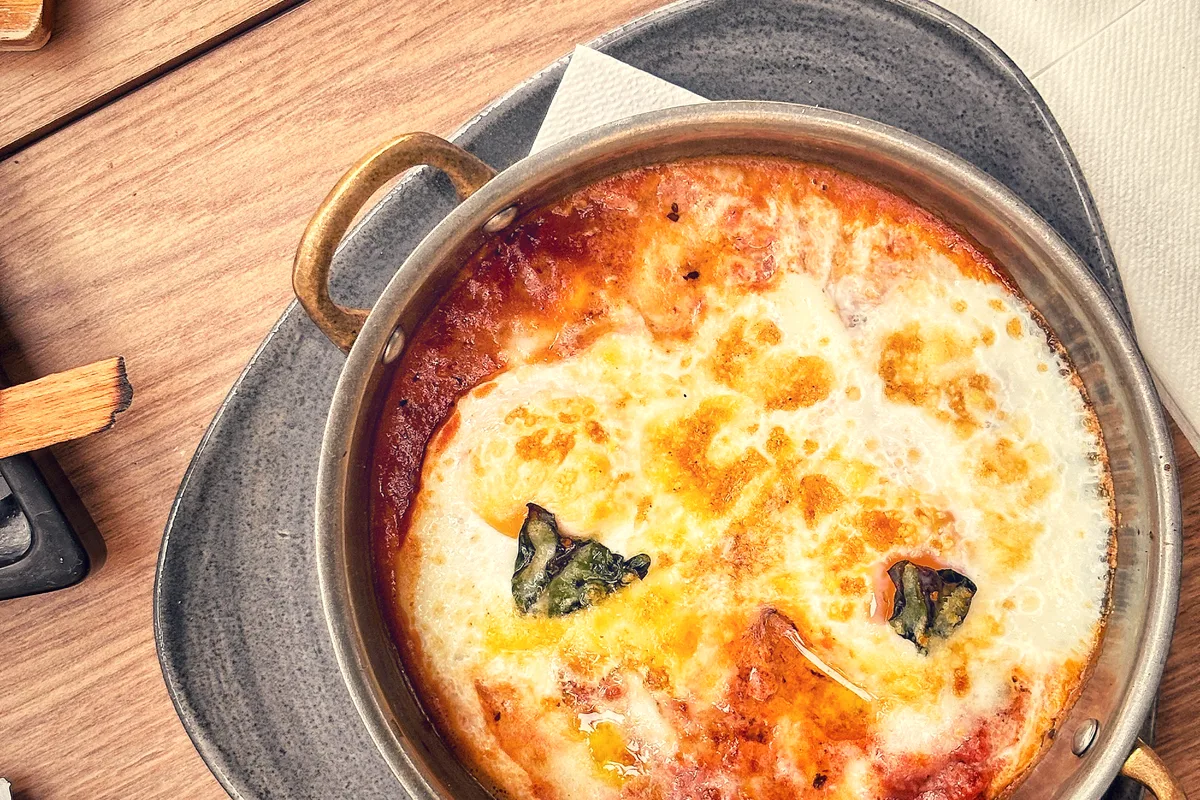
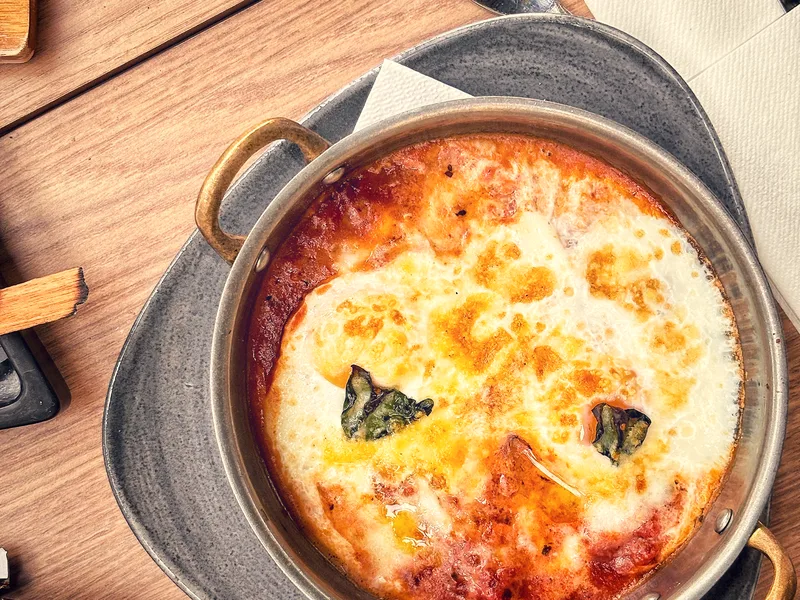
Shakshuka is the breakfast that eats like a celebration: eggs poached directly in a skillet of tomatoes, peppers and onions, the sauce spiced with cumin and smoked paprika until it tastes like it simmered for hours. It arrives at the table in the pan, yolks still wobbling, with crusty bread for the essential work of scooping. For all that drama, it is a thirty-minute, one-pan recipe built from pantry staples.
The dish has roots across North Africa and the Middle East and endless regional variations — which means you have permission to make it your own. Ours keeps the classic structure and a gentle warmth rather than real heat, so it works at a family breakfast table; the chili is there for those who want it. It also sits happily in our healthy rotation next to dishes like the Mediterranean Chickpea Salad, because the sauce is all vegetables and olive oil, and the protein is simply eggs.
Weekend mornings are its natural home, alongside make-ahead favorites like our Overnight Blueberry French Toast Bake — but honestly, shakshuka is just as often dinner here, with a green salad and the last of a loaf. Make the sauce once and you will find excuses to make it weekly.
The sauce must thicken before the eggs go in
Eggs poached in a watery sauce spread, pale and steamed-looking, and the finished dish eats like soup. Cook the tomato mixture until it has visibly thickened — when you drag a spoon across the pan, the trail should hold for a second before closing — and most of the raw tomato brightness should have cooked into sweetness. Canned tomatoes vary in wateriness, so judge by the spoon test rather than the clock. A thick sauce cradles each egg in its own well and keeps the whites distinct and tender.
Whites set, yolks runny: the two-stage finish
The eternal shakshuka problem is eggs that are perfect on top and raw underneath, or set yolks by the time the whites behave. Our fix: make wells, drop the eggs in, then cover the pan and keep the heat at the gentlest simmer. The lid traps steam that sets the tops of the whites while the sauce poaches from below, and the yolks stay glossy and runny. Check at five minutes — whites just opaque with a slight jiggle — and carry the pan to the table immediately, because the eggs keep cooking in the hot sauce while everyone admires it.
Ingredients
- 2 tablespoons olive oil (30 ml)
- 1 medium yellow onion, thinly sliced (about 150 g)
- 1 red bell pepper, thinly sliced (about 150 g)
- 3 garlic cloves, minced (about 9 g)
- 1 teaspoon ground cumin (2 g)
- 1 teaspoon smoked paprika (3 g)
- 1/4 teaspoon red pepper flakes (0.5 g), plus more to taste
- 1 (28 oz) can crushed tomatoes (800 g)
- 1 teaspoon kosher salt (6 g), plus more to taste
- 1/2 teaspoon black pepper (1.5 g)
- 6 large eggs
- 1/3 cup crumbled feta (50 g), optional
- 2 tablespoons chopped fresh cilantro or parsley (8 g)
- Crusty bread, warmed, for serving
Amounts are for the yield below. US customary measures first, grams in brackets for scale users.
Step-by-step instructions
- Soften the onion and pepper. Heat the olive oil in a large, deep skillet with a lid over medium heat. Add the onion and bell pepper with a pinch of the salt and cook for 8 to 10 minutes, stirring now and then, until completely soft and sweet and just starting to color at the edges. Do not rush this — the vegetables are the sauce's foundation.
- Bloom the spices. Stir in the garlic, cumin, smoked paprika and red pepper flakes and cook for 30 to 60 seconds, until the spices smell deeply fragrant and coat the vegetables. Blooming spices in oil like this is what makes the sauce taste long-cooked.
- Simmer the sauce thick. Pour in the crushed tomatoes, add the remaining salt and the black pepper, and stir well, scraping up the spiced oil from the bottom of the pan. Simmer gently for 8 to 10 minutes, stirring occasionally, until the sauce has thickened enough that a spoon dragged across the pan leaves a brief trail. Taste and adjust: it should be well seasoned and a little bold, since the eggs will mellow it.
- Make wells and add the eggs. With the back of a spoon, make 6 shallow wells in the sauce. Crack an egg into a small cup first — insurance against a stray shell or a broken yolk — then slip it into a well. Repeat with the remaining eggs, spacing them evenly around the pan.
- Cover and poach gently. Cover the pan, reduce the heat to low, and cook for 5 to 8 minutes, checking from 5 minutes, until the whites are just set and opaque and the yolks are still runny and glossy. For firmer yolks, give them 2 minutes more. Remember the eggs keep cooking in the hot sauce off the heat, so err on the early side.
- Finish and serve in the pan. Take the skillet off the heat, scatter the feta, if using, and the cilantro or parsley over the top, and carry the whole pan to the table. Serve straight from the skillet with plenty of warm crusty bread for scooping up sauce and yolk together.
Nutrition estimate
| Nutrient | Per serving |
|---|---|
| Calories | 260 kcal |
| Protein | 13 g |
| Carbohydrates | 16 g |
| Fat | 16 g |
| Saturated fat | 4 g |
| Sodium | 780 mg |
| Fiber | 4 g |
| Sugar | 9 g |
Nutrition figures are estimates calculated from standard ingredient data for the yield stated. Your actual values will vary with brands, substitutions and portion sizes — treat them as a guide, not a guarantee.
Storage & reheating
The tomato sauce alone keeps beautifully: refrigerate it for up to 4 days or freeze it for up to 3 months, then reheat to a simmer and poach fresh eggs in it whenever you like — this is the make-ahead move we recommend. Finished shakshuka with the eggs cooked is best eaten immediately; leftovers can be refrigerated for up to 2 days and reheated gently, covered, in a 325°F (163°C) oven for about 10 minutes, but the yolks will set firm. Nutrition figures are estimates from standard ingredient data and vary with brands and substitutions.
Easy Shakshuka Baked Eggs
Eggs poached in smoky tomato-pepper sauce — one pan, crusty bread mandatory.
Ingredients
Tick ingredients off as you prep, and tap a step below to mark it done as you cook. Scaling adjusts the listed amounts - seasoning to taste stays your call.
Instructions
- Soften the onion and pepper. Heat the olive oil in a large, deep skillet with a lid over medium heat. Add the onion and bell pepper with a pinch of the salt and cook for 8 to 10 minutes, stirring now and then, until completely soft and sweet and just starting to color at the edges. Do not rush this — the vegetables are the sauce's foundation.
- Bloom the spices. Stir in the garlic, cumin, smoked paprika and red pepper flakes and cook for 30 to 60 seconds, until the spices smell deeply fragrant and coat the vegetables. Blooming spices in oil like this is what makes the sauce taste long-cooked.
- Simmer the sauce thick. Pour in the crushed tomatoes, add the remaining salt and the black pepper, and stir well, scraping up the spiced oil from the bottom of the pan. Simmer gently for 8 to 10 minutes, stirring occasionally, until the sauce has thickened enough that a spoon dragged across the pan leaves a brief trail. Taste and adjust: it should be well seasoned and a little bold, since the eggs will mellow it.
- Make wells and add the eggs. With the back of a spoon, make 6 shallow wells in the sauce. Crack an egg into a small cup first — insurance against a stray shell or a broken yolk — then slip it into a well. Repeat with the remaining eggs, spacing them evenly around the pan.
- Cover and poach gently. Cover the pan, reduce the heat to low, and cook for 5 to 8 minutes, checking from 5 minutes, until the whites are just set and opaque and the yolks are still runny and glossy. For firmer yolks, give them 2 minutes more. Remember the eggs keep cooking in the hot sauce off the heat, so err on the early side.
- Finish and serve in the pan. Take the skillet off the heat, scatter the feta, if using, and the cilantro or parsley over the top, and carry the whole pan to the table. Serve straight from the skillet with plenty of warm crusty bread for scooping up sauce and yolk together.
Tested in the FryDaily kitchen, October 2026. Printing? This card is designed to print cleanly on its own.