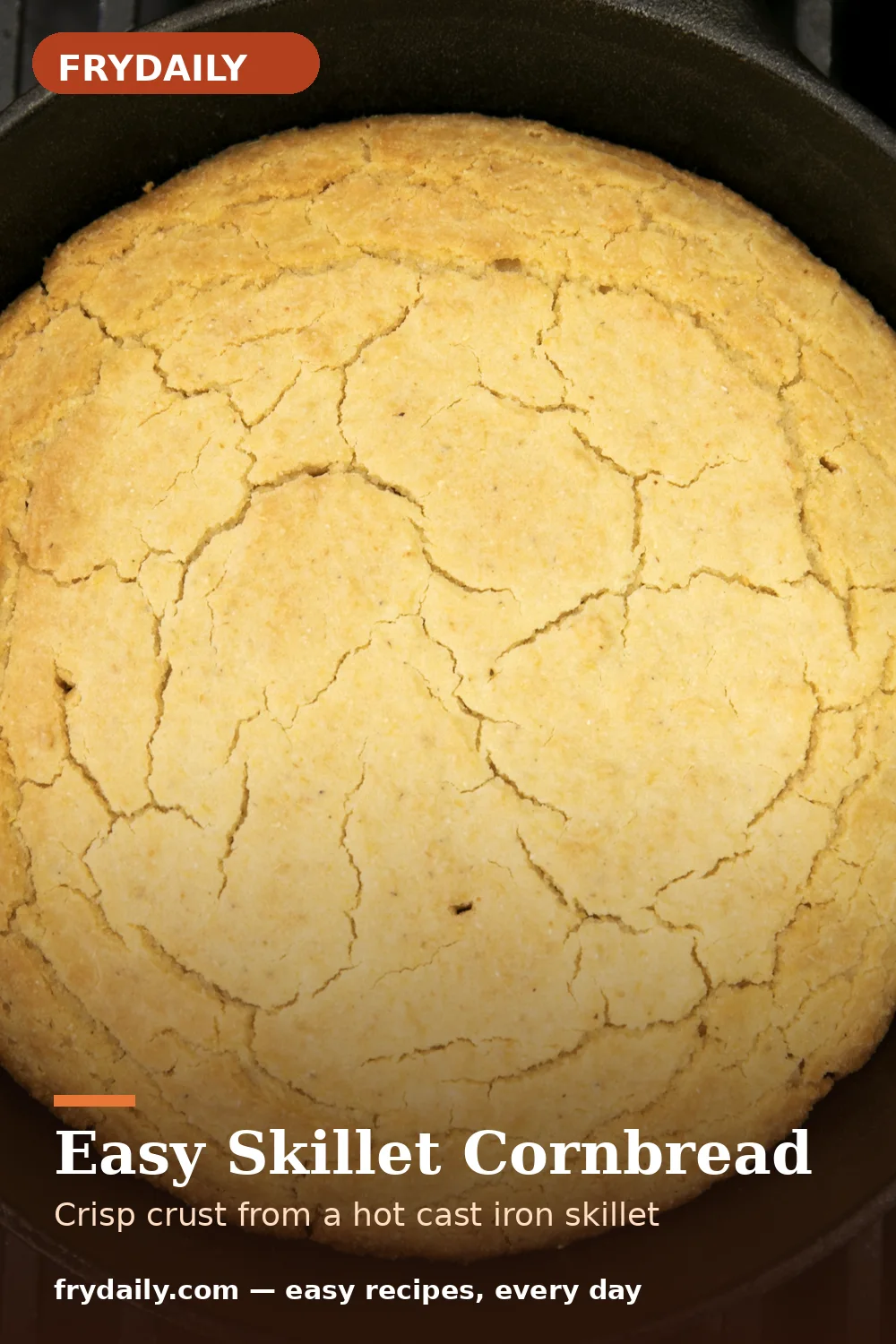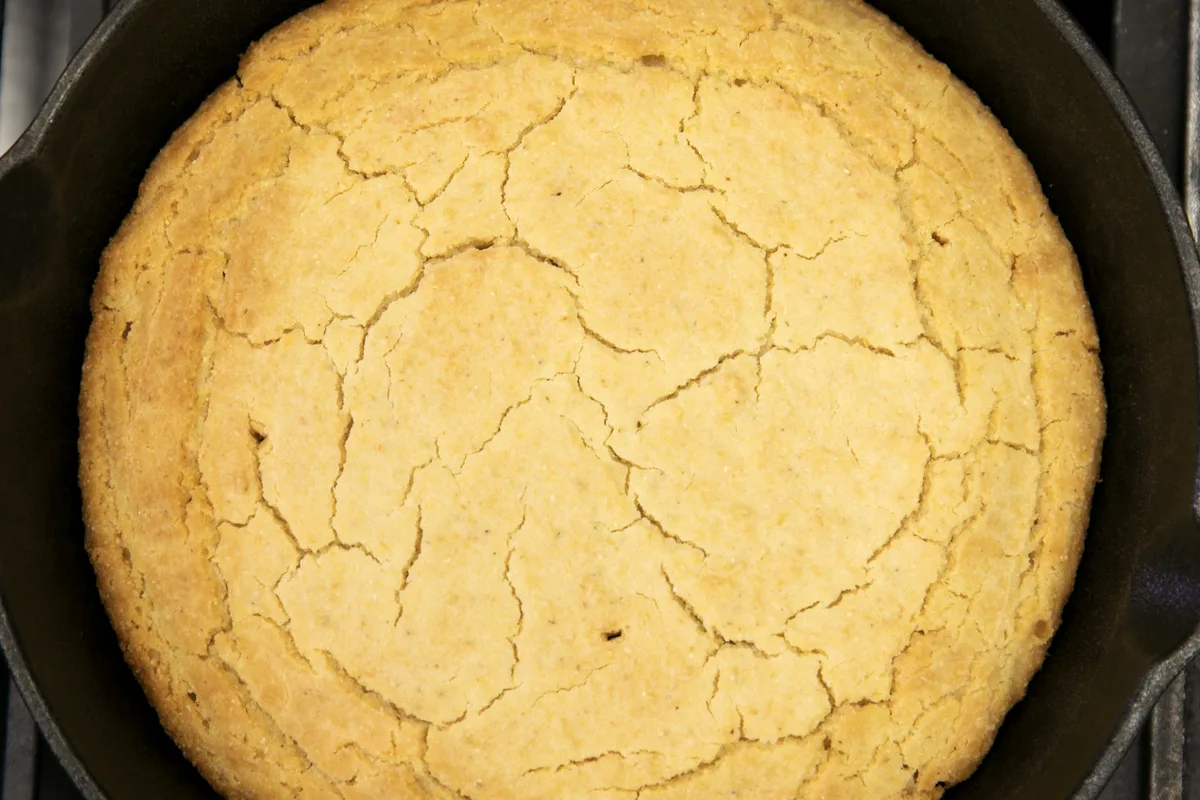
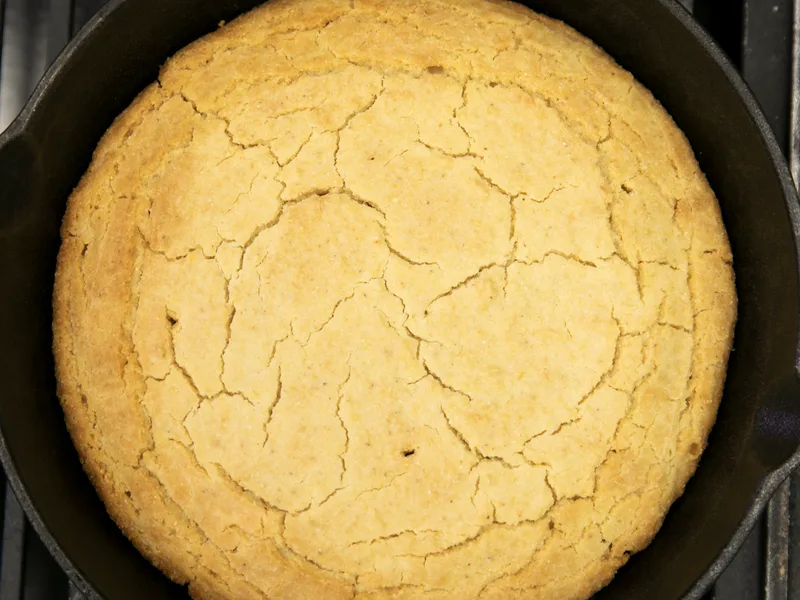
There is a particular sound good cornbread makes when the batter hits a hot skillet — a fierce sizzle that promises the crust is already forming before the pan even reaches the oven. That sound is the whole secret to this Southern-style skillet cornbread. The crumb stays tender and moist, the edges turn deep golden and crisp, and the top cracks in the prettiest way as it bakes. It is the bread we make first whenever a pot of slow cooker beef chili is on the stove.
No fancy equipment or hard-to-find ingredients are hiding here. Regular yellow cornmeal, a little flour for structure, baking powder, buttermilk, eggs and butter come together in one bowl in about ten minutes. There is no creamed butter, no mixer and no long rise to plan around. You whisk the dry ingredients, whisk the wet ones, bring them together with a few strokes, and pour. Dinner bread really can be that straightforward on a busy weeknight.
Serve wedges warm, straight from the skillet, with butter melting into every crack. The cornbread loves anything saucy or smoky — barbecue, beans, greens and fried chicken are all natural partners — and it balances a cool, crunchy side like easy creamy coleslaw beautifully. Leftovers, if the pan does not empty at the table, toast up the next morning for breakfast with honey or jam, which might be the best argument for making the full skillet every time.
Why preheat the skillet
Preheating is not a fussy extra step; it is what makes skillet cornbread different from ordinary pan cornbread. When cold batter lands in a cold pan, the edges bake at the same gentle pace as the center and stay pale and soft. When that same batter hits cast iron that is already at oven temperature, the bottom and sides set on contact, frying lightly in the butter and drippings until they form a firm, shattering crust. The skillet then holds its heat evenly, so the interior finishes moist instead of drying out while the crust catches up.
Cornmeal grind notes
Fine and medium grinds are the sweet spot here. Fine cornmeal gives a tighter, more cake-like crumb, while medium grind keeps the pleasant, slightly sandy texture most people expect from Southern cornbread, so use whichever you have or a mix of both. Coarse or stone-ground cornmeal can work too, but let the mixed batter rest for ten minutes before baking so the larger grains absorb some buttermilk and soften. Avoid self-rising cornmeal mix for this version, because the recipe already balances its salt and baking powder carefully.
Ingredients
- 1 1/4 cups yellow cornmeal (195 g)
- 1/2 cup all-purpose flour (60 g)
- 1 tablespoon granulated sugar (12 g)
- 1 tablespoon baking powder (12 g)
- 1 teaspoon fine salt (6 g)
- 2 large eggs (100 g)
- 1 cup buttermilk (240 ml)
- 1/4 cup unsalted butter, melted (57 g)
- 2 tablespoons bacon drippings or neutral oil (30 ml)
Amounts are for the yield below. US customary measures first, grams in brackets for scale users.
Step-by-step instructions
- Preheat the oven and skillet. Place a 10-inch cast iron skillet in the oven and heat to 425°F (220°C). Heating the empty pan for at least 15 minutes matters just as much as a hot oven, so do not rush this stage. A properly hot skillet is what gives the finished bread its deep golden bottom and its crisp, lacy edges.
- Mix the dry ingredients. In a large bowl, whisk the cornmeal, flour, sugar, baking powder and salt until evenly combined and no streaks of baking powder remain. Whisking now distributes the leavening through every cup of meal, which helps the cornbread rise evenly instead of doming in one spot or tunneling through the middle.
- Whisk the wet ingredients. In a second bowl or large measuring jug, whisk the eggs until the yolks and whites are fully blended, then whisk in the buttermilk and melted butter. The mixture may look slightly thick or flecked if the butter meets cold buttermilk; that is fine and will smooth out once it joins the dry ingredients.
- Combine without overmixing. Pour the wet ingredients over the dry and stir with a spatula just until no dry pockets of cornmeal remain, about twelve strokes. A few small lumps are welcome. Overmixing develops the flour and makes the crumb tough and dense, so stop as soon as the batter comes together and looks uniformly moist.
- Swirl, pour and sizzle. Carefully remove the hot skillet, add the bacon drippings or oil, and swirl to coat the bottom and sides. Pour in the batter; it should sizzle immediately and begin setting at the edges. Smooth the top once, return the pan to the oven, and bake for 22 to 25 minutes until deep golden with a cracked top.
- Rest, slice and serve. Let the cornbread rest in the skillet for 5 minutes; the crust firms up and the crumb finishes setting as it cools slightly. Run a knife around the edge, cut into 8 wedges, and serve warm with butter. The wedges lift out cleanly once rested, but they are fragile straight from the oven.
Nutrition estimate
| Nutrient | Per serving |
|---|---|
| Calories | 232 kcal |
| Protein | 6 g |
| Carbohydrates | 28 g |
| Fat | 10 g |
| Saturated fat | 5 g |
| Sodium | 420 mg |
| Fiber | 2 g |
| Sugar | 5 g |
Nutrition figures are estimates calculated from standard ingredient data for the yield stated. Your actual values will vary with brands, substitutions and portion sizes — treat them as a guide, not a guarantee.
Storage & reheating
Store cooled cornbread tightly wrapped at room temperature for up to 2 days, or refrigerate for up to 5 days; the crust softens either way, but a few minutes in a 350°F (177°C) oven or a dry skillet brings much of it back. For longer storage, wrap individual wedges in foil, freeze for up to 3 months, and thaw at room temperature before reheating. Nutrition figures are estimates from standard ingredient data and vary with brands, cornmeal grind and substitutions, so treat them as a guide rather than an exact count.
Easy Skillet Cornbread
Crisp crust, tender crumb, hot cast iron — the Southern side that steals chili night.
Ingredients
Tick ingredients off as you prep, and tap a step below to mark it done as you cook. Scaling adjusts the listed amounts - seasoning to taste stays your call.
Instructions
- Preheat the oven and skillet. Place a 10-inch cast iron skillet in the oven and heat to 425°F (220°C). Heating the empty pan for at least 15 minutes matters just as much as a hot oven, so do not rush this stage. A properly hot skillet is what gives the finished bread its deep golden bottom and its crisp, lacy edges.
- Mix the dry ingredients. In a large bowl, whisk the cornmeal, flour, sugar, baking powder and salt until evenly combined and no streaks of baking powder remain. Whisking now distributes the leavening through every cup of meal, which helps the cornbread rise evenly instead of doming in one spot or tunneling through the middle.
- Whisk the wet ingredients. In a second bowl or large measuring jug, whisk the eggs until the yolks and whites are fully blended, then whisk in the buttermilk and melted butter. The mixture may look slightly thick or flecked if the butter meets cold buttermilk; that is fine and will smooth out once it joins the dry ingredients.
- Combine without overmixing. Pour the wet ingredients over the dry and stir with a spatula just until no dry pockets of cornmeal remain, about twelve strokes. A few small lumps are welcome. Overmixing develops the flour and makes the crumb tough and dense, so stop as soon as the batter comes together and looks uniformly moist.
- Swirl, pour and sizzle. Carefully remove the hot skillet, add the bacon drippings or oil, and swirl to coat the bottom and sides. Pour in the batter; it should sizzle immediately and begin setting at the edges. Smooth the top once, return the pan to the oven, and bake for 22 to 25 minutes until deep golden with a cracked top.
- Rest, slice and serve. Let the cornbread rest in the skillet for 5 minutes; the crust firms up and the crumb finishes setting as it cools slightly. Run a knife around the edge, cut into 8 wedges, and serve warm with butter. The wedges lift out cleanly once rested, but they are fragile straight from the oven.
Recipe by Ahsan ul Haq · FryDaily. Printing? This card is designed to print cleanly on its own.