Every preserving season needs one recipe that asks almost nothing of you, and this is ours: cucumbers cut into spears, a hot garlic-dill brine poured over, and the refrigerator doing the rest. In forty-eight hours you have pickles that snap when you bite them, taste properly of dill and garlic, and keep for weeks — ready for burgers, sandwiches, snack boards, and eating straight from the jar while standing in front of the open fridge.
One thing we state plainly, because our Canning and Preserving readers deserve it: this is a refrigerator pickle, not a shelf-stable canned one. It is never processed in a water bath, it must live in the fridge from the moment it cools, and it should never be stored in the pantry. If you want pickles for the shelf, use a tested USDA water-bath recipe exactly as written. For a jar that lives happily beside our Homemade Vegetable Soup for Canning in the cold months, the fridge method is the honest, easy winner.
The recipe makes two quart jars, which sounds like a lot until the first jar empties in a weekend. Small pickling cucumbers are worth seeking out at a market — they are firmer and less seedy than slicing cucumbers — but ordinary Kirby cucumbers from any grocery store come a close second.
Crispness is decided in the first hour
Three small habits keep these spears snapping instead of slumping. First, trim a thin slice off the blossom end of each cucumber — that end carries enzymes that soften pickles as they sit. Second, salt the spears and rest them in ice water for an hour before jarring; the cold firms the flesh noticeably. Third, pour the brine over hot but not violently boiling, which sets the surface without cooking the interior. Skip the alum and lime of old-fashioned recipes — none of that is needed, or recommended, for a fridge pickle eaten within weeks.
The brine ratio, and why not to improvise it
This brine is equal parts vinegar and water with a measured hand of salt and a little sugar to round the edges — balanced for flavor, and acidic enough for refrigerator storage. Because these pickles are not canned, you have a little more freedom than a shelf recipe allows, but do not dilute the vinegar further: acidity is your safety margin in the jar, even in the fridge. Swapping in apple cider vinegar for up to half the white vinegar is fine and adds a pleasant fruitiness; flavored vinegars and anything below 5% acidity are not.
Ingredients
- 2 lb small pickling cucumbers, about 8 to 10 (900 g)
- 2 tablespoons pickling or kosher salt (36 g), divided
- 4 garlic cloves, smashed (about 12 g)
- 2 teaspoons dill seed (4 g)
- 1 teaspoon black peppercorns (3 g)
- 1/2 teaspoon red pepper flakes (1 g), optional
- 4 fresh dill sprigs
- 1 1/2 cups white vinegar, 5% acidity (360 ml)
- 1 1/2 cups water (360 ml)
- 1 tablespoon granulated sugar (12 g)
Amounts are for the yield below. US customary measures first, grams in brackets for scale users.
Step-by-step instructions
- Trim and chill the cucumbers. Wash the cucumbers well and scrub off any spines. Trim about 1/16 inch (2 mm) from the blossom end of each one — the end opposite the stem, often slightly rougher — and cut the cucumbers lengthwise into spears. Toss the spears with 1 tablespoon of the salt in a large bowl, cover with ice water, and refrigerate for 1 hour. This firms them up for a crisper finished pickle.
- Pack the jars. Drain the spears and pat them dry. Divide the garlic, dill seed, peppercorns and red pepper flakes, if using, between two clean 1-quart (950 ml) jars, tuck 2 dill sprigs into each, then pack the spears in snugly, standing upright where you can. Snug is good — loose spears float and poke above the brine.
- Make the hot brine. Combine the vinegar, water, sugar and the remaining 1 tablespoon salt in a medium saucepan. Bring just to a boil over medium-high heat, stirring to dissolve the salt and sugar, then take it straight off the heat. The brine should be steaming hot but no longer bubbling when it meets the cucumbers.
- Fill and tap out the bubbles. Pour the hot brine slowly over the spears in both jars, covering them completely and leaving about 1/2 inch (1.25 cm) of space at the top. Tap each jar gently on a folded towel and run a clean chopstick around the inside to release trapped air bubbles, then top up with brine if the level drops. Any spear tip above the brine line should be pushed down or the brine topped up.
- Cool, then refrigerate. Let the jars cool on the counter for about 1 hour, until they are no longer warm, then seal with lids and refrigerate immediately. These pickles are stored in the refrigerator from this moment on — never on a pantry shelf.
- Wait for the flavor, then enjoy. The spears are pleasantly pickled after 24 hours and properly themselves after 48 hours, when the garlic and dill have moved all the way through. Keep them refrigerated and enjoy within 2 months, using clean utensils to take pickles from the jar so the brine stays uncontaminated.
Nutrition estimate
| Nutrient | Per serving |
|---|---|
| Calories | 10 kcal |
| Protein | 0 g |
| Carbohydrates | 2 g |
| Fat | 0 g |
| Saturated fat | 0 g |
| Sodium | 560 mg |
| Fiber | 0 g |
| Sugar | 1 g |
Nutrition figures are estimates calculated from standard ingredient data for the yield stated. Your actual values will vary with brands, substitutions and portion sizes — treat them as a guide, not a guarantee.
Storage & reheating
Store the sealed jars in the refrigerator at all times and use within 2 months for best quality and crunch; the spears gradually soften the longer they sit. Never store these pickles at room temperature and never attempt to seal them for the pantry — this recipe has not been tested for water-bath canning. If the brine ever turns cloudy with sliminess, develops an off smell, or the jar fizzes when opened, discard the whole jar without tasting. Nutrition figures are estimates from standard ingredient data and vary with brands and substitutions.
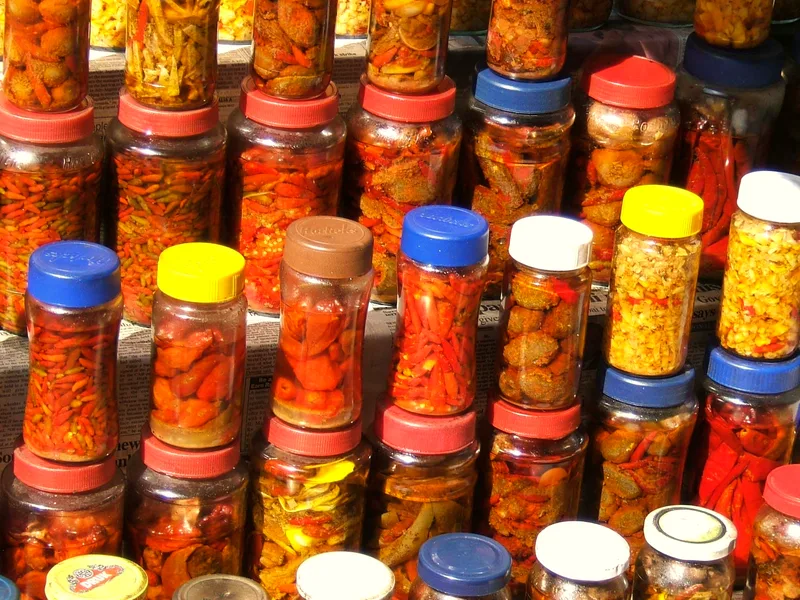
Refrigerator Dill Pickle Spears
Crisp, garlicky spears in 48 hours — the easiest pickle in the FryDaily fridge.
Ingredients
Tick ingredients off as you prep, and tap a step below to mark it done as you cook. Scaling adjusts the listed amounts - seasoning to taste stays your call.
Instructions
- Trim and chill the cucumbers. Wash the cucumbers well and scrub off any spines. Trim about 1/16 inch (2 mm) from the blossom end of each one — the end opposite the stem, often slightly rougher — and cut the cucumbers lengthwise into spears. Toss the spears with 1 tablespoon of the salt in a large bowl, cover with ice water, and refrigerate for 1 hour. This firms them up for a crisper finished pickle.
- Pack the jars. Drain the spears and pat them dry. Divide the garlic, dill seed, peppercorns and red pepper flakes, if using, between two clean 1-quart (950 ml) jars, tuck 2 dill sprigs into each, then pack the spears in snugly, standing upright where you can. Snug is good — loose spears float and poke above the brine.
- Make the hot brine. Combine the vinegar, water, sugar and the remaining 1 tablespoon salt in a medium saucepan. Bring just to a boil over medium-high heat, stirring to dissolve the salt and sugar, then take it straight off the heat. The brine should be steaming hot but no longer bubbling when it meets the cucumbers.
- Fill and tap out the bubbles. Pour the hot brine slowly over the spears in both jars, covering them completely and leaving about 1/2 inch (1.25 cm) of space at the top. Tap each jar gently on a folded towel and run a clean chopstick around the inside to release trapped air bubbles, then top up with brine if the level drops. Any spear tip above the brine line should be pushed down or the brine topped up.
- Cool, then refrigerate. Let the jars cool on the counter for about 1 hour, until they are no longer warm, then seal with lids and refrigerate immediately. These pickles are stored in the refrigerator from this moment on — never on a pantry shelf.
- Wait for the flavor, then enjoy. The spears are pleasantly pickled after 24 hours and properly themselves after 48 hours, when the garlic and dill have moved all the way through. Keep them refrigerated and enjoy within 2 months, using clean utensils to take pickles from the jar so the brine stays uncontaminated.
Tested in the FryDaily kitchen, October 2026. Printing? This card is designed to print cleanly on its own.