Blueberry jam is the jar people ask about. The color alone — deep, inky purple — makes it look like something from a farm stand, and the flavor is pure summer: concentrated berries, a lift of lemon, and just enough sugar to let the fruit taste like itself. This is a small, manageable batch — five half-pints — which makes it the right first jam for new canners and the right size for using up a flat of berries before they soften.
You will find it in our Canning & Preserving section alongside our Strawberry Jam, and the method rhymes: crushed fruit, a hard boil, an honest set test, and a short water-bath process. Blueberries are naturally rich in pectin, especially slightly underripe ones, so this jam sets reliably with the added pectin in the recipe without tasting stiff or rubbery.
Use fresh berries when they are in season and cheap, or frozen berries in winter — frozen fruit makes excellent jam because it breaks down quickly and releases its juice as it thaws in the pot. Either way, pick over the berries and pull out stems, which turn woody in the finished jam.
The set test never lies
Timing a jam by the clock alone is how you get syrup. Use the freezer-plate test: keep two small plates in the freezer, and when the jam has boiled hard for the stated time, drop a spoonful onto a cold plate, wait 30 seconds, and push it with your finger. A jam that is ready wrinkles and holds the path your finger made; a jam that runs back together needs 2 more minutes of boiling and another test. Blueberries are forgiving — err slightly under-set rather than overcooked, because the jam firms as it cools and a dark, caramelized batch loses its fresh berry flavor.
Skim, rest, then fill
A spoonful of foam always rises as jam boils, and while it is harmless, it clouds the jars. Take the pot off the heat, stir in a small knob of butter if you like — it breaks the foam — and skim what remains. Then let the jam rest for 2 minutes before ladling: the pause lets the berries distribute evenly through the syrup instead of floating to the top of every jar. Stir once more as you fill so the last jar looks as good as the first.
Ingredients
- 6 cups fresh or frozen blueberries (900 g), picked over
- 4 cups granulated sugar (800 g)
- 2 tablespoons lemon juice (30 ml)
- 1 (1.75 oz) package powdered fruit pectin (49 g)
- 1/2 teaspoon unsalted butter (2 g), optional, to reduce foam
Amounts are for the yield below. US customary measures first, grams in brackets for scale users.
Step-by-step instructions
- Prepare the canner and jars. Fill a boiling-water canner and bring the water toward a simmer. Wash 5 half-pint jars (about 8 oz / 250 ml each) in hot, soapy water and keep them hot. Set new lids in hot water. Put two small plates in the freezer for the set test. Jam waits for no one, so have everything ready before the fruit goes on the heat.
- Crush the berries. Put the blueberries in a large, heavy pot and crush them with a potato masher until no whole berries remain but the mixture is still textured — you want broken fruit, not a puree. Stir in the lemon juice and the powdered pectin until the pectin dissolves completely.
- Bring to the first boil. Set the pot over high heat and bring the mixture to a full, rolling boil, stirring constantly so the pectin does not catch on the bottom. A rolling boil here means the bubbles do not stop when you stir — that intensity is what activates the set.
- Add the sugar and boil hard. Pour in all the sugar at once and stir until it dissolves, then add the butter if using. Return the jam to a full rolling boil and boil hard for exactly 1 minute, stirring constantly. Start the set test straight away.
- Test the set and skim. Drop a spoonful of jam onto a frozen plate, wait 30 seconds, and push it with your finger — it should wrinkle. If it runs, boil 2 minutes more and test again. Off the heat, skim any foam and rest the jam for 2 minutes, stirring once.
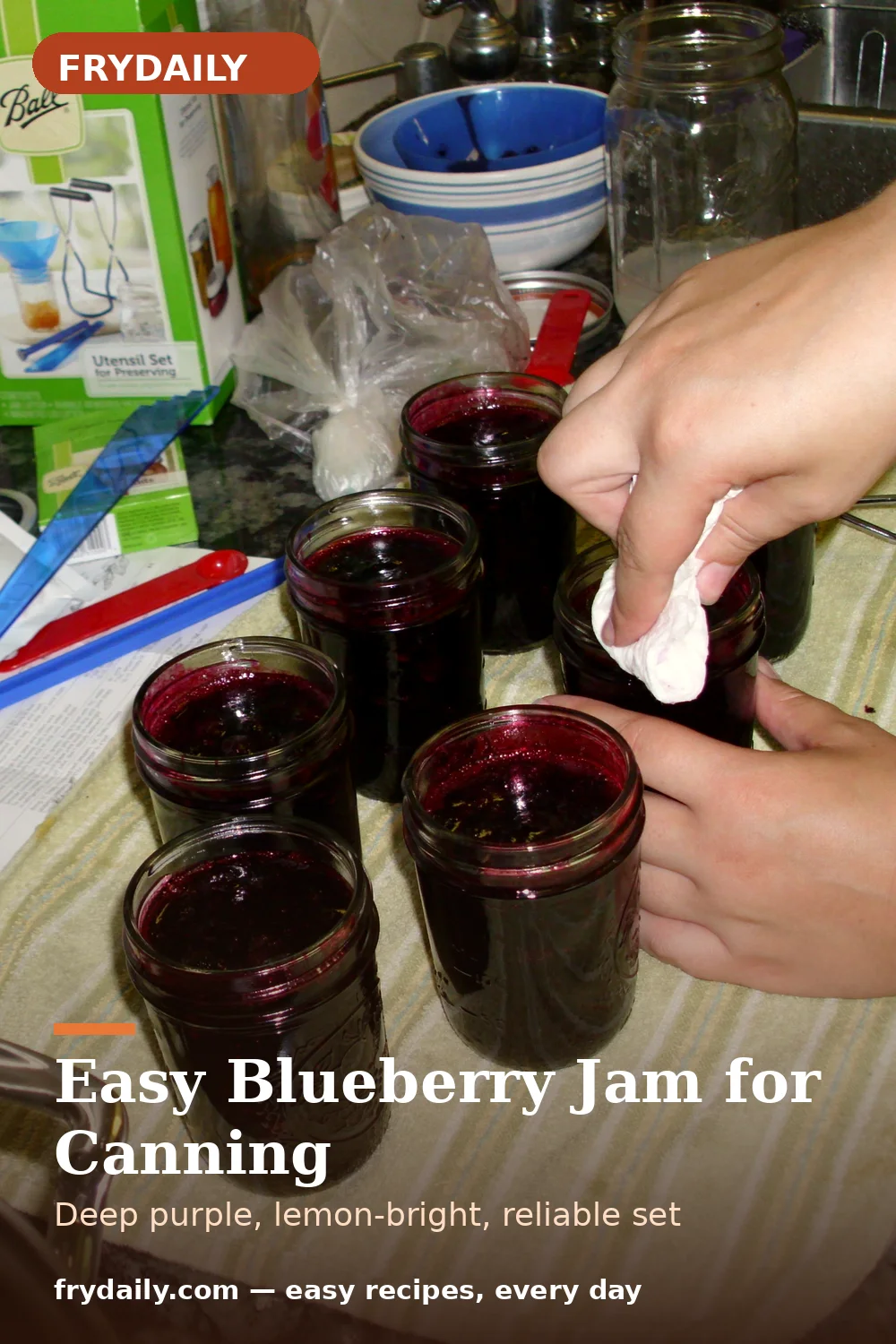
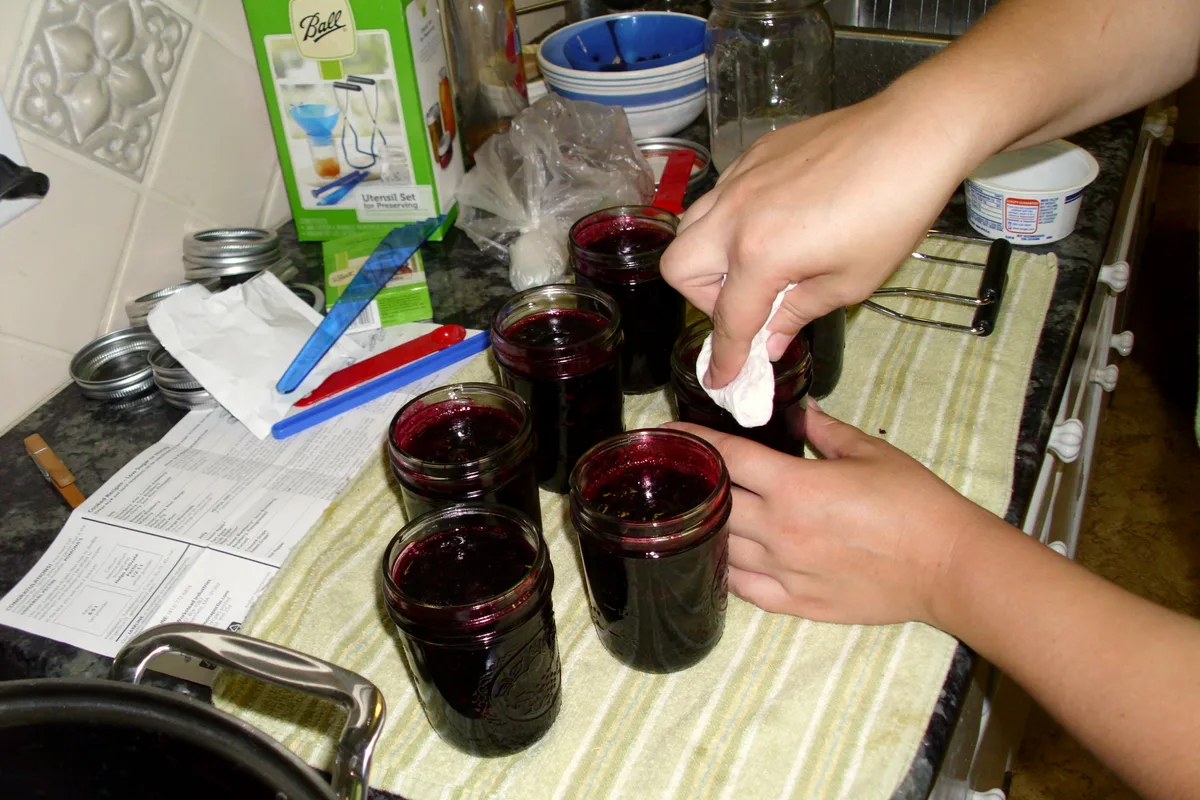
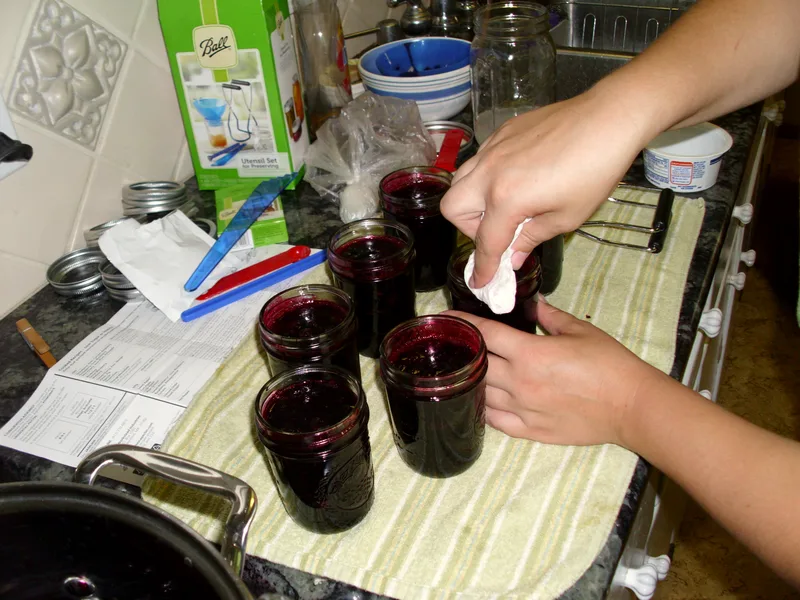
- Fill and process. Ladle the hot jam into the hot jars, leaving 1/4 inch (0.6 cm) of headspace. Wipe the rims, apply lids and bands fingertip-tight, and process in the boiling-water canner for 10 minutes at altitudes up to 1,000 ft (305 m), adjusting upward for altitude per current USDA guidance. Rest the jars in the canner for 5 minutes, then cool undisturbed for 12 to 24 hours and check the seals.
Nutrition estimate
| Nutrient | Per serving |
|---|---|
| Calories | 56 kcal |
| Protein | 0 g |
| Carbohydrates | 14 g |
| Fat | 0 g |
| Saturated fat | 0 g |
| Sodium | 1 mg |
| Fiber | 0 g |
| Sugar | 13 g |
Nutrition figures are estimates calculated from standard ingredient data for the yield stated. Your actual values will vary with brands, substitutions and portion sizes — treat them as a guide, not a guarantee.
Storage & reheating
Sealed jars keep for up to 12 months in a cool, dark place; the color stays deepest away from light. Once opened, refrigerate and use within 1 month — blueberry jam holds its texture well in the fridge. Any jar that fails to seal should be refrigerated and used first. Nutrition is estimated per tablespoon.
Canning safety — read first
Home canning must follow tested processes exactly. The times on this page follow the structure of current USDA guidance for the stated jar size at 0-1,000 feet elevation; always confirm processing times and altitude adjustments in the USDA Complete Guide to Home Canning or the National Center for Home Food Preservation before you start. Never taste food from a jar with a failed seal, bulging lid or off odor — discard it.
Easy Blueberry Jam for Canning
Deep purple, lemon-bright jam with a set you can trust, jar after jar.
Ingredients
Tick ingredients off as you prep, and tap a step below to mark it done as you cook. Scaling adjusts the listed amounts - seasoning to taste stays your call.
Instructions
- Prepare the canner and jars. Fill a boiling-water canner and bring the water toward a simmer. Wash 5 half-pint jars (about 8 oz / 250 ml each) in hot, soapy water and keep them hot. Set new lids in hot water. Put two small plates in the freezer for the set test. Jam waits for no one, so have everything ready before the fruit goes on the heat.
- Crush the berries. Put the blueberries in a large, heavy pot and crush them with a potato masher until no whole berries remain but the mixture is still textured — you want broken fruit, not a puree. Stir in the lemon juice and the powdered pectin until the pectin dissolves completely.
- Bring to the first boil. Set the pot over high heat and bring the mixture to a full, rolling boil, stirring constantly so the pectin does not catch on the bottom. A rolling boil here means the bubbles do not stop when you stir — that intensity is what activates the set.
- Add the sugar and boil hard. Pour in all the sugar at once and stir until it dissolves, then add the butter if using. Return the jam to a full rolling boil and boil hard for exactly 1 minute, stirring constantly. Start the set test straight away.
- Test the set and skim. Drop a spoonful of jam onto a frozen plate, wait 30 seconds, and push it with your finger — it should wrinkle. If it runs, boil 2 minutes more and test again. Off the heat, skim any foam and rest the jam for 2 minutes, stirring once.
- Fill and process. Ladle the hot jam into the hot jars, leaving 1/4 inch (0.6 cm) of headspace. Wipe the rims, apply lids and bands fingertip-tight, and process in the boiling-water canner for 10 minutes at altitudes up to 1,000 ft (305 m), adjusting upward for altitude per current USDA guidance. Rest the jars in the canner for 5 minutes, then cool undisturbed for 12 to 24 hours and check the seals.
Recipe by Ahsan ul Haq · FryDaily. Printing? This card is designed to print cleanly on its own.