A bushel of fall apples turns into a winter of easy desserts, pork-chop sides and lunchbox cups when you put up applesauce — and the homemade kind, cooked from real apples with nothing in it you did not choose, tastes like a different food from the jarred store version. This recipe is deliberately simple: apples, water, lemon juice, and cinnamon only if you want it. Sugar is optional and honestly unnecessary with ripe fruit.
It belongs in our Canning & Preserving collection next to our Spiced Apple Butter — the apple butter cooks down for hours into a dark spread, while this sauce stays bright and spoonable. Both follow the same discipline: correct headspace, clean rims, and processing times from current USDA guidance, which you should always confirm for your altitude before you start.
Mix your apple varieties if you can. A blend of a sweet apple like Gala or Fuji with a tart one like Granny Smith or Braeburn gives a sauce with real depth, and softer apples break down faster, which shortens the cooking time. Firm apples work too — they just need a few more minutes and a firmer hand with the masher.
To peel or not to peel
For the smoothest sauce, peel the apples before cooking — the skins never fully break down and can leave the texture stringy. If you own a food mill, you can cook the apples unpeeled and let the mill strip the skins and seeds out as you pass the sauce through, which is faster and gives a faintly rosy sauce from red skins. A food mill also produces the most even texture. Without a mill or a blender, a potato masher gives a chunky, rustic sauce that many families prefer — decide your texture before you start, because it decides your tools.
Safety notes that are not optional
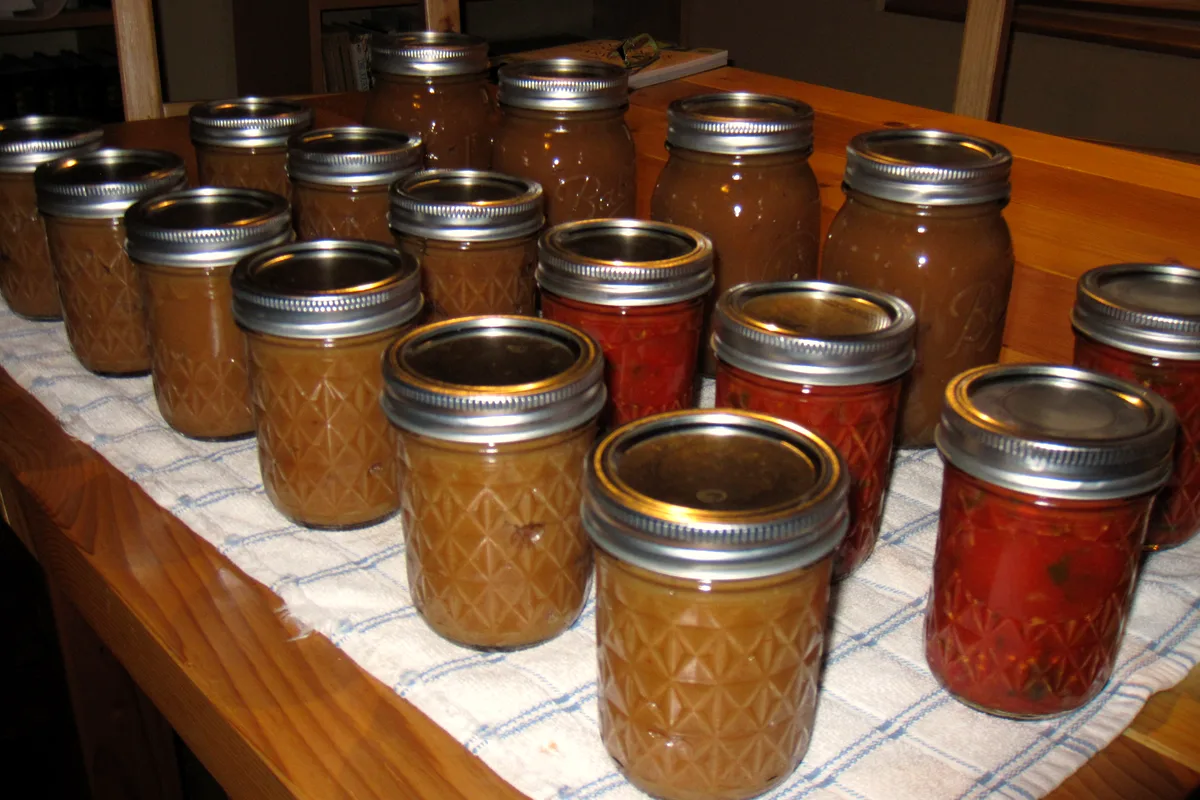
Applesauce is a high-acid food and is safely processed in a boiling-water canner, but the details matter: use jars made for canning, new lids every time, and the headspace written in the recipe — 1/2 inch (1.3 cm) for applesauce. Wipe every rim with a clean, damp cloth before the lid goes on, because a single smear of sauce can prevent a seal. Process for the full time for your jar size and altitude, let the jars cool undisturbed for 12 to 24 hours, then check that every lid is concave and does not flex. Any jar that did not seal goes in the fridge and gets eaten first.
Ingredients
- 6 lb apples (2.7 kg), mixed sweet and tart varieties
- 1 cup water (240 ml)
- 2 tablespoons lemon juice (30 ml)
- 1 teaspoon ground cinnamon (2.6 g), optional
- 1/2 cup granulated sugar (100 g), optional, to taste
Amounts are for the yield below. US customary measures first, grams in brackets for scale users.
Step-by-step instructions
- Prepare the canner and jars. Fill a boiling-water canner with water and bring it toward a simmer. Wash 6 pint jars (or 3 quart jars) with hot, soapy water and keep them hot in the canner water until you are ready to fill. Set new lids in a small pan of hot — not boiling — water. Starting with hot jars matters: cold jars filled with hot sauce can crack.
- Prep the apples. Peel, core and quarter the apples, dropping the pieces into a large bowl of water with the lemon juice stirred in as you work — the acidulated water keeps the cut fruit from browning while you finish the batch. Drain before cooking.
- Cook until completely soft. Put the drained apples in a large, heavy pot with 1 cup (240 ml) of water. Bring to a simmer over medium heat, then cover and cook for 15 to 20 minutes, stirring often, until every piece is completely soft and collapsing. Soft fruit mills and mashes evenly; firm chunks leave the sauce lumpy.
- Mill or mash the sauce. Pass the hot apples through a food mill for a smooth sauce, or mash in the pot with a potato masher for a chunky one. Stir in the cinnamon and the sugar, if using, and return the sauce to a gentle simmer. Taste now — the sauce should be bright first and sweet second.
- Fill the jars. Ladle the hot sauce into the hot jars, leaving 1/2 inch (1.3 cm) of headspace. Run a flat utensil around the inside of each jar to release air bubbles, wipe the rims clean with a damp cloth, and apply the lids and bands fingertip-tight.
- Process in the water bath. Lower the jars into the canner, making sure they are covered by at least 1 inch (2.5 cm) of water. Bring to a full rolling boil and process pint jars for 15 minutes and quart jars for 20 minutes at altitudes up to 1,000 ft (305 m) — adjust upward for higher altitudes following current USDA guidance. Turn off the heat, wait 5 minutes, then lift the jars onto a towel to cool undisturbed for 12 to 24 hours before checking seals.
Nutrition estimate
| Nutrient | Per serving |
|---|---|
| Calories | 95 kcal |
| Protein | 0 g |
| Carbohydrates | 25 g |
| Fat | 0 g |
| Saturated fat | 0 g |
| Sodium | 2 mg |
| Fiber | 3 g |
| Sugar | 20 g |
Nutrition figures are estimates calculated from standard ingredient data for the yield stated. Your actual values will vary with brands, substitutions and portion sizes — treat them as a guide, not a guarantee.
Storage & reheating
Sealed jars keep for up to 12 months in a cool, dark cupboard; label each lid with the date and contents. Once opened, a jar keeps for up to 1 week in the refrigerator. Unsealed jars from processing day go straight into the fridge and should be used within the week. The sauce also freezes well for up to 6 months if you prefer not to can it.
Canning safety — read first
Home canning must follow tested processes exactly. The times on this page follow the structure of current USDA guidance for the stated jar size at 0-1,000 feet elevation; always confirm processing times and altitude adjustments in the USDA Complete Guide to Home Canning or the National Center for Home Food Preservation before you start. Never taste food from a jar with a failed seal, bulging lid or off odor — discard it.
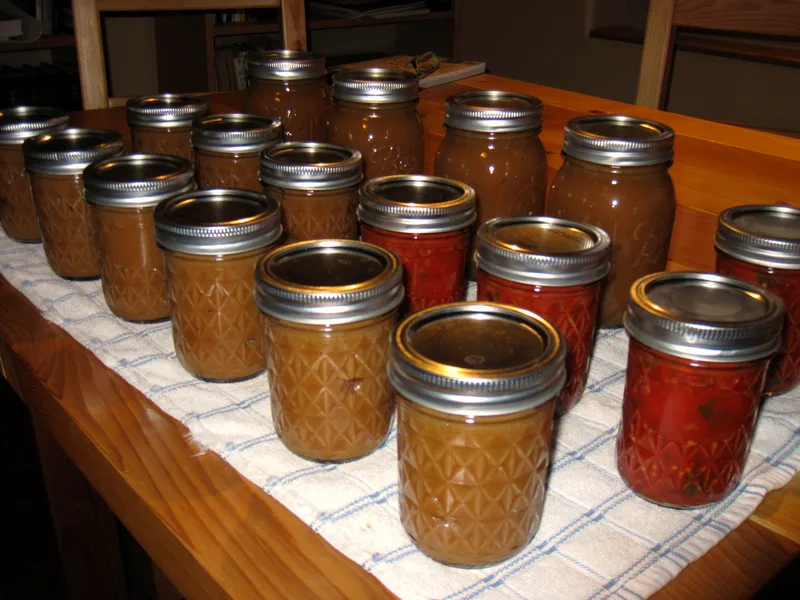
Easy Homemade Applesauce for Canning
Unsweetened, cinnamon-kissed applesauce, canned for the pantry shelf.
Ingredients
Tick ingredients off as you prep, and tap a step below to mark it done as you cook. Scaling adjusts the listed amounts - seasoning to taste stays your call.
Instructions
- Prepare the canner and jars. Fill a boiling-water canner with water and bring it toward a simmer. Wash 6 pint jars (or 3 quart jars) with hot, soapy water and keep them hot in the canner water until you are ready to fill. Set new lids in a small pan of hot — not boiling — water. Starting with hot jars matters: cold jars filled with hot sauce can crack.
- Prep the apples. Peel, core and quarter the apples, dropping the pieces into a large bowl of water with the lemon juice stirred in as you work — the acidulated water keeps the cut fruit from browning while you finish the batch. Drain before cooking.
- Cook until completely soft. Put the drained apples in a large, heavy pot with 1 cup (240 ml) of water. Bring to a simmer over medium heat, then cover and cook for 15 to 20 minutes, stirring often, until every piece is completely soft and collapsing. Soft fruit mills and mashes evenly; firm chunks leave the sauce lumpy.
- Mill or mash the sauce. Pass the hot apples through a food mill for a smooth sauce, or mash in the pot with a potato masher for a chunky one. Stir in the cinnamon and the sugar, if using, and return the sauce to a gentle simmer. Taste now — the sauce should be bright first and sweet second.
- Fill the jars. Ladle the hot sauce into the hot jars, leaving 1/2 inch (1.3 cm) of headspace. Run a flat utensil around the inside of each jar to release air bubbles, wipe the rims clean with a damp cloth, and apply the lids and bands fingertip-tight.
- Process in the water bath. Lower the jars into the canner, making sure they are covered by at least 1 inch (2.5 cm) of water. Bring to a full rolling boil and process pint jars for 15 minutes and quart jars for 20 minutes at altitudes up to 1,000 ft (305 m) — adjust upward for higher altitudes following current USDA guidance. Turn off the heat, wait 5 minutes, then lift the jars onto a towel to cool undisturbed for 12 to 24 hours before checking seals.
Recipe by Ahsan ul Haq · FryDaily. Printing? This card is designed to print cleanly on its own.