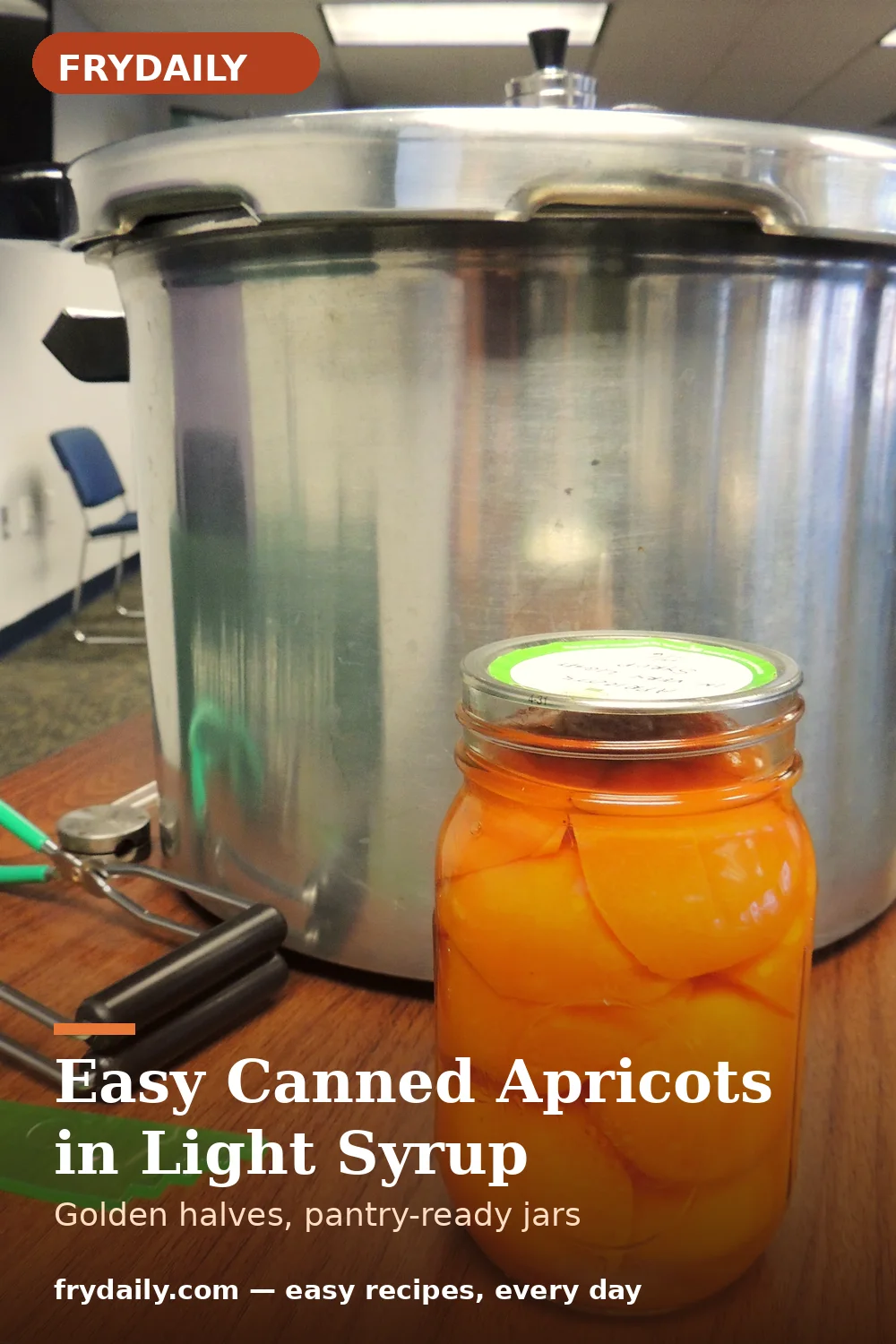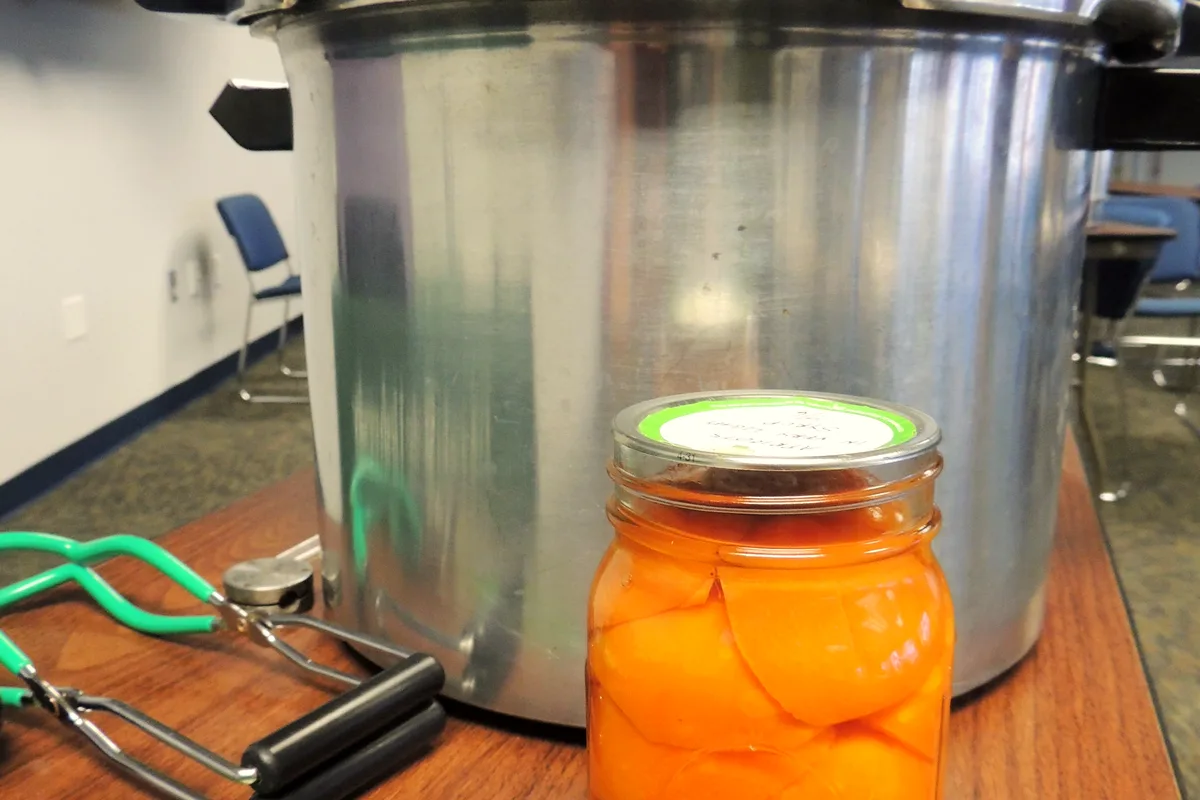
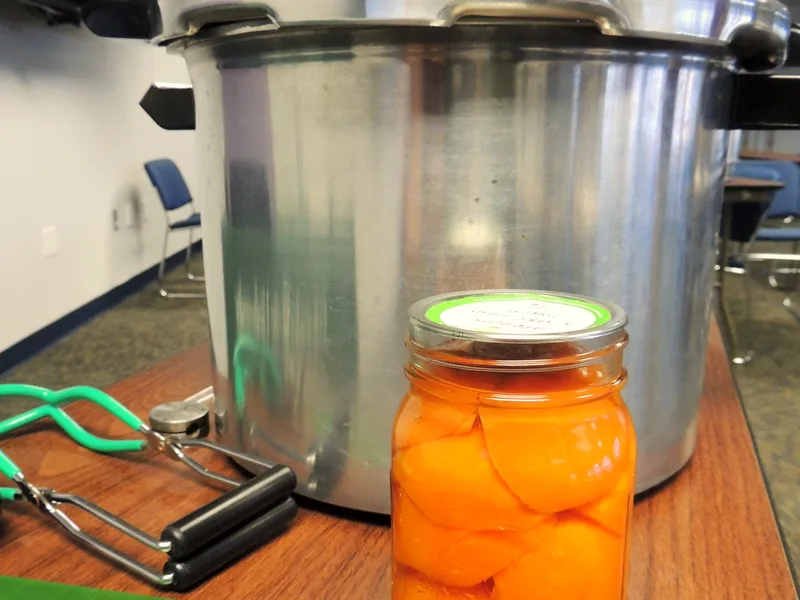
The jar in the photograph is labelled in marker on the lid, the way real pantry jars are: apricots, in very light syrup. That is this recipe exactly — golden apricot halves, skins left on so there is no peeling, settled in a light syrup and hot-packed for the shelf. Apricots are the beginner's stone fruit for canning: they halve cleanly, the pits lift out with a thumb, and a quart jar of them in January, spooned over yogurt or baked into a cobbler, tastes like proof that August happened. The recipe sits in our Canning & Preserving collection with the full safety notes this category always carries.
Choose fruit that is ripe but still firm — an apricot that eats soft at the counter will fall apart in the jar. Freestone types are not a concern the way they are with peaches, because apricot pits release easily from ripe fruit regardless of variety. Plan on roughly two and a quarter pounds of fruit per finished quart, and buy a little extra for the split, bruised and cook's-portion halves that never reach a jar. Our Peach Jam is the place to send any fruit too ripe for halves.
Read the safety box on this page before you start, and confirm processing times for your altitude with the National Center for Home Food Preservation. The times below are for hot-packed halves at 0–1,000 feet; altitude changes them, and with canning, close enough is not a standard that exists.
No peeling — and the skins are a feature
Unlike peaches, apricots are canned with their skins on, and the skins earn their place: they help the halves hold their shape through processing, they carry much of the fruit's flavour and colour, and they save you the entire blanching-and-peeling stage. What the skins do need is a thorough wash and a gentle rub under running water to remove the fruit's natural fuzz-dust. Halve each apricot along its seam and twist; ripe fruit opens cleanly and the pit lifts straight out. Any half that tears badly goes to the jam pile, not the jar.
Light syrup keeps the fruit tasting like fruit
Heavy syrup buries apricots under sugar, and plain water packing can taste thin and slightly flat by midwinter. Light syrup — roughly two cups of sugar to a quart of water — is the middle path generations of canners settled on: it protects the colour of the cut surfaces, plumps the halves gently and leaves syrup in the jar that is worth drinking over ice. The sugar is about flavour and texture, not preservation; the heat process is what makes these jars shelf-safe, which is why the syrup strength can be adjusted to taste but the processing time cannot.
Ingredients
- 16 lb ripe but firm apricots (7.3 kg), about 110 medium apricots
- 2 1/4 cups granulated sugar (450 g), for the light syrup
- 5 1/4 cups water (1.25 l), for the syrup
- 1/4 cup lemon juice (60 ml), to keep the cut fruit from browning
Amounts are for the yield below. US customary measures first, grams in brackets for scale users.
Step-by-step instructions
- Make the light syrup. Combine the sugar and water in a large pot and heat, stirring, until the sugar dissolves completely. Keep the syrup hot but not boiling while you prepare the fruit.
- Wash, halve and pit the apricots. Wash the apricots well and rub them gently under running water. Halve each one along the seam, twist the halves apart and lift out the pit. Drop the halves into a large bowl of cold water mixed with the lemon juice to stop browning.
- Heat the fruit through. Drain the halves and add them to the hot syrup. Simmer gently for 4 to 5 minutes, until the fruit is heated through — hot packing gives better colour and far fewer floating halves than packing raw fruit.
- Fill the jars. Pack the hot halves cavity-side down into hot, clean quart jars, overlapping neatly. Ladle hot syrup over them, leaving 1/2 inch (1.3 cm) headspace. Remove air bubbles, wipe the rims, and apply lids and bands fingertip-tight.
- Process in a water bath. Lower the jars into a canner of hot water covering them by 1 to 2 inches. Bring to a full rolling boil and process quart jars for 25 minutes at 0–1,000 feet elevation, adjusting for altitude per USDA guidance. Start timing only when the boil is full.
- Cool and check the seals. Lift the jars onto a towel and leave undisturbed for 12 to 24 hours. Check that every lid is sealed and concave, then label with the contents and date, like the jar in the photograph. Refrigerate any jar that did not seal and use it within a week.
Nutrition estimate
| Nutrient | Per serving |
|---|---|
| Calories | 112 kcal |
| Protein | 1 g |
| Carbohydrates | 28 g |
| Fat | 0 g |
| Saturated fat | 0 g |
| Sodium | 2 mg |
| Fiber | 2 g |
| Sugar | 26 g |
Nutrition figures are estimates calculated from standard ingredient data for the yield stated. Your actual values will vary with brands, substitutions and portion sizes — treat them as a guide, not a guarantee.
Storage & reheating
Sealed jars keep best in a cool, dark cupboard and are at their best within 12 months. Once opened, refrigerate and use within 7 days. Nutrition is estimated per 1-cup serving of apricots in light syrup, drained; estimates vary with fruit ripeness and how much syrup is consumed. Always discard any jar with a failed seal, spurting liquid or off smell, without tasting.
Canning safety — read first
Home canning must follow tested processes exactly. The times on this page follow the structure of current USDA guidance for the stated jar size at 0-1,000 feet elevation; always confirm processing times and altitude adjustments in the USDA Complete Guide to Home Canning or the National Center for Home Food Preservation before you start. Never taste food from a jar with a failed seal, bulging lid or off odor — discard it.
Easy Canned Apricots in Light Syrup
Golden apricot halves in light syrup, hot-packed for the pantry shelf.
Ingredients
Tick ingredients off as you prep, and tap a step below to mark it done as you cook. Scaling adjusts the listed amounts - seasoning to taste stays your call.
Instructions
- Make the light syrup. Combine the sugar and water in a large pot and heat, stirring, until the sugar dissolves completely. Keep the syrup hot but not boiling while you prepare the fruit.
- Wash, halve and pit the apricots. Wash the apricots well and rub them gently under running water. Halve each one along the seam, twist the halves apart and lift out the pit. Drop the halves into a large bowl of cold water mixed with the lemon juice to stop browning.
- Heat the fruit through. Drain the halves and add them to the hot syrup. Simmer gently for 4 to 5 minutes, until the fruit is heated through — hot packing gives better colour and far fewer floating halves than packing raw fruit.
- Fill the jars. Pack the hot halves cavity-side down into hot, clean quart jars, overlapping neatly. Ladle hot syrup over them, leaving 1/2 inch (1.3 cm) headspace. Remove air bubbles, wipe the rims, and apply lids and bands fingertip-tight.
- Process in a water bath. Lower the jars into a canner of hot water covering them by 1 to 2 inches. Bring to a full rolling boil and process quart jars for 25 minutes at 0–1,000 feet elevation, adjusting for altitude per USDA guidance. Start timing only when the boil is full.
- Cool and check the seals. Lift the jars onto a towel and leave undisturbed for 12 to 24 hours. Check that every lid is sealed and concave, then label with the contents and date, like the jar in the photograph. Refrigerate any jar that did not seal and use it within a week.
Recipe by Ahsan ul Haq · FryDaily. Printing? This card is designed to print cleanly on its own.