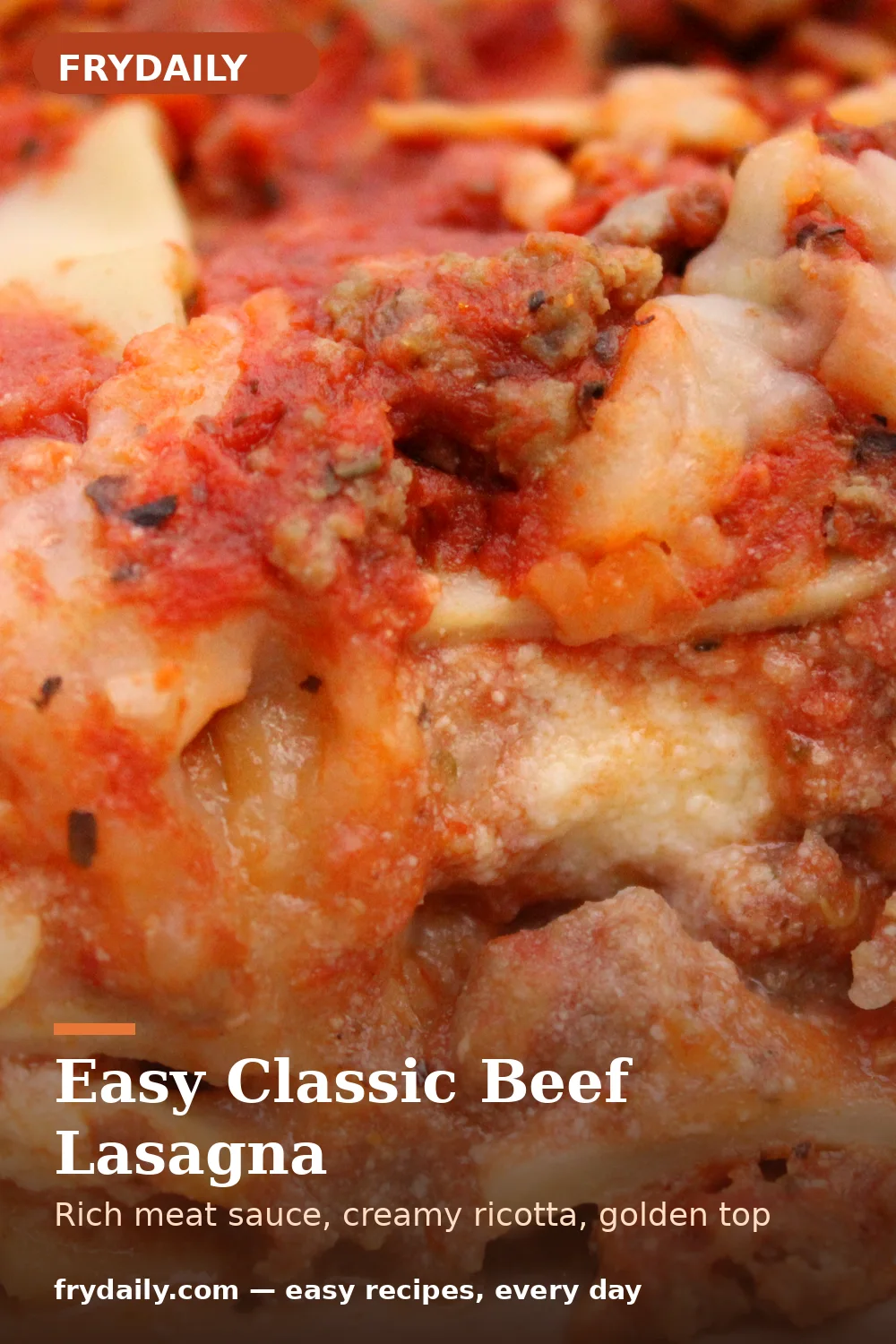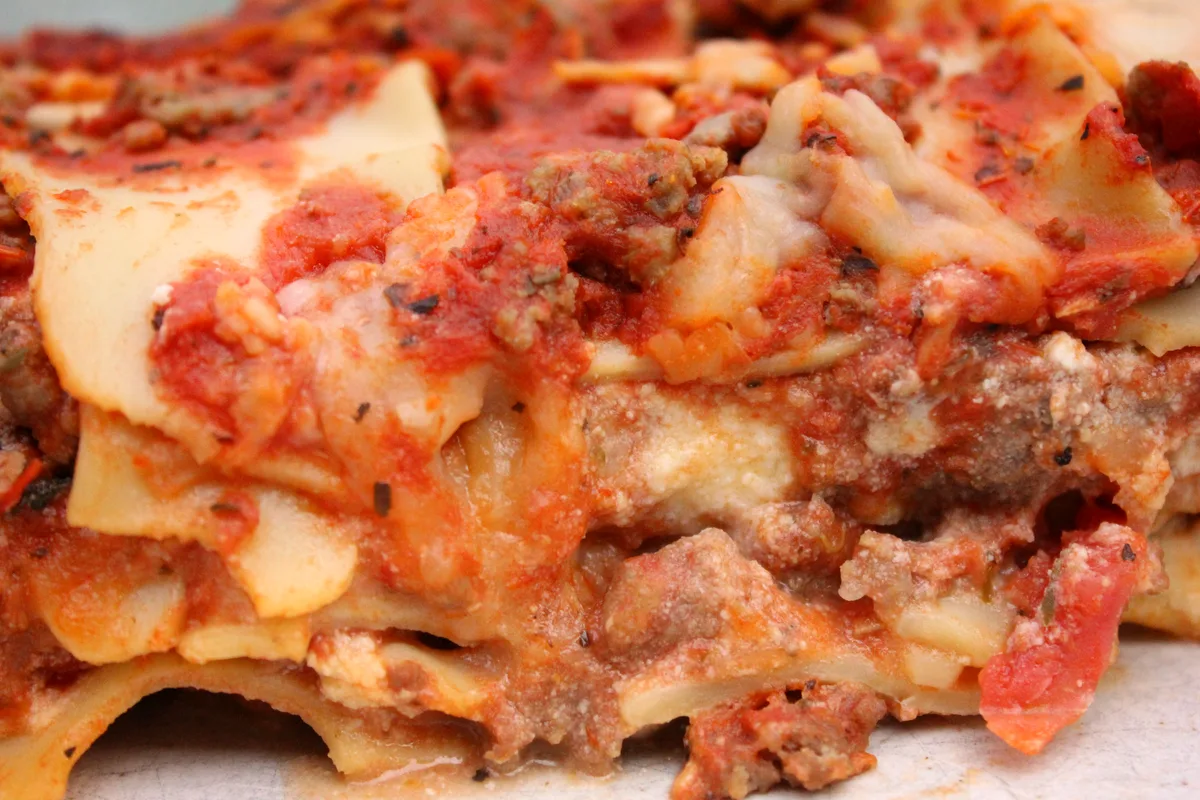
Lasagna has a reputation as an all-afternoon project, and the classic version earns it — boiling noodles, making béchamel, simmering sauce for hours. This is the weeknight-honest version that keeps everything people actually love about the dish: a rich, tomatoey beef sauce, a creamy ricotta layer seasoned like you mean it, noodles that cook in the sauce, and a top that goes golden and bubbling at the edges. Nobody at the table has ever asked whether the noodles were pre-boiled.
It anchors our Easy Dinners collection alongside our Baked Ziti, and the two are cousins — the ziti is faster and looser, this is the one for when you want clean slices and leftovers that reheat like a dream. Serve it with our Garlic Pull-Apart Bread and something green and sharp, and dinner is an event without being a production.
Two disciplines make it work. The sauce must be a little looser than you think — the no-boil noodles drink from it as they bake, and a dry sauce means crunchy noodle edges. And the finished lasagna must rest. Cut it at five minutes and it slumps into a delicious puddle; give it fifteen and it slices into the layered squares that make the leftovers worth fighting over.
The ricotta layer is a sauce, not a filling
Plain ricotta baked in a thick layer comes out grainy and bland, which is why so many people think they do not like it in lasagna. Beaten with an egg, Parmesan, salt and a splash of milk, it turns into something closer to a creamy sauce that sets softly as it bakes — rich, seasoned all the way through, and smooth against the pasta. Season it properly on its own: taste a spoonful before you assemble. If the ricotta tastes flat in the bowl, it will taste flat in the slice, because the pasta around it brings almost no salt of its own.
Assembly order matters more than people think
Sauce goes on the bare dish first — always — so the bottom noodles have something to drink and never weld themselves to the pan. From there it is noodles, ricotta, sauce, mozzarella, repeated, and the top layer finishes with sauce and a full blanket of cheese. Noodles that reach the edge of the dish should be broken to fit and tucked under sauce; any dry corner left exposed bakes into a crisp shard. It is edible, even enjoyable, but it is not the bite anyone wanted.
Ingredients
- 1 lb ground beef (450 g), 80 to 90 percent lean
- 1 medium yellow onion (about 150 g), finely diced
- 3 garlic cloves (about 9 g), minced
- 1 (24 oz) jar marinara sauce (680 g), a good plain one
- 1 (14 oz) can crushed tomatoes (400 g)
- 1 teaspoon dried Italian seasoning (2 g)
- 1 teaspoon kosher salt (6 g), divided, plus more to taste
- 1/2 teaspoon black pepper (1.5 g)
- 15 oz whole-milk ricotta (425 g)
- 1 large egg
- 1/2 cup grated Parmesan cheese (50 g), divided
- 2 tablespoons milk (30 ml)
- 9 oz no-boil lasagna noodles (255 g), about 12 sheets
- 3 cups shredded low-moisture mozzarella (340 g)
- 2 tablespoons chopped fresh parsley (8 g), to serve
Amounts are for the yield below. US customary measures first, grams in brackets for scale users.
Step-by-step instructions
- Brown the beef and build the sauce. Heat a large, deep skillet over medium-high heat and cook the beef, breaking it into small pieces, for 7 to 8 minutes until well browned with crispy edges. Spoon off all but a tablespoon of fat. Add the onion and cook for 4 minutes until soft, then stir in the garlic for 30 seconds. Add the marinara, crushed tomatoes, Italian seasoning, half the salt and the pepper. Simmer for 10 minutes — the sauce should be loose and spoonable, like a thick soup; add a splash of water if it looks dry, because the noodles will drink from it.
- Mix the ricotta layer. In a medium bowl, stir the ricotta, egg, half the Parmesan, the milk and the remaining salt together until smooth and evenly combined. Taste it — it should be clearly seasoned, almost a little salty on its own. Set aside; cold ricotta straight from the fridge is fine here, since it warms through in the oven.
- Heat the oven and prepare the dish. Heat the oven to 375°F (190°C). Spread 1 1/2 cups of the meat sauce (about 360 ml) evenly over the bottom of a 9 by 13 inch (23 by 33 cm) baking dish. This first layer is not optional — it is what cooks the bottom noodles and keeps the first slice from sticking.
- Layer the lasagna. Arrange a single layer of no-boil noodles over the sauce, breaking sheets to fit and slightly overlapping where needed. Spread over a third of the ricotta mixture, then 1 1/2 cups of sauce, then a third of the mozzarella. Repeat the layers twice more — noodles, ricotta, sauce, mozzarella — finishing with sauce and a full, generous layer of mozzarella and the remaining Parmesan on top.
- Bake covered, then uncovered. Cover the dish tightly with foil — tent it slightly so it does not touch the cheese — and bake for 30 minutes. Remove the foil and bake for another 20 to 25 minutes, until the sauce is bubbling up at the edges and the cheese is golden in patches. A noodle at the corner should feel completely tender when poked with a knife; if it resists, cover and give it 10 more minutes.
- Rest, then slice. Rest the lasagna on the counter for at least 15 minutes before cutting — 20 is better. The layers set, the sauce thickens, and the slices come out clean instead of sliding. Scatter with the parsley, cut into 8 generous squares, and serve. Leftovers, famously, are even better tomorrow.
Nutrition estimate
| Nutrient | Per serving |
|---|---|
| Calories | 548 kcal |
| Protein | 34 g |
| Carbohydrates | 38 g |
| Fat | 28 g |
| Saturated fat | 13 g |
| Sodium | 890 mg |
| Fiber | 4 g |
| Sugar | 8 g |
Nutrition figures are estimates calculated from standard ingredient data for the yield stated. Your actual values will vary with brands, substitutions and portion sizes — treat them as a guide, not a guarantee.
Storage & reheating
Covered in the refrigerator, lasagna keeps for up to 4 days and reheats beautifully: individual slices in a 350°F (177°C) oven for 20 minutes, covered, come back almost exactly as baked; the microwave works for a quick lunch but softens the top. It freezes exceptionally well — wrap the whole cooled dish or individual slices tightly and freeze for up to 3 months. Thaw overnight in the fridge before reheating. An assembled, unbaked lasagna can also wait in the fridge for a full day; add 10 minutes to the covered baking time.
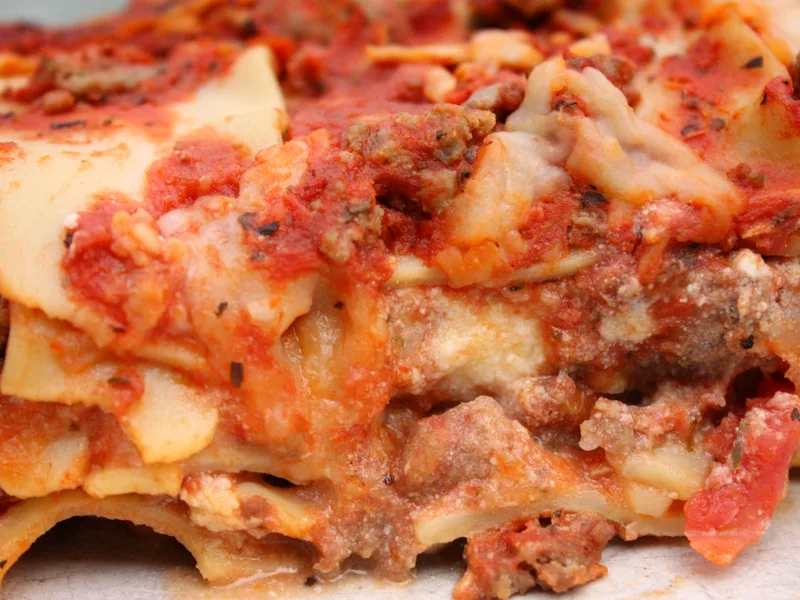
Easy Classic Beef Lasagna
Rich meat sauce, creamy ricotta, golden top — Sunday flavour, weeknight method.
Ingredients
Tick ingredients off as you prep, and tap a step below to mark it done as you cook. Scaling adjusts the listed amounts - seasoning to taste stays your call.
Instructions
- Brown the beef and build the sauce. Heat a large, deep skillet over medium-high heat and cook the beef, breaking it into small pieces, for 7 to 8 minutes until well browned with crispy edges. Spoon off all but a tablespoon of fat. Add the onion and cook for 4 minutes until soft, then stir in the garlic for 30 seconds. Add the marinara, crushed tomatoes, Italian seasoning, half the salt and the pepper. Simmer for 10 minutes — the sauce should be loose and spoonable, like a thick soup; add a splash of water if it looks dry, because the noodles will drink from it.
- Mix the ricotta layer. In a medium bowl, stir the ricotta, egg, half the Parmesan, the milk and the remaining salt together until smooth and evenly combined. Taste it — it should be clearly seasoned, almost a little salty on its own. Set aside; cold ricotta straight from the fridge is fine here, since it warms through in the oven.
- Heat the oven and prepare the dish. Heat the oven to 375°F (190°C). Spread 1 1/2 cups of the meat sauce (about 360 ml) evenly over the bottom of a 9 by 13 inch (23 by 33 cm) baking dish. This first layer is not optional — it is what cooks the bottom noodles and keeps the first slice from sticking.
- Layer the lasagna. Arrange a single layer of no-boil noodles over the sauce, breaking sheets to fit and slightly overlapping where needed. Spread over a third of the ricotta mixture, then 1 1/2 cups of sauce, then a third of the mozzarella. Repeat the layers twice more — noodles, ricotta, sauce, mozzarella — finishing with sauce and a full, generous layer of mozzarella and the remaining Parmesan on top.
- Bake covered, then uncovered. Cover the dish tightly with foil — tent it slightly so it does not touch the cheese — and bake for 30 minutes. Remove the foil and bake for another 20 to 25 minutes, until the sauce is bubbling up at the edges and the cheese is golden in patches. A noodle at the corner should feel completely tender when poked with a knife; if it resists, cover and give it 10 more minutes.
- Rest, then slice. Rest the lasagna on the counter for at least 15 minutes before cutting — 20 is better. The layers set, the sauce thickens, and the slices come out clean instead of sliding. Scatter with the parsley, cut into 8 generous squares, and serve. Leftovers, famously, are even better tomorrow.
Recipe by Ahsan ul Haq · FryDaily. Printing? This card is designed to print cleanly on its own.