A lemon bar should make you sit up a little. Too many are just sweet — a soft yellow square that tastes vaguely citrusy and mostly of sugar. The good ones, the ones that disappear from a bake-sale table first, have a filling that is properly tart, balanced right at the edge, over a shortbread crust that tastes of real butter and holds its edge when you pick the bar up. That balance is what this recipe is tuned for, and it comes from a simple commitment: a full cup of lemon juice and the zest, never bottled juice, never a timid quarter cup.
They sit in our Desserts collection for the cooks who like their sweets bright rather than heavy — the natural counterpoint to rich bakes like our Salted Caramel Brownies. The ingredient list is short enough to memorise, the method is two bowls and a whisk, and the only genuinely hard part is waiting for the pan to cool before you cut.
A thin layer of filling over a thick, sturdy crust is the other quiet decision here. It keeps the bar balanced and portable — filling that wobbles and slides has no place at a picnic — and it means the lemon flavour lands in a clean, intense layer instead of diluting through an inch of custard. Cut small, eat two.
Hot crust, warm filling — the bond that matters
Pour the lemon filling over the crust while the crust is still hot from its first bake. The heat does two jobs: it starts setting the bottom of the filling on contact, so the two layers bond instead of separating into a curd sheet sliding on a cookie, and it prevents the liquid filling from soaking down into the shortbread and turning it soft. It is a thirty-second timing detail that decides whether your bars have one clean bite or two layers falling apart, so have the filling whisked and ready before the crust comes out of the oven.
The jiggle tells you when they are done
Overbaked lemon bars crack, puff at the edges and turn rubbery; underbaked ones weep when cut. The target is a filling that looks set and matte at the edges with the faintest jiggle in the very centre when you nudge the pan — like set jelly, not like liquid. Residual heat finishes the centre as the pan cools. If the surface has browned more than a faint golden freckling, the bars went a few minutes too long; they will still taste good, but pull the next batch earlier.
Ingredients
- 1 cup unsalted butter (226 g), melted
- 2 cups all-purpose flour (240 g), divided
- 2 1/4 cups granulated sugar (450 g), divided
- 1/2 teaspoon kosher salt (3 g), divided
- 1 teaspoon vanilla extract (5 ml)
- 4 large eggs, at room temperature
- 1 cup fresh lemon juice (240 ml), from about 5 lemons
- 1 tablespoon lemon zest (6 g), finely grated
- 2 tablespoons powdered sugar (16 g), for dusting
Amounts are for the yield below. US customary measures first, grams in brackets for scale users.
Step-by-step instructions
- Heat the oven and line the pan. Heat the oven to 350°F (177°C). Line a 9 by 13 inch (23 by 33 cm) baking pan with parchment paper, leaving an overhang on the long sides so the whole slab lifts out cleanly later. Lemon bars cut far more neatly as a lifted slab than dug out of a pan square by square.
- Make and bake the shortbread crust. In a medium bowl, stir the melted butter, 1 3/4 cups (210 g) of the flour — hold back the remaining 1/4 cup (30 g) for the filling — along with 1/2 cup (100 g) of the granulated sugar, a pinch of the salt and the vanilla, until a soft dough forms. Press it firmly and evenly into the lined pan, building a slight rim at the edges. Bake for 18 to 20 minutes, until the edges are just turning golden.
- Whisk the lemon filling. While the crust bakes, whisk the eggs and the remaining 1 3/4 cups (350 g) of granulated sugar in a large bowl until smooth and slightly thickened. Whisk in the lemon juice and zest, then the remaining 1/4 cup flour (30 g) and the remaining salt, until no flour streaks remain. Whisk gently at the end — you want the flour incorporated, not a bowl full of foam, which bakes into bubbles on the surface.
- Fill the hot crust and bake again. The moment the crust comes out, give the filling one last whisk and pour it over the hot crust. Return the pan to the oven and bake for 18 to 22 minutes, until the edges look set and the centre has only the faintest jiggle when nudged. Do not wait for browning; a pale, matte surface is correct.
- Cool completely, then chill. Cool the pan on a rack for at least 1 hour at room temperature, then refrigerate for at least 1 hour more. Lemon filling firms and its flavour sharpens as it chills, and warm bars cut ragged no matter how sharp the knife. This waiting is part of the recipe, not a serving suggestion.
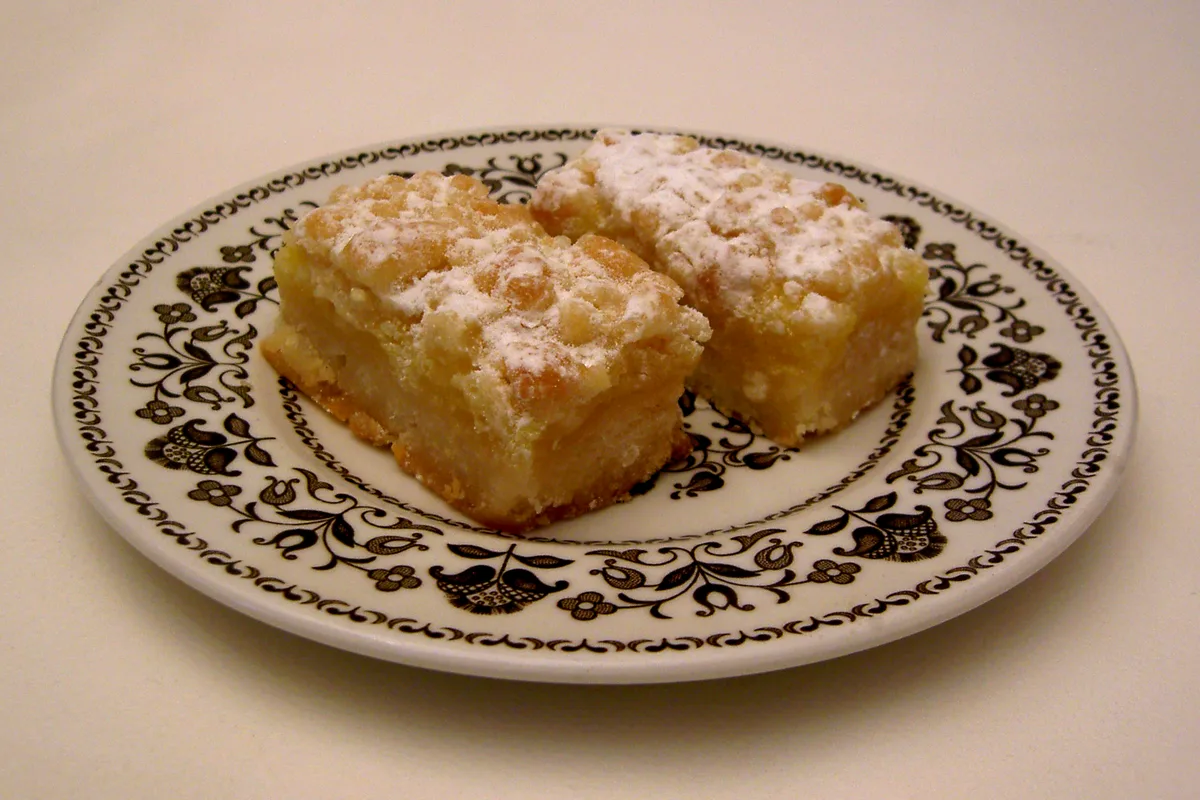
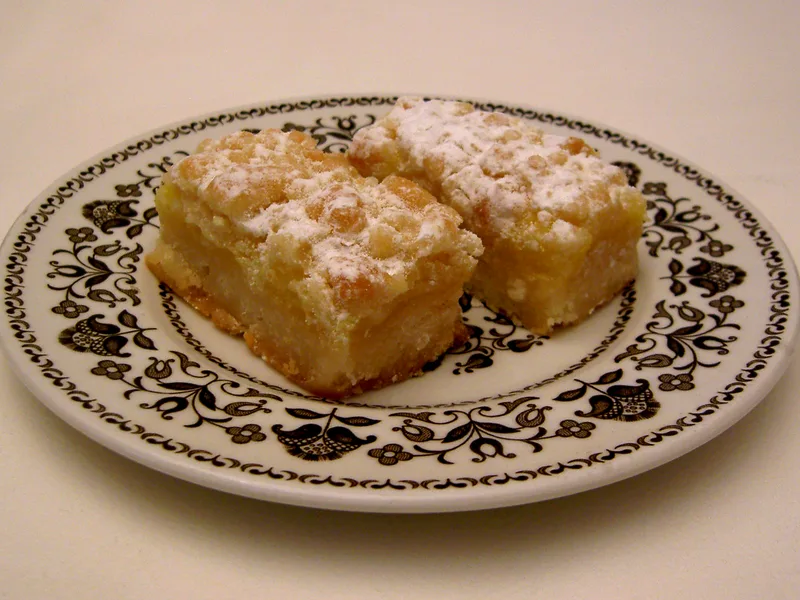
- Lift, dust and cut. Use the parchment overhang to lift the slab onto a board. Dust generously with the powdered sugar — through a small sieve for the even, snowy finish in the photograph — then cut into 16 bars with a long knife, wiping the blade clean between cuts. Serve chilled or at cool room temperature.
Nutrition estimate
| Nutrient | Per serving |
|---|---|
| Calories | 212 kcal |
| Protein | 2 g |
| Carbohydrates | 32 g |
| Fat | 9 g |
| Saturated fat | 5 g |
| Sodium | 88 mg |
| Fiber | 0 g |
| Sugar | 24 g |
Nutrition figures are estimates calculated from standard ingredient data for the yield stated. Your actual values will vary with brands, substitutions and portion sizes — treat them as a guide, not a guarantee.
Storage & reheating
Lemon bars keep in an airtight container in the refrigerator for up to 5 days, with parchment between layers — the filling is a baked custard and should stay chilled. The powdered sugar slowly absorbs into the surface over a day or two, so give stored bars a fresh dusting before serving and they will look newly made. They freeze well for up to 3 months, wrapped individually; thaw in the fridge and dust again.
Easy Lemon Bars with Shortbread Crust
Buttery shortbread, bright lemon curd, a snowfall of sugar.
Ingredients
Tick ingredients off as you prep, and tap a step below to mark it done as you cook. Scaling adjusts the listed amounts - seasoning to taste stays your call.
Instructions
- Heat the oven and line the pan. Heat the oven to 350°F (177°C). Line a 9 by 13 inch (23 by 33 cm) baking pan with parchment paper, leaving an overhang on the long sides so the whole slab lifts out cleanly later. Lemon bars cut far more neatly as a lifted slab than dug out of a pan square by square.
- Make and bake the shortbread crust. In a medium bowl, stir the melted butter, 1 3/4 cups (210 g) of the flour — hold back the remaining 1/4 cup (30 g) for the filling — along with 1/2 cup (100 g) of the granulated sugar, a pinch of the salt and the vanilla, until a soft dough forms. Press it firmly and evenly into the lined pan, building a slight rim at the edges. Bake for 18 to 20 minutes, until the edges are just turning golden.
- Whisk the lemon filling. While the crust bakes, whisk the eggs and the remaining 1 3/4 cups (350 g) of granulated sugar in a large bowl until smooth and slightly thickened. Whisk in the lemon juice and zest, then the remaining 1/4 cup flour (30 g) and the remaining salt, until no flour streaks remain. Whisk gently at the end — you want the flour incorporated, not a bowl full of foam, which bakes into bubbles on the surface.
- Fill the hot crust and bake again. The moment the crust comes out, give the filling one last whisk and pour it over the hot crust. Return the pan to the oven and bake for 18 to 22 minutes, until the edges look set and the centre has only the faintest jiggle when nudged. Do not wait for browning; a pale, matte surface is correct.
- Cool completely, then chill. Cool the pan on a rack for at least 1 hour at room temperature, then refrigerate for at least 1 hour more. Lemon filling firms and its flavour sharpens as it chills, and warm bars cut ragged no matter how sharp the knife. This waiting is part of the recipe, not a serving suggestion.
- Lift, dust and cut. Use the parchment overhang to lift the slab onto a board. Dust generously with the powdered sugar — through a small sieve for the even, snowy finish in the photograph — then cut into 16 bars with a long knife, wiping the blade clean between cuts. Serve chilled or at cool room temperature.
Recipe by Ahsan ul Haq · FryDaily. Printing? This card is designed to print cleanly on its own.