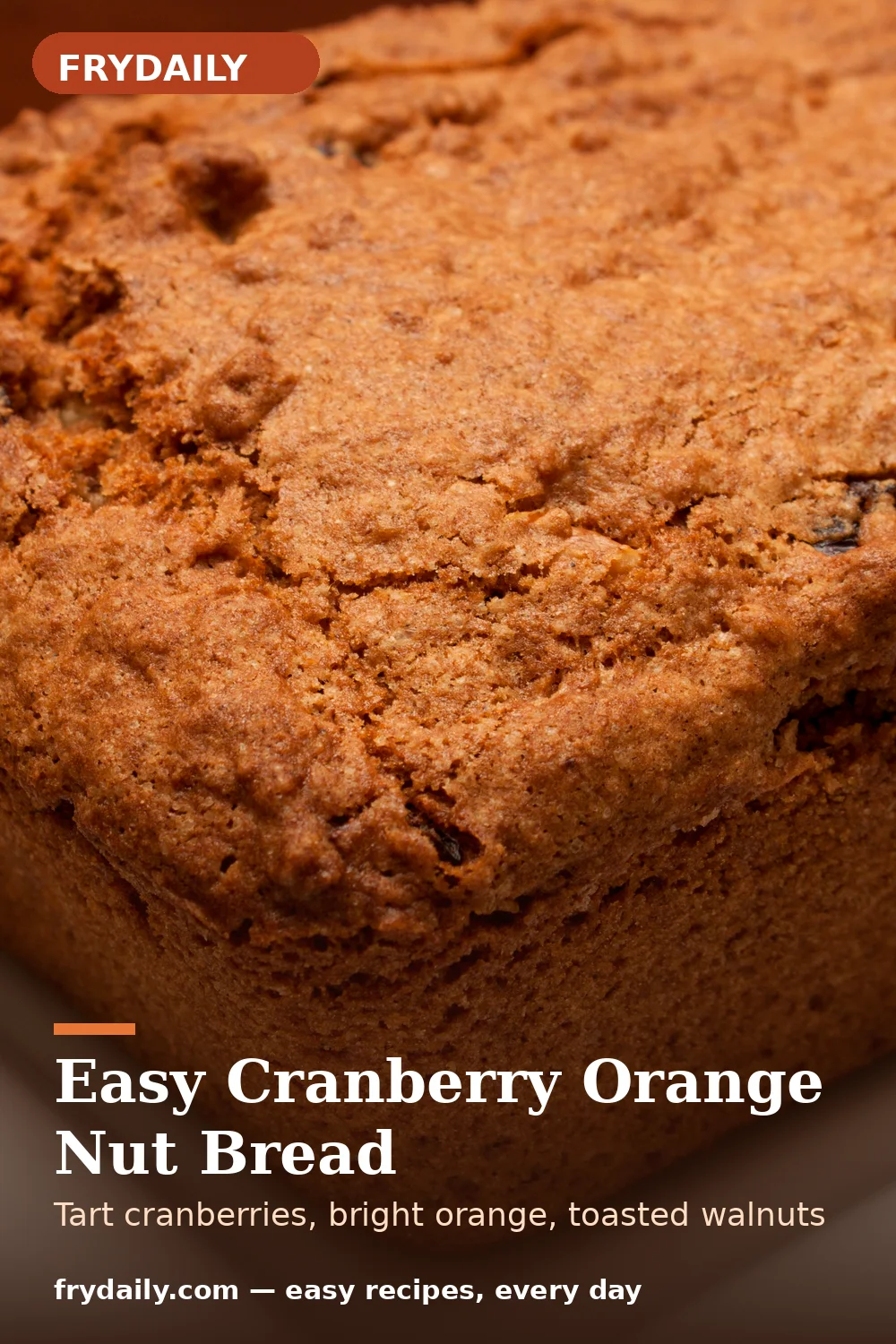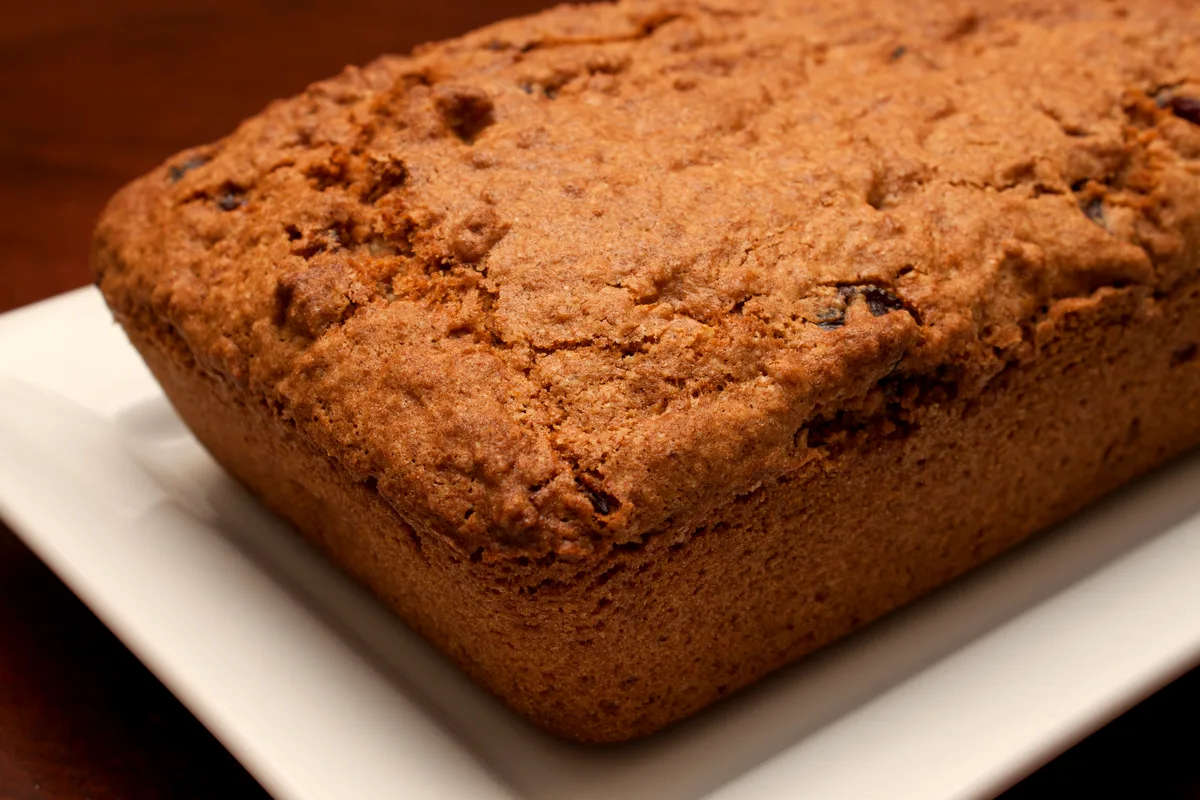
Cranberry and orange are the pairing that announces the holidays before a single decoration goes up, and this loaf is the easiest way to get them on the table. Fresh cranberries keep their tart bite instead of melting into jam, orange zest and juice perfume the whole crumb, and toasted walnuts add the crunch that stops a fruit loaf from feeling one-note. It is a one-bowl quick bread — no yeast, no mixer, no creaming — and it bakes into exactly the loaf in the photograph: a tall, deeply golden 9 by 5-inch loaf with a craggy top, dark cranberries peeking through the crust, served whole on a plate and sliced at the table.
The trick to a loaf that stays tender rather than turning into a brick is restraint. You stir the wet and dry ingredients together only until the flour disappears, and then you stop, because every extra stroke develops gluten and tightens the crumb. The cranberries go in last, halved so they distribute instead of sinking in clumps, and the walnuts are toasted first so they taste like walnuts rather than damp cardboard. Freshly squeezed juice gives a brighter flavour that survives an hour in the oven.
This is a loaf that earns its place in the run-up to Thanksgiving, when cranberries are cheap and plentiful and every host needs something that can be baked a day ahead. It joins our Desserts collection alongside our banana bread with walnuts, and if you want another spiced loaf for the same table, our chocolate chip pumpkin bread bakes in the same pan. Serve it warm with butter for breakfast, or plain with coffee after dinner — it is equally at home in both roles.
Toast the walnuts first
Raw walnuts taste flat in a baked loaf, and they soften to a damp texture by the second day. Ten minutes in a 350°F (177°C) oven, or a few minutes in a dry skillet over medium heat, changes that completely: the nuts turn fragrant and stay crunchy in the crumb. Let them cool before chopping, or the warm nuts will smear rather than chop cleanly. For a nut allergy, leave the walnuts out and add an extra 1/4 cup (25 g) of cranberries — the loaf is still excellent, just a little less textured.
Halve the cranberries so they stay put
Whole cranberries are heavy for a quick-bread batter, and they tend to sink to the bottom of the pan or burst in pockets that make the loaf wet. Halving them takes two minutes and solves both problems: the halves distribute evenly and every slice gets cranberries instead of a cranberry layer at the base. Toss the halved berries in a spoonful of flour before folding them in, so they grip the batter rather than slide through it.
Ingredients
- 2 cups all-purpose flour (240 g)
- 1 cup granulated sugar (200 g)
- 1 1/2 teaspoons baking powder (6 g)
- 1/2 teaspoon baking soda (3 g)
- 1/2 teaspoon fine salt (3 g)
- 1 tablespoon orange zest (6 g), from 1 large orange
- 3/4 cup fresh orange juice (180 ml)
- 1/2 cup unsalted butter (115 g), melted and slightly cooled
- 1 large egg (50 g)
- 1 teaspoon vanilla extract (5 ml)
- 1 1/2 cups fresh cranberries (150 g), halved
- 3/4 cup chopped walnuts (90 g), toasted
Amounts are for the yield below. US customary measures first, grams in brackets for scale users.
Step-by-step instructions
- Heat the oven and prep the pan. Heat the oven to 350°F (177°C). Grease a 9 by 5-inch loaf pan and line it with a parchment strip overhanging the two long sides, so the loaf lifts out cleanly. Zest the orange before you juice it, and measure out the juice.
- Whisk the dry ingredients. Whisk the flour, sugar, baking powder, baking soda and salt together in a large bowl until they are evenly combined and no pockets of baking soda remain. Stir in the orange zest, rubbing it into the flour with your fingertips for a few seconds; that friction releases the oils in the zest and perfumes the whole bowl.
- Whisk the wet ingredients. In a second bowl or large measuring jug, whisk the orange juice, melted butter, egg and vanilla until smooth. The butter should be only warm, not hot — hot butter will scramble the egg.
- Combine, briefly. Pour the wet ingredients into the dry and stir with a spatula just until the flour disappears. A few small lumps are fine and expected; this is the moment to stop, not to chase smoothness. Overmixing is the single most common reason a quick bread turns tough, and you cannot undo it once the gluten has developed.
- Fold in the cranberries and walnuts. Toss the halved cranberries in a spoonful of the flour mixture if you like, then fold them and the toasted walnuts into the batter with three or four gentle strokes. Scrape the batter into the prepared pan and smooth the top, then run the spatula down the centre of the batter to make a shallow groove — it helps the loaf split evenly along the top as it rises instead of cracking to one side.
- Bake until deeply golden. Bake for 55 to 65 minutes, until the top is deeply golden like the loaf in the photograph and a skewer inserted in the centre comes out with a few moist crumbs but no wet batter. If the top browns too fast after 40 minutes, lay foil loosely over the pan. Do not open the oven door in the first 30 minutes, when the loaf is doing most of its rising.
- Cool, then slice. Cool the loaf in the pan for 15 minutes, then lift it out by the parchment and cool completely on a rack, at least 1 hour, before slicing. Cutting a hot quick bread compresses the crumb and leaves it gummy. Slice with a serrated knife using a gentle sawing motion, and serve plain, or warm a slice briefly and butter it.
Nutrition estimate
| Nutrient | Per serving |
|---|---|
| Calories | 310 kcal |
| Protein | 5 g |
| Carbohydrates | 42 g |
| Fat | 14 g |
| Saturated fat | 5 g |
| Sodium | 210 mg |
| Fiber | 2 g |
| Sugar | 22 g |
Nutrition figures are estimates calculated from standard ingredient data for the yield stated. Your actual values will vary with brands, substitutions and portion sizes — treat them as a guide, not a guarantee.
Storage & reheating
Wrapped tightly in plastic wrap or foil, the loaf keeps at room temperature for up to 3 days and in the refrigerator for up to 1 week — bring refrigerated slices to room temperature or warm them briefly before serving. It freezes beautifully for up to 3 months: wrap the cooled loaf in plastic wrap, then foil, and thaw overnight in the refrigerator. Nutrition figures are estimates per slice and vary with the size of the slices; estimates vary.
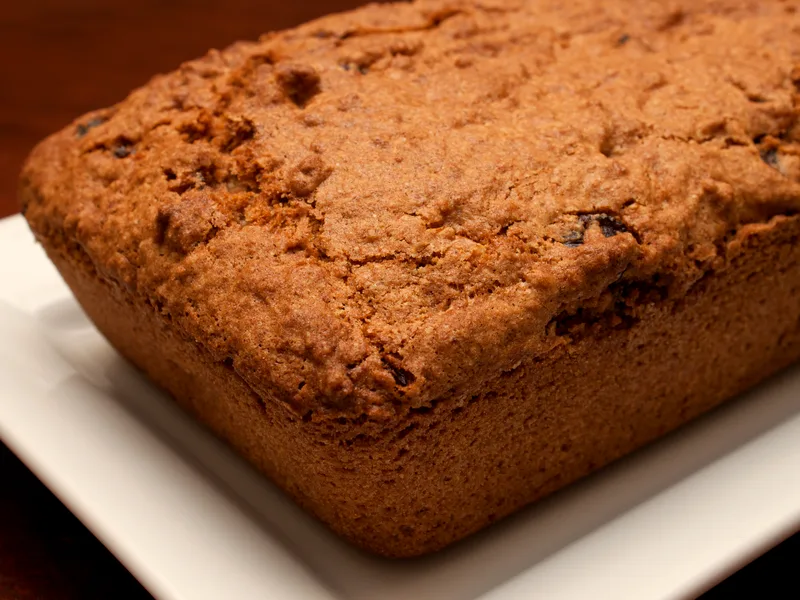
Easy Cranberry Orange Nut Bread
Tart cranberries, bright orange, toasted walnuts
Ingredients
Tick ingredients off as you prep, and tap a step below to mark it done as you cook. Scaling adjusts the listed amounts - seasoning to taste stays your call.
Instructions
- Heat the oven and prep the pan. Heat the oven to 350°F (177°C). Grease a 9 by 5-inch loaf pan and line it with a parchment strip overhanging the two long sides, so the loaf lifts out cleanly. Zest the orange before you juice it, and measure out the juice.
- Whisk the dry ingredients. Whisk the flour, sugar, baking powder, baking soda and salt together in a large bowl until they are evenly combined and no pockets of baking soda remain. Stir in the orange zest, rubbing it into the flour with your fingertips for a few seconds; that friction releases the oils in the zest and perfumes the whole bowl.
- Whisk the wet ingredients. In a second bowl or large measuring jug, whisk the orange juice, melted butter, egg and vanilla until smooth. The butter should be only warm, not hot — hot butter will scramble the egg.
- Combine, briefly. Pour the wet ingredients into the dry and stir with a spatula just until the flour disappears. A few small lumps are fine and expected; this is the moment to stop, not to chase smoothness. Overmixing is the single most common reason a quick bread turns tough, and you cannot undo it once the gluten has developed.
- Fold in the cranberries and walnuts. Toss the halved cranberries in a spoonful of the flour mixture if you like, then fold them and the toasted walnuts into the batter with three or four gentle strokes. Scrape the batter into the prepared pan and smooth the top, then run the spatula down the centre of the batter to make a shallow groove — it helps the loaf split evenly along the top as it rises instead of cracking to one side.
- Bake until deeply golden. Bake for 55 to 65 minutes, until the top is deeply golden like the loaf in the photograph and a skewer inserted in the centre comes out with a few moist crumbs but no wet batter. If the top browns too fast after 40 minutes, lay foil loosely over the pan. Do not open the oven door in the first 30 minutes, when the loaf is doing most of its rising.
- Cool, then slice. Cool the loaf in the pan for 15 minutes, then lift it out by the parchment and cool completely on a rack, at least 1 hour, before slicing. Cutting a hot quick bread compresses the crumb and leaves it gummy. Slice with a serrated knife using a gentle sawing motion, and serve plain, or warm a slice briefly and butter it.
Recipe by Ahsan ul Haq · FryDaily. Printing? This card is designed to print cleanly on its own.