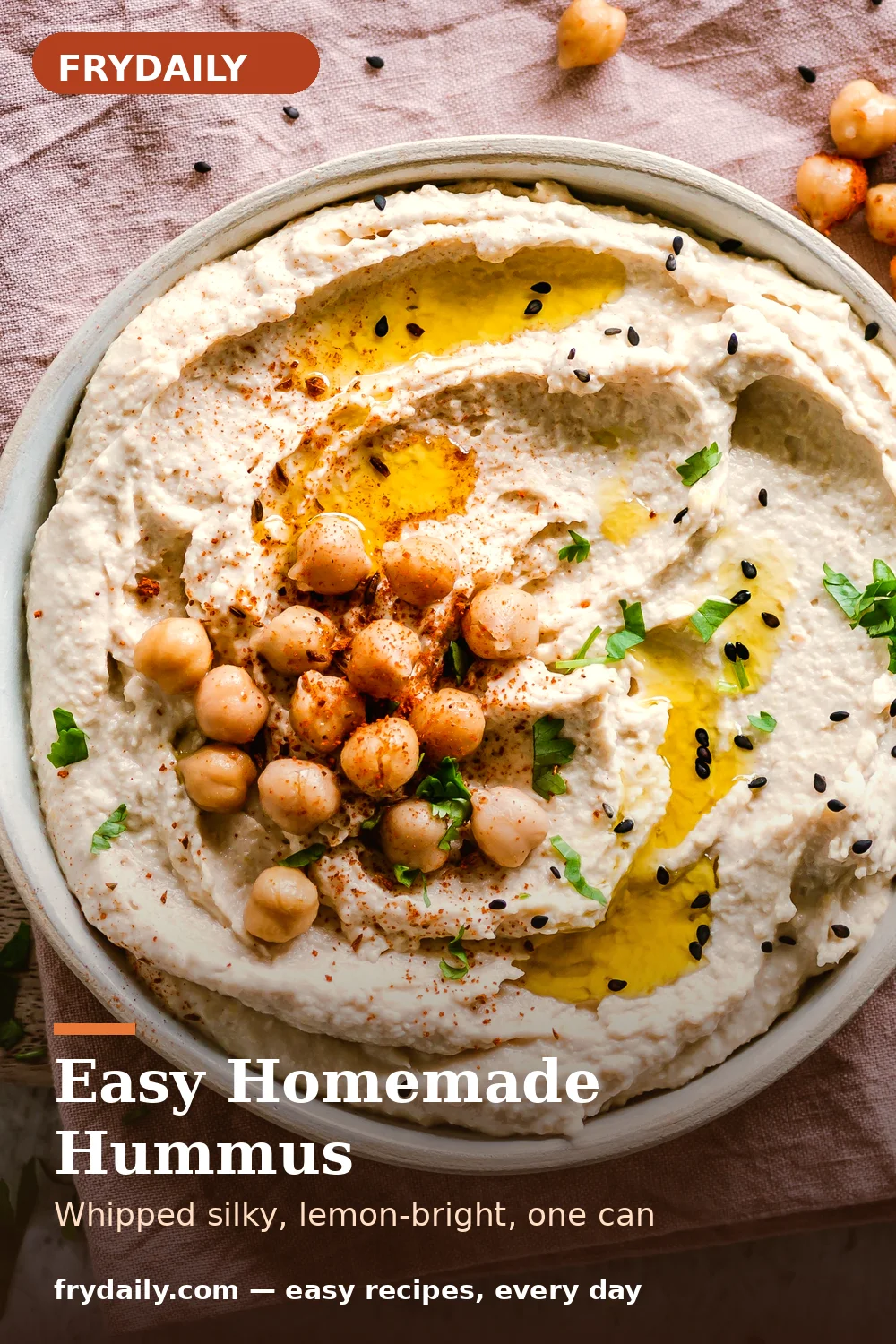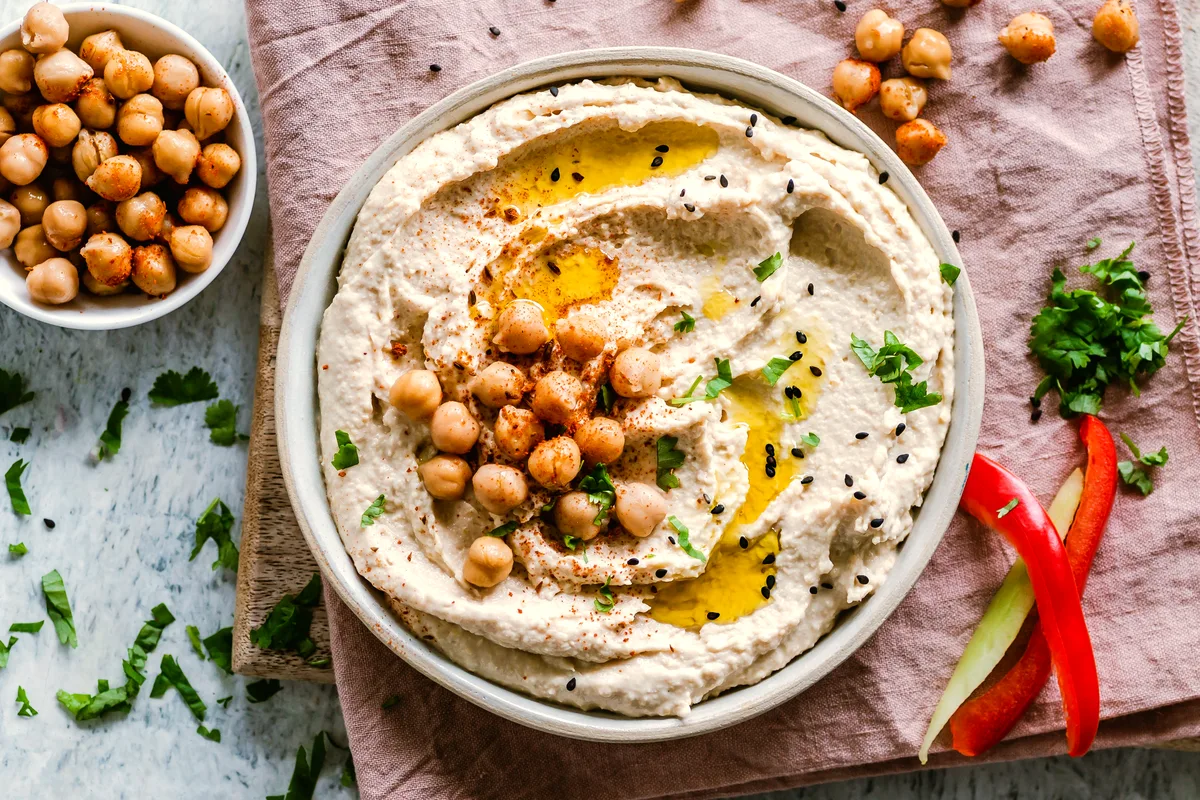
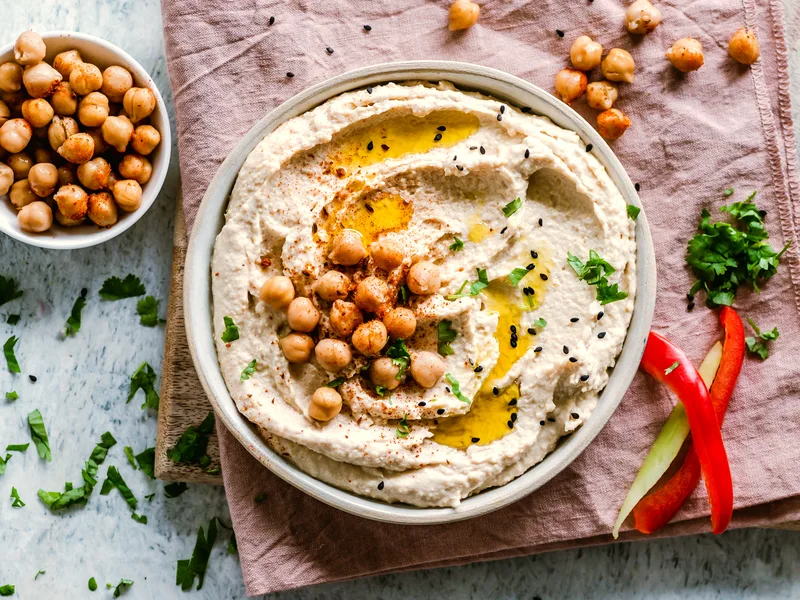
Good hummus is a texture before it is a flavour: whipped until it holds soft peaks, pale and silky, with lemon up front and olive oil pooling in the swirl. The photograph shows the bowl we are aiming at — hummus dragged into a swoop with the back of a spoon, whole chickpeas scattered over, paprika and herbs, oil shining in the low places. A can of chickpeas and fifteen minutes stand between the pantry and that bowl.
It anchors our Snacks & Sides shelf with Homemade Guacamole and Warm Spinach Artichoke Dip — the dip rotation. Where guacamole races the clock once it is made, hummus improves overnight, which makes it the dip to make ahead for people coming, for lunches, and for the snack plate that becomes dinner.
The method below borrows the two moves that separate whipped hummus from merely blended chickpeas: the tahini is whipped with lemon first, before any chickpeas arrive, and ice water is drizzled in while the processor runs. Everything else — garlic restraint, cumin, the toppings — is support for those two decisions.
Whip the tahini first
Tahini whipped alone with lemon juice and salt for a full minute turns pale, thick and almost fluffy — an emulsion that stays stable when the chickpeas join. Hummus made by throwing everything in together is reliably heavier and grainier, because the tahini never gets its moment. Use a good tahini, the runny kind that pours like thin peanut butter, and stir the jar well before measuring: the oil separates in storage, and a scoop of the dry solids from the bottom will make a pasty dip no amount of water quite rescues.
Ice water is the fluffiness
The difference between dense hummus and the whipped kind is water — added cold, added slowly, with the processor running. Two to three tablespoons of ice water (or the cold reserved chickpea liquid) lighten the mixture visibly as it blends, and a full two minutes of processing after everything is in gives the silkiest result. Judge consistency in the bowl, not the processor: hummus thickens slightly as it sits, so stop when it looks a shade softer than the photograph's swoop.
The garlic rule: less than you think
Raw garlic grows stronger as hummus sits, and a dip that tastes balanced at noon can bully the whole plate by evening. One small clove is the written amount on purpose. If your garlic is fierce, or you are making the hummus a day ahead, drop the clove into the lemon juice for ten minutes first — the acid takes the raw edge off while keeping the flavour.
Ingredients
- 1 (15 oz) can chickpeas (425 g), drained, a few whole chickpeas reserved to serve
- 1/4 cup chickpea liquid or ice water (60 ml), plus more as needed
- 1/3 cup tahini (80 g), well stirred
- 3 tablespoons fresh lemon juice (45 ml), from about 1 large lemon
- 1 small garlic clove (about 3 g), grated or crushed
- 1/2 teaspoon ground cumin (1.3 g)
- 1/2 teaspoon fine salt (3 g), plus more to taste
- 2 tablespoons extra-virgin olive oil (30 ml), plus more to serve
- 1/2 teaspoon paprika (1.2 g), to serve
- 1 tablespoon chopped fresh parsley (4 g), to serve
Amounts are for the yield below. US customary measures first, grams in brackets for scale users.
Step-by-step instructions
- Whip the tahini base. Put the tahini, lemon juice and salt in a food processor and blend for 1 full minute, scraping down once, until pale, thick and whipped. This base is where the silkiness is built — do not shorten the minute.
- Add the aromatics and oil. Add the garlic and cumin and blend for 30 seconds, then drizzle in the olive oil with the motor running and blend until it disappears into the emulsion.
- Add the chickpeas in two lots. Add half the drained chickpeas and process for 1 minute, then the rest and process for 1 minute more, scraping the bowl down between lots. Two lots keep the mixture moving so it blends evenly instead of riding around in a lump.
- Whip with ice water. With the processor running, drizzle in the chickpea liquid or ice water a tablespoon at a time until the hummus is smooth, pale and softly whipped — about 3 to 5 tablespoons (45 to 75 ml) in total. Let it run 1 final minute. Taste and correct the salt and lemon; hummus should be brighter than you expect, because chilling dulls it.
- Swirl and serve. Spoon the hummus into a shallow bowl and drag the back of the spoon around in a spiral to make the swoop from the photograph. Pool olive oil in the swirl, scatter the reserved whole chickpeas, dust with paprika and finish with parsley. Serve with warm pita, cut vegetables, or as the base of a grain bowl.
Nutrition estimate
| Nutrient | Per serving |
|---|---|
| Calories | 148 kcal |
| Protein | 5 g |
| Carbohydrates | 12 g |
| Fat | 10 g |
| Saturated fat | 1 g |
| Sodium | 240 mg |
| Fiber | 3 g |
| Sugar | 2 g |
Nutrition figures are estimates calculated from standard ingredient data for the yield stated. Your actual values will vary with brands, substitutions and portion sizes — treat them as a guide, not a guarantee.
Storage & reheating
Hummus keeps in an airtight container in the refrigerator for up to 5 days, with a thin film of olive oil over the surface to keep it from drying; stir before serving and refresh with a squeeze of lemon. It freezes for up to 1 month — thaw overnight in the fridge and whisk in a teaspoon of ice water to restore the whipped texture. The toppings are best added fresh at serving, though the hummus underneath only improves as the flavours settle.
Easy Homemade Hummus
Whipped silky, lemon-bright, swirled with olive oil — from one can.
Ingredients
Tick ingredients off as you prep, and tap a step below to mark it done as you cook. Scaling adjusts the listed amounts - seasoning to taste stays your call.
Instructions
- Whip the tahini base. Put the tahini, lemon juice and salt in a food processor and blend for 1 full minute, scraping down once, until pale, thick and whipped. This base is where the silkiness is built — do not shorten the minute.
- Add the aromatics and oil. Add the garlic and cumin and blend for 30 seconds, then drizzle in the olive oil with the motor running and blend until it disappears into the emulsion.
- Add the chickpeas in two lots. Add half the drained chickpeas and process for 1 minute, then the rest and process for 1 minute more, scraping the bowl down between lots. Two lots keep the mixture moving so it blends evenly instead of riding around in a lump.
- Whip with ice water. With the processor running, drizzle in the chickpea liquid or ice water a tablespoon at a time until the hummus is smooth, pale and softly whipped — about 3 to 5 tablespoons (45 to 75 ml) in total. Let it run 1 final minute. Taste and correct the salt and lemon; hummus should be brighter than you expect, because chilling dulls it.
- Swirl and serve. Spoon the hummus into a shallow bowl and drag the back of the spoon around in a spiral to make the swoop from the photograph. Pool olive oil in the swirl, scatter the reserved whole chickpeas, dust with paprika and finish with parsley. Serve with warm pita, cut vegetables, or as the base of a grain bowl.
Recipe by Ahsan ul Haq · FryDaily. Printing? This card is designed to print cleanly on its own.