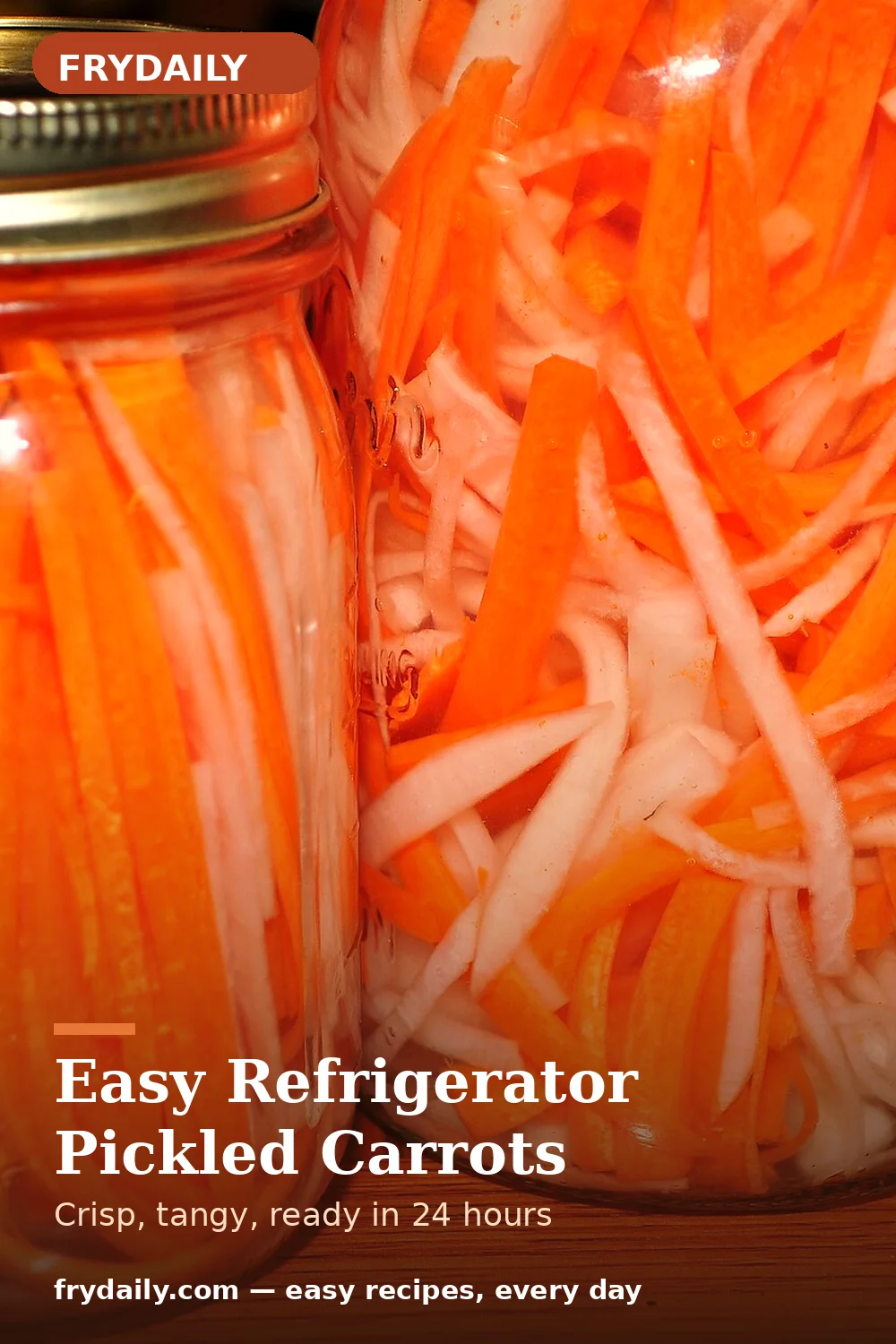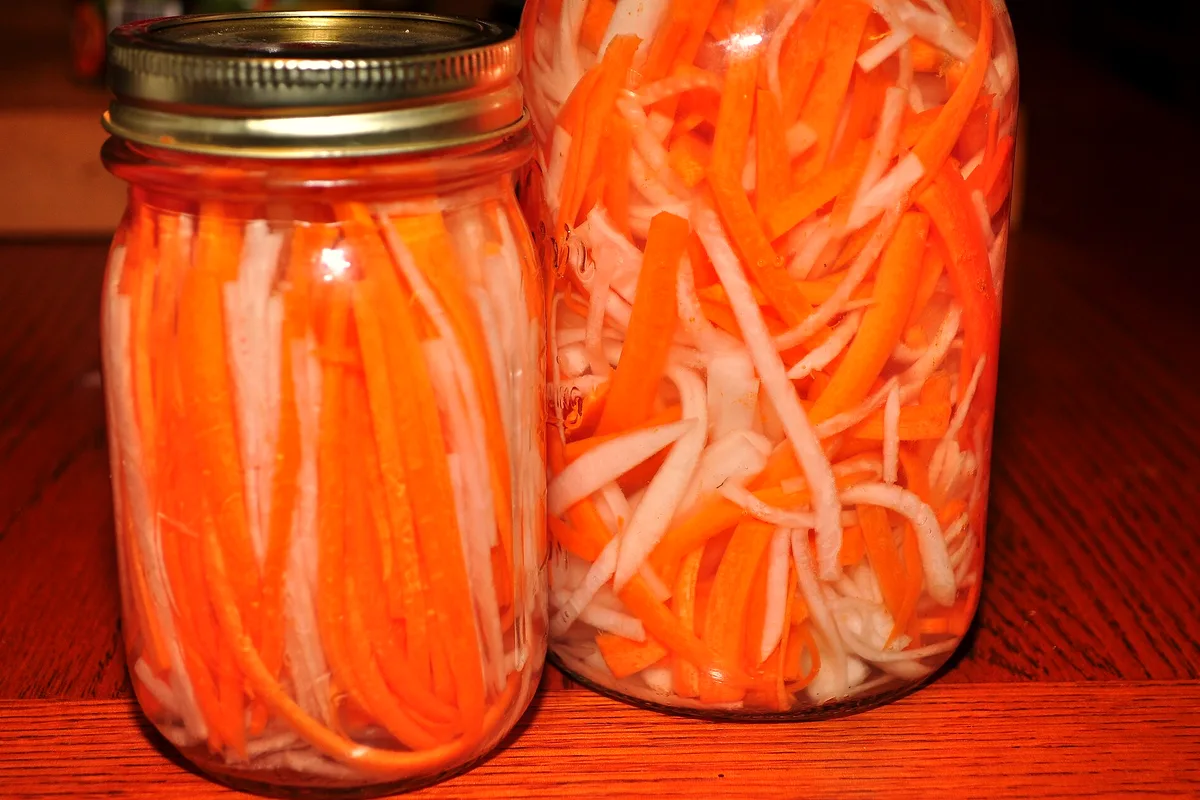
Pickled carrots are the jar to reach for when a plate needs brightness: crisp, tangy sticks that sit happily alongside sandwiches, cheese and grilled meats, and improve a plain salad the moment they are scattered over it. This refrigerator version needs no canning kettle and no processing. You cut the carrots, warm a vinegar brine with garlic, dill seed and a little sugar, pour it over, and let the fridge do the rest. In 24 hours they are pickled; in three days they are at their best.
One label matters here, in the same spirit as our Easy Refrigerator Pickled Beets: these carrots are not processed and are not shelf-stable. They live in the refrigerator for their whole life, and in return they keep the snap that long processing would soften. For pantry storage, follow only a current tested recipe from the USDA or the National Center for Home Food Preservation, exactly as written. Our Canning and Preserving collection keeps that distinction plain on every page, because it is the distinction that keeps preserving safe.
Cut the carrots into sticks of a similar thickness so they pickle at the same rate. Thin coins are ready sooner and suit salads; thicker sticks keep more crunch for snacking and cheese boards. Either shape works in the same brine and the same jar, so choose by how you plan to eat them rather than by habit.
Warm brine, crisp carrots — do not cook them in it
The brine should come to a simmer only long enough to dissolve the sugar and salt and bloom the spices, then go over the raw carrot sticks while it is warm. That warmth helps the brine start penetrating the surface of the carrots, so the pickled flavour goes deeper in the first day, but the carrots themselves never cook. If you simmer the carrots in the brine, even for a few minutes, they lose the raw snap that makes a refrigerator pickle worth making, and no amount of chilling will bring it back.
Give the jar a full day before you judge it
At four hours these carrots taste like carrots in vinegar, which has put more than one cook off a perfectly good jar. At 24 hours the garlic and dill have moved into the sticks and the sharp edge has rounded off, and at three days the brine and the vegetable taste like one thing instead of two. Leave the sealed jar alone for the first day, then taste one stick a day until they hit the balance you like. They keep improving gently for about a week and hold well for a month.
Ingredients
- 1 lb carrots (450 g), peeled and cut into sticks
- 3 garlic cloves (about 9 g), lightly crushed
- 1 teaspoon dill seeds (2 g)
- 1 teaspoon mustard seeds (3 g)
- 1/2 teaspoon black peppercorns (1.5 g)
- 1 cup white wine vinegar or apple cider vinegar (240 ml), 5 percent acidity
- 1 cup water (240 ml)
- 1 tablespoon granulated sugar (12 g)
- 1 tablespoon kosher salt (18 g)
- 2 sprigs fresh dill (about 6 g), optional
Amounts are for the yield below. US customary measures first, grams in brackets for scale users.
Step-by-step instructions
- Prepare the carrots. Peel the carrots and cut them into sticks about 3 inches long and 1/3 inch thick, keeping the thickness as even as you can so they pickle at the same rate. For salad coins, slice them into rounds about 1/8 inch thick instead.
- Pack the jar. Set the garlic, dill seeds, mustard seeds, peppercorns and fresh dill if using in the bottom of a clean 1-quart (950 ml) glass jar. Pack the carrot sticks in upright and snugly, leaving 1/2 inch of headspace at the top.
- Make the warm brine. Combine the vinegar, water, sugar and salt in a small saucepan. Bring to a simmer over medium heat, stirring until the sugar and salt dissolve completely, then take the pan straight off the heat. Do not add the carrots to the pan.
- Brine the carrots. Pour the warm brine slowly over the carrots in the jar, making sure every stick is covered and tapping the jar gently on the counter to release any air pockets. Top up with a little extra vinegar if any carrot tips sit above the liquid.
- Cool, then chill. Let the jar cool to room temperature with the lid resting loosely on top, then seal it properly and move it to the refrigerator. Cooling on the counter first keeps condensation from diluting the brine at the surface.
- Wait, then serve. Refrigerate for at least 24 hours before serving, and ideally 3 days for the fullest flavour. Serve the sticks cold as a snack, with sandwiches and cheese boards, or chopped into salads and grain bowls.
Nutrition estimate
| Nutrient | Per serving |
|---|---|
| Calories | 35 kcal |
| Protein | 1 g |
| Carbohydrates | 8 g |
| Fat | 0 g |
| Saturated fat | 0 g |
| Sodium | 560 mg |
| Fiber | 2 g |
| Sugar | 5 g |
Nutrition figures are estimates calculated from standard ingredient data for the yield stated. Your actual values will vary with brands, substitutions and portion sizes — treat them as a guide, not a guarantee.
Storage & reheating
Keep the pickled carrots refrigerated at all times, fully covered by their brine, and use them within 4 weeks; always lift sticks out with a clean fork so the brine stays fresh. They are not shelf-stable and must never be stored at room temperature or canned using this recipe. The empty brine can season one more batch of fresh carrot sticks for a further 2 weeks in the fridge, but do not reuse it a third time. Nutrition figures are estimates from standard ingredient data and vary with brands and substitutions.
Canning safety — read first
Home canning must follow tested processes exactly. The times on this page follow the structure of current USDA guidance for the stated jar size at 0-1,000 feet elevation; always confirm processing times and altitude adjustments in the USDA Complete Guide to Home Canning or the National Center for Home Food Preservation before you start. Never taste food from a jar with a failed seal, bulging lid or off odor — discard it.
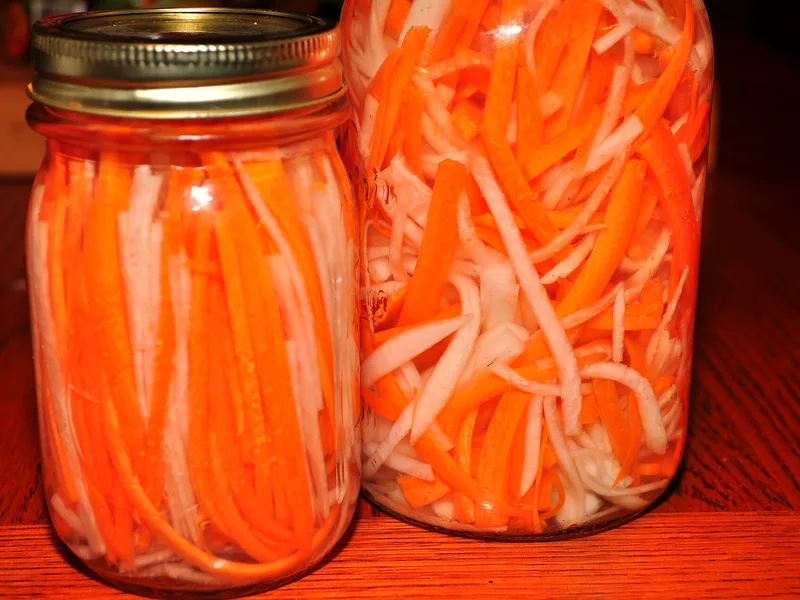
Easy Refrigerator Pickled Carrots
Crisp, tangy and bright — fridge-pickled carrots for snacking and salads.
Ingredients
Tick ingredients off as you prep, and tap a step below to mark it done as you cook. Scaling adjusts the listed amounts - seasoning to taste stays your call.
Instructions
- Prepare the carrots. Peel the carrots and cut them into sticks about 3 inches long and 1/3 inch thick, keeping the thickness as even as you can so they pickle at the same rate. For salad coins, slice them into rounds about 1/8 inch thick instead.
- Pack the jar. Set the garlic, dill seeds, mustard seeds, peppercorns and fresh dill if using in the bottom of a clean 1-quart (950 ml) glass jar. Pack the carrot sticks in upright and snugly, leaving 1/2 inch of headspace at the top.
- Make the warm brine. Combine the vinegar, water, sugar and salt in a small saucepan. Bring to a simmer over medium heat, stirring until the sugar and salt dissolve completely, then take the pan straight off the heat. Do not add the carrots to the pan.
- Brine the carrots. Pour the warm brine slowly over the carrots in the jar, making sure every stick is covered and tapping the jar gently on the counter to release any air pockets. Top up with a little extra vinegar if any carrot tips sit above the liquid.
- Cool, then chill. Let the jar cool to room temperature with the lid resting loosely on top, then seal it properly and move it to the refrigerator. Cooling on the counter first keeps condensation from diluting the brine at the surface.
- Wait, then serve. Refrigerate for at least 24 hours before serving, and ideally 3 days for the fullest flavour. Serve the sticks cold as a snack, with sandwiches and cheese boards, or chopped into salads and grain bowls.
Recipe by Shahid Imran · FryDaily. Printing? This card is designed to print cleanly on its own.