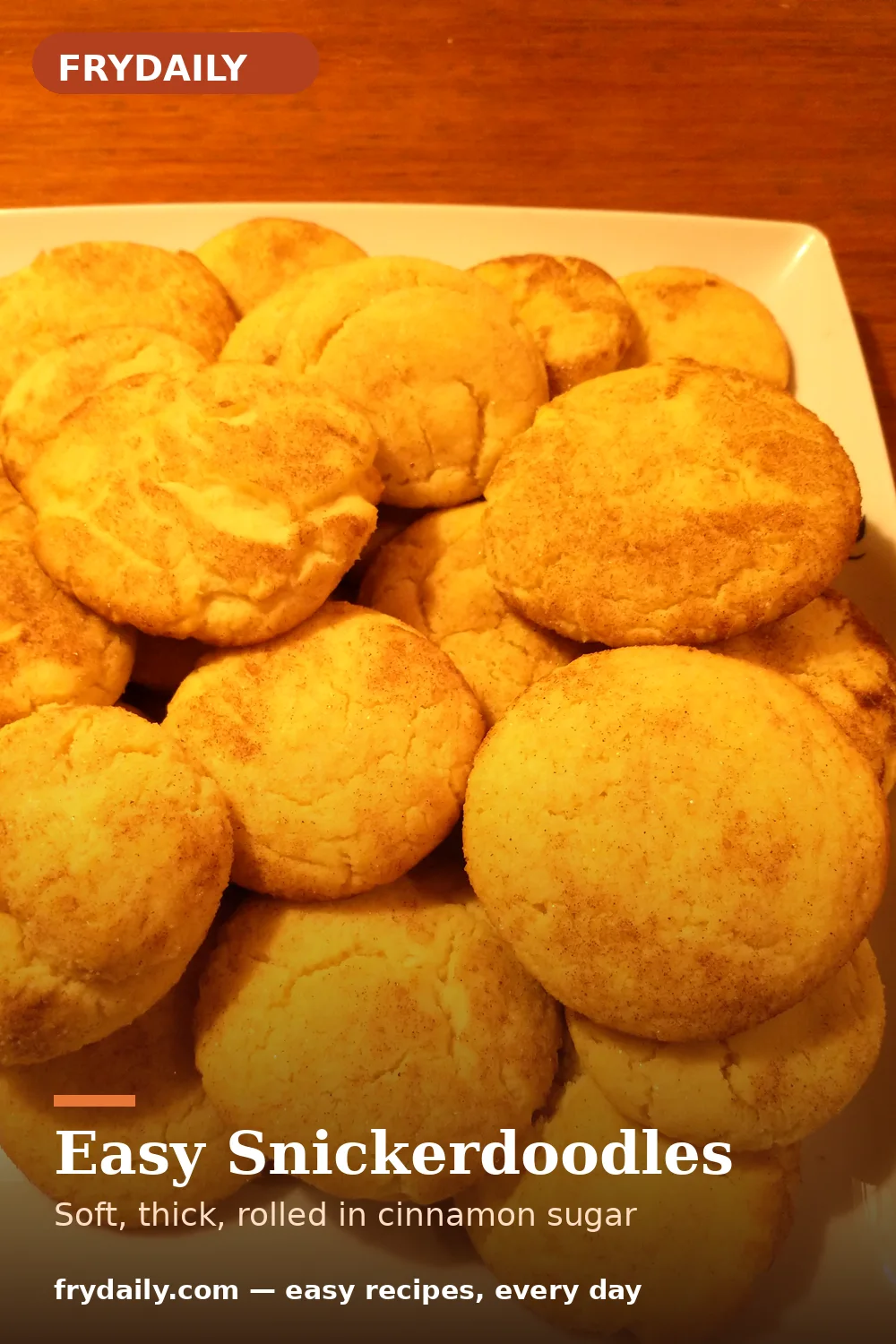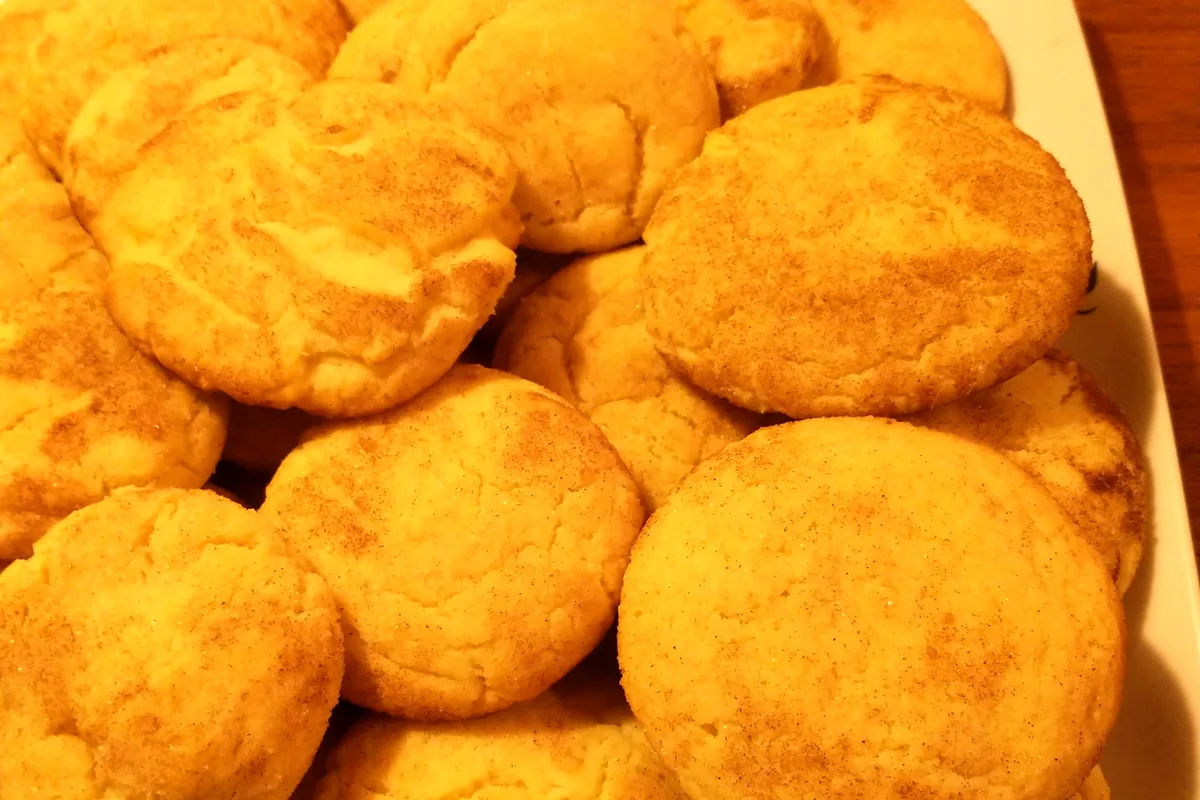
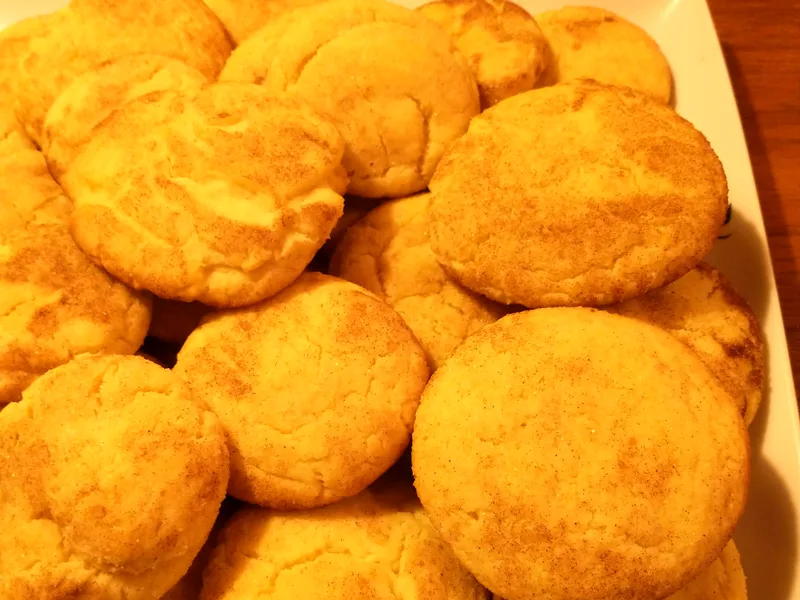
A snickerdoodle is a sugar cookie with a point of view. The dough itself is plain and buttery, but every ball gets rolled in cinnamon sugar before it bakes, so the finished cookie has a crackled, spice-dusted top and a soft, almost cake-like centre. The photograph shows the result at its best: a white platter piled high with golden cookies, each one dusted with cinnamon, the kind of pile that empties fast at a bake sale or a holiday table. This recipe makes 36 of them, which sounds like a lot until you watch the first tray disappear.
The ingredient that makes a snickerdoodle taste like a snickerdoodle — and not just a sugar cookie with cinnamon on top — is cream of tartar. It gives the cookie its faint tang and its signature soft, pillowy texture, so do not leave it out or swap it for extra baking powder; the result will be flatter and far less distinctive. Everything else is pantry standard: butter, sugar, eggs, vanilla and flour, mixed in one bowl and baked straight away. There is no chilling step, which is why this is the cookie to reach for when you promised a plate of something homemade and only remembered an hour ago.
This belongs in our Desserts collection because it is the reliable crowd cookie: cheap, fast, forgiving, and liked by almost everyone, including people who claim not to like cookies. If your cookie jar already holds our Easy Chocolate Chip Cookies, snickerdoodles are the natural second batch — same equipment, same oven temperature range, a completely different flavour. Bake them for a school event, a work potluck or a neighbourly drop-off, and pile them on a platter the way the photograph shows them; they look generous, and they are.
Why cream of tartar is not optional
Cream of tartar is an acidic powder, and in this dough it does two jobs at once. First, it reacts with the baking soda to give the cookies their lift, which is why the centres stay thick and soft instead of spreading thin. Second, it adds the gentle tang that separates a snickerdoodle from a plain sugar cookie. If your tin of cream of tartar has sat in the cupboard for years, check it still smells faintly sharp; a stale tin loses its strength. Fresh cream of tartar, properly measured, is the difference between a good cookie and the one people ask you for the recipe for.
Roll generously, and do not overbake
The cinnamon-sugar coat is not decoration — it is half the flavour, so roll each ball of dough until it is fully coated, not just dusted on one side. A shallow bowl works better than a plate, because you can tumble the ball around without chasing it. And watch the oven, not just the timer: pull the cookies when the edges look set and the centres still look slightly soft and pale. They finish setting on the hot tray, and that carryover heat is what keeps them chewy. A snickerdoodle baked until it looks done in the oven will be dry by the time it cools.
Ingredients
- 1 cup unsalted butter (227 g), softened
- 1 1/2 cups granulated sugar (300 g)
- 2 large eggs (about 100 g)
- 2 teaspoons vanilla extract (10 ml)
- 2 3/4 cups all-purpose flour (330 g)
- 2 teaspoons cream of tartar (8 g)
- 1 teaspoon baking soda (5 g)
- 1/2 teaspoon salt (3 g)
- 1/4 cup granulated sugar (50 g), for rolling
- 2 teaspoons ground cinnamon (5 g), for rolling
Amounts are for the yield below. US customary measures first, grams in brackets for scale users.
Step-by-step instructions
- Cream the butter and sugar. Beat the softened butter and 1 1/2 cups sugar in a large bowl with a hand mixer or wooden spoon for 2 to 3 minutes, until pale and fluffy. Beat in the eggs one at a time, then the vanilla, scraping down the sides of the bowl so everything is evenly mixed.
- Add the dry ingredients. Whisk the flour, cream of tartar, baking soda and salt together in a separate bowl. Add them to the butter mixture in two parts, stirring just until no dry flour remains. Do not overmix — a few gentle strokes past combined is enough, and overmixing makes tough cookies.
- Mix the cinnamon sugar. Stir the remaining 1/4 cup sugar and the cinnamon together in a small shallow bowl. This is the coating, and you want it well mixed so every cookie gets the same balance of sweet and spice.
- Roll the cookies. Scoop tablespoon-sized balls of dough, about 1 1/2 inches across, and roll each one between your palms until smooth. Drop each ball into the cinnamon sugar and tumble it until fully coated, then set it on a parchment-lined baking sheet about 2 inches apart.
- Bake in batches. Bake at 375°F (190°C) for 9 to 11 minutes, one tray at a time, until the edges are set and lightly golden and the centres still look slightly soft. The cookies will look underdone in the middle — that is exactly right.
- Cool on the tray. Let the cookies sit on the baking sheet for 5 minutes, where they finish setting and stay chewy, then transfer them to a wire rack to cool completely. Pile them on a platter to serve, as in the photograph.
Nutrition estimate
| Nutrient | Per serving |
|---|---|
| Calories | 140 kcal |
| Protein | 2 g |
| Carbohydrates | 19 g |
| Fat | 6 g |
| Saturated fat | 4 g |
| Sodium | 95 mg |
| Fiber | 0 g |
| Sugar | 11 g |
Nutrition figures are estimates calculated from standard ingredient data for the yield stated. Your actual values will vary with brands, substitutions and portion sizes — treat them as a guide, not a guarantee.
Storage & reheating
Store snickerdoodles in an airtight container at room temperature for up to 5 days; add a slice of bread to the container to keep them soft, replacing it if it dries out. Freeze baked cookies in a freezer bag for up to 3 months and thaw at room temperature for 30 minutes, or freeze scooped, cinnamon-sugar-coated dough balls and bake straight from frozen, adding 2 minutes to the baking time. Nutrition figures are estimates per cookie and vary with cookie size; estimates vary.
Easy Snickerdoodles
Soft, thick, rolled in cinnamon sugar
Ingredients
Tick ingredients off as you prep, and tap a step below to mark it done as you cook. Scaling adjusts the listed amounts - seasoning to taste stays your call.
Instructions
- Cream the butter and sugar. Beat the softened butter and 1 1/2 cups sugar in a large bowl with a hand mixer or wooden spoon for 2 to 3 minutes, until pale and fluffy. Beat in the eggs one at a time, then the vanilla, scraping down the sides of the bowl so everything is evenly mixed.
- Add the dry ingredients. Whisk the flour, cream of tartar, baking soda and salt together in a separate bowl. Add them to the butter mixture in two parts, stirring just until no dry flour remains. Do not overmix — a few gentle strokes past combined is enough, and overmixing makes tough cookies.
- Mix the cinnamon sugar. Stir the remaining 1/4 cup sugar and the cinnamon together in a small shallow bowl. This is the coating, and you want it well mixed so every cookie gets the same balance of sweet and spice.
- Roll the cookies. Scoop tablespoon-sized balls of dough, about 1 1/2 inches across, and roll each one between your palms until smooth. Drop each ball into the cinnamon sugar and tumble it until fully coated, then set it on a parchment-lined baking sheet about 2 inches apart.
- Bake in batches. Bake at 375°F (190°C) for 9 to 11 minutes, one tray at a time, until the edges are set and lightly golden and the centres still look slightly soft. The cookies will look underdone in the middle — that is exactly right.
- Cool on the tray. Let the cookies sit on the baking sheet for 5 minutes, where they finish setting and stay chewy, then transfer them to a wire rack to cool completely. Pile them on a platter to serve, as in the photograph.
Recipe by Ahsan ul Haq · FryDaily. Printing? This card is designed to print cleanly on its own.