Apricot season is short, and this jam is how we make it last. Ripe apricots cook down into a deep golden-orange spread that tastes like concentrated summer: sweet at first, then gently tart, with a soft set that spoons easily over toast, yogurt and warm biscuits. If you have already made our easy peach jam or easy blueberry jam, this follows the same trusted water-bath routine, with apricots in the starring role.
This is a classic full-sugar jam, and the sugar does real work here: it helps the jam set, keeps the colour bright and supports reliable preserving, while fresh lemon juice sharpens the flavour and adds acid for a good gel. You get two honest paths. Powdered pectin gives a shorter cook, fresher flavour and a dependable, slightly softer set. Skipping it means a longer cook and a deeper taste, with the set judged by temperature and the freezer-plate test below.
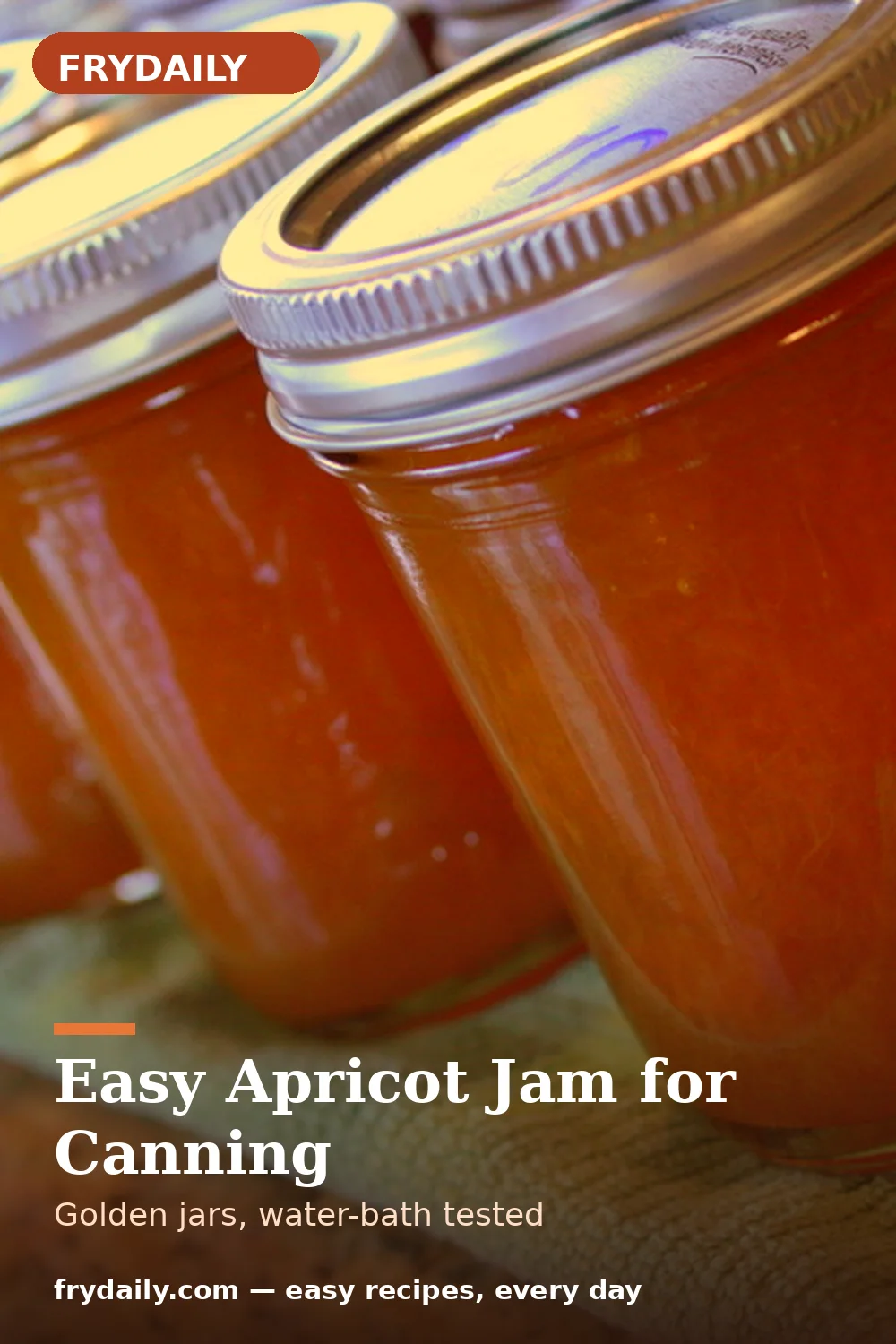
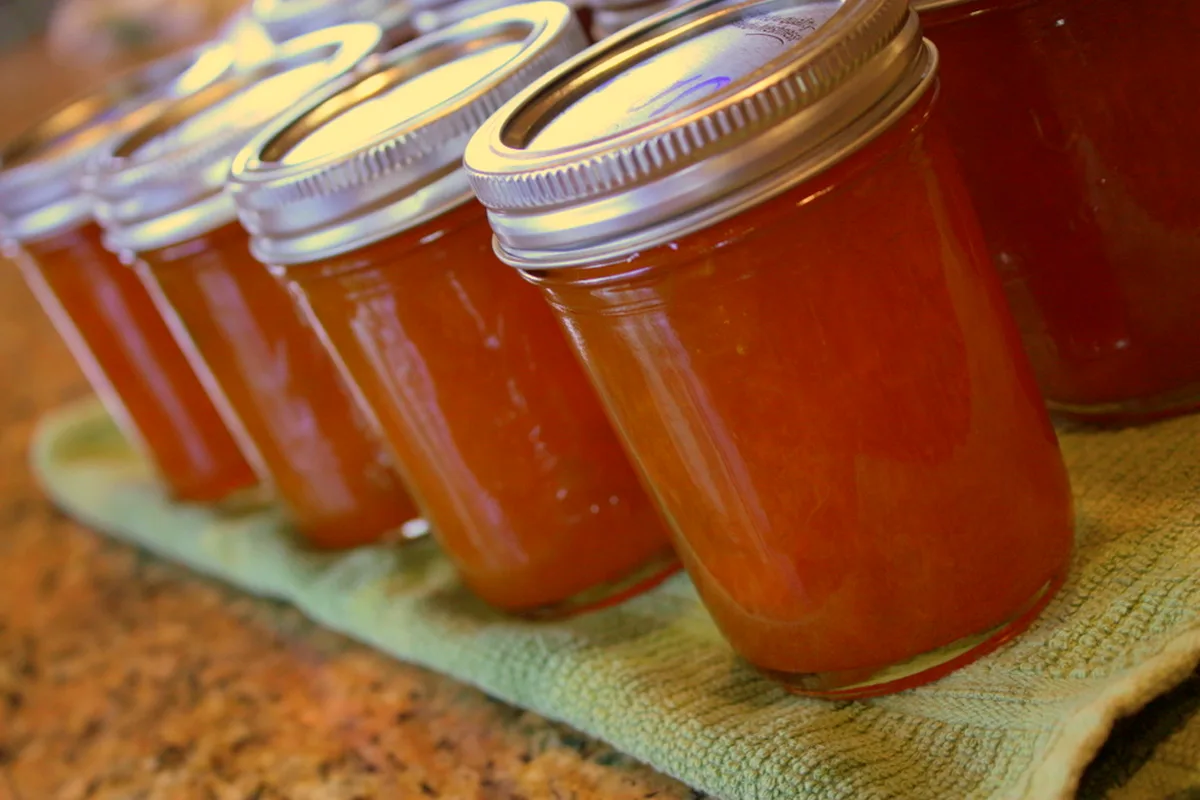
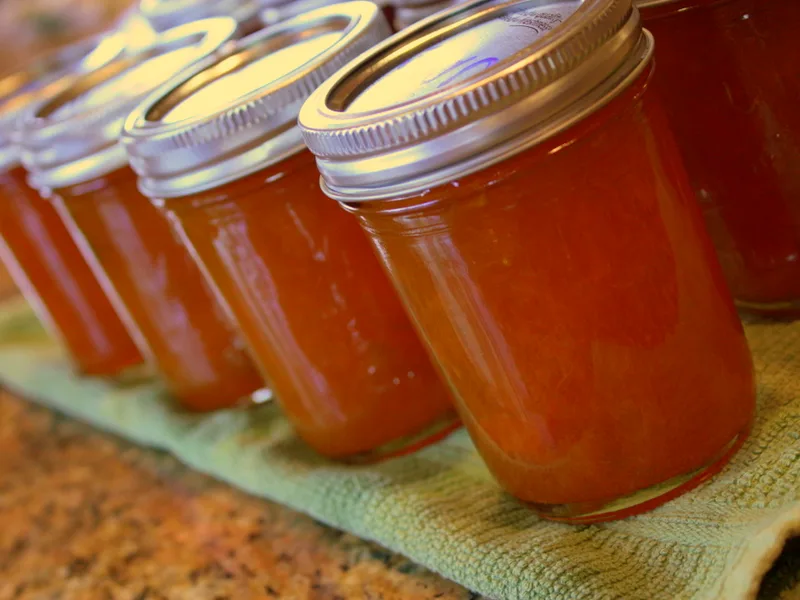
The batch fills half-pint jars, the handiest size for home canning because they heat through evenly, fit any canner and make perfect gifts. You will process them for 10 minutes at low altitude, with a clear altitude table included, then listen for the ping as each lid seals on the towel. Work calmly, measure the headspace properly and check every seal the next day, and you will have a neat row of glowing jars, exactly like the ones in the photograph.
Testing the Set: The Freezer-Plate Wrinkle Test
Apricots vary in ripeness and natural pectin, so never guess the set. Before cooking, put two small plates in the freezer. Spoon a little jam onto a cold plate, freeze it for 2 minutes, then push the edge with your fingertip. Set jam wrinkles and holds the line your finger draws. If it floods back together, boil 3 to 5 minutes more and test again on the second plate. No-pectin jam should also reach about 220°F (104°C) at sea level, but the wrinkle test is the final judge.
Altitude and Safety Essentials
Processing time rises with altitude because water boils cooler higher up. For half-pints: 10 minutes at 0 to 1,000 feet, 15 minutes at 1,001 to 6,000 feet and 20 minutes above 6,000 feet, timed from a full rolling boil. Always confirm against current USDA guidance for your altitude before you begin, and never shorten the time. Use new lids every time, leave exactly 1/4 inch (6 mm) of headspace, wipe rims clean, and check seals after 12 to 24 hours. Refrigerate any jar that did not seal and use it first.
Ingredients
- 4 pounds ripe fresh apricots, pitted and finely chopped (1,800 g)
- 4 cups granulated sugar (800 g)
- 1/4 cup fresh lemon juice (60 ml)
- 1 (1.75 oz) package powdered fruit pectin, optional (49 g)
- 1/2 teaspoon unsalted butter, optional (2 g)
- 6 half-pint canning jars with new lids and clean bands (6 jars)
Amounts are for the yield below. US customary measures first, grams in brackets for scale users.
Step-by-step instructions
- Prepare the canner and jars. Wash the jars, lids and bands in hot soapy water and rinse well. Keep the jars hot in a canner of simmering water so they do not crack when filled. Lay a clean kitchen towel on the counter for the finished jars, and put two small plates in the freezer for testing the set.
- Prep the apricots. Rinse the apricots, halve them and remove the pits. Do not peel them: the skins soften completely during cooking and add colour and natural pectin. Chop the fruit finely, or crush it lightly with a masher for soft pieces. Stir in the lemon juice at once to protect the colour, and tip everything into a large, heavy pot.
- Choose your set: pectin or no pectin. For the pectin version, stir the powdered pectin into the fruit and lemon juice before adding any sugar, then bring it to a full rolling boil. For the no-pectin version, skip the pectin, stir in all the sugar at the start and plan a longer cook in the next step. Both routes are reliable when tested properly.
- Boil the jam. Add the sugar and the butter, if using, which helps reduce foaming. Bring the pot to a full rolling boil over high heat, stirring constantly. With pectin, boil hard for exactly 1 minute, then remove from the heat. Without pectin, boil steadily for 20 to 30 minutes, stirring often, until thickened and passing the freezer-plate test. Skim off any foam.
- Fill the jars. Ladle hot jam into one hot jar at a time, leaving exactly 1/4 inch (6 mm) of headspace. Run a non-metallic spatula around the inside to release air bubbles and check the headspace again. Wipe each rim with a clean, damp cloth, centre a new lid on top and screw the band on until just fingertip tight.
- Process in the water bath. Lower the jars into the canner, covered by at least 1 inch (2.5 cm) of water. Bring it to a full rolling boil, then start timing: 10 minutes for half-pints at 0 to 1,000 feet, 15 minutes at 1,001 to 6,000 feet and 20 minutes above 6,000 feet. Rest the jars in the hot water for 5 minutes after the heat goes off.
- Cool and check the seals. Lift the jars straight onto the kitchen towel, spaced apart, exactly as shown in the photograph. Leave them undisturbed for 12 to 24 hours and do not press the lids. Then check each seal: the lid should curve slightly downward and not flex when pressed. Label and date the jars, and refrigerate any unsealed jar to use within 3 weeks.
Nutrition estimate
| Nutrient | Per serving |
|---|---|
| Calories | 52 kcal |
| Protein | 0 g |
| Carbohydrates | 13 g |
| Fat | 0 g |
| Saturated fat | 0 g |
| Sodium | 0 mg |
| Fiber | 0 g |
| Sugar | 12 g |
Nutrition figures are estimates calculated from standard ingredient data for the yield stated. Your actual values will vary with brands, substitutions and portion sizes — treat them as a guide, not a guarantee.
Storage & reheating
Store sealed jars in a cool, dark pantry and enjoy them at their best within 12 months. Once opened, refrigerate the jar and use it within 1 month, always with a clean spoon. Unsealed jars must be refrigerated straight away and used within 3 weeks. Nutrition is per 1 tablespoon; figures are estimates and vary with fruit ripeness, brands and final yield, so nutrition estimates vary.
Canning safety — read first
Home canning must follow tested processes exactly. The times on this page follow the structure of current USDA guidance for the stated jar size at 0-1,000 feet elevation; always confirm processing times and altitude adjustments in the USDA Complete Guide to Home Canning or the National Center for Home Food Preservation before you start. Never taste food from a jar with a failed seal, bulging lid or off odor — discard it.
Easy Apricot Jam for Canning
Deep golden, sweet-tart apricot jam in half-pint jars, with pectin and no-pectin options, a freezer-plate set test and clear altitude times.
Ingredients
Tick ingredients off as you prep, and tap a step below to mark it done as you cook. Scaling adjusts the listed amounts - seasoning to taste stays your call.
Instructions
- Prepare the canner and jars. Wash the jars, lids and bands in hot soapy water and rinse well. Keep the jars hot in a canner of simmering water so they do not crack when filled. Lay a clean kitchen towel on the counter for the finished jars, and put two small plates in the freezer for testing the set.
- Prep the apricots. Rinse the apricots, halve them and remove the pits. Do not peel them: the skins soften completely during cooking and add colour and natural pectin. Chop the fruit finely, or crush it lightly with a masher for soft pieces. Stir in the lemon juice at once to protect the colour, and tip everything into a large, heavy pot.
- Choose your set: pectin or no pectin. For the pectin version, stir the powdered pectin into the fruit and lemon juice before adding any sugar, then bring it to a full rolling boil. For the no-pectin version, skip the pectin, stir in all the sugar at the start and plan a longer cook in the next step. Both routes are reliable when tested properly.
- Boil the jam. Add the sugar and the butter, if using, which helps reduce foaming. Bring the pot to a full rolling boil over high heat, stirring constantly. With pectin, boil hard for exactly 1 minute, then remove from the heat. Without pectin, boil steadily for 20 to 30 minutes, stirring often, until thickened and passing the freezer-plate test. Skim off any foam.
- Fill the jars. Ladle hot jam into one hot jar at a time, leaving exactly 1/4 inch (6 mm) of headspace. Run a non-metallic spatula around the inside to release air bubbles and check the headspace again. Wipe each rim with a clean, damp cloth, centre a new lid on top and screw the band on until just fingertip tight.
- Process in the water bath. Lower the jars into the canner, covered by at least 1 inch (2.5 cm) of water. Bring it to a full rolling boil, then start timing: 10 minutes for half-pints at 0 to 1,000 feet, 15 minutes at 1,001 to 6,000 feet and 20 minutes above 6,000 feet. Rest the jars in the hot water for 5 minutes after the heat goes off.
- Cool and check the seals. Lift the jars straight onto the kitchen towel, spaced apart, exactly as shown in the photograph. Leave them undisturbed for 12 to 24 hours and do not press the lids. Then check each seal: the lid should curve slightly downward and not flex when pressed. Label and date the jars, and refrigerate any unsealed jar to use within 3 weeks.
Recipe by Ahsan ul Haq · FryDaily. Printing? This card is designed to print cleanly on its own.