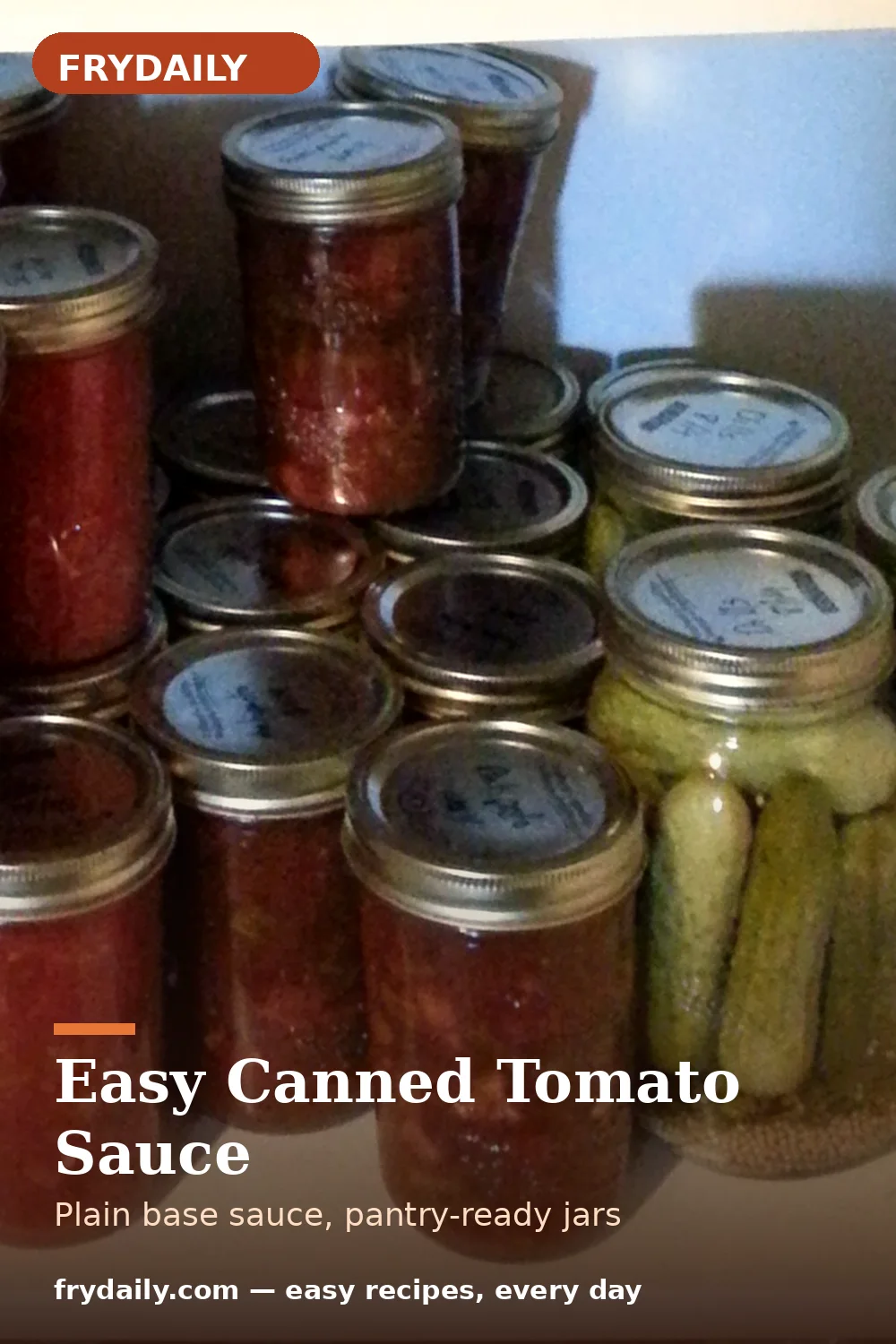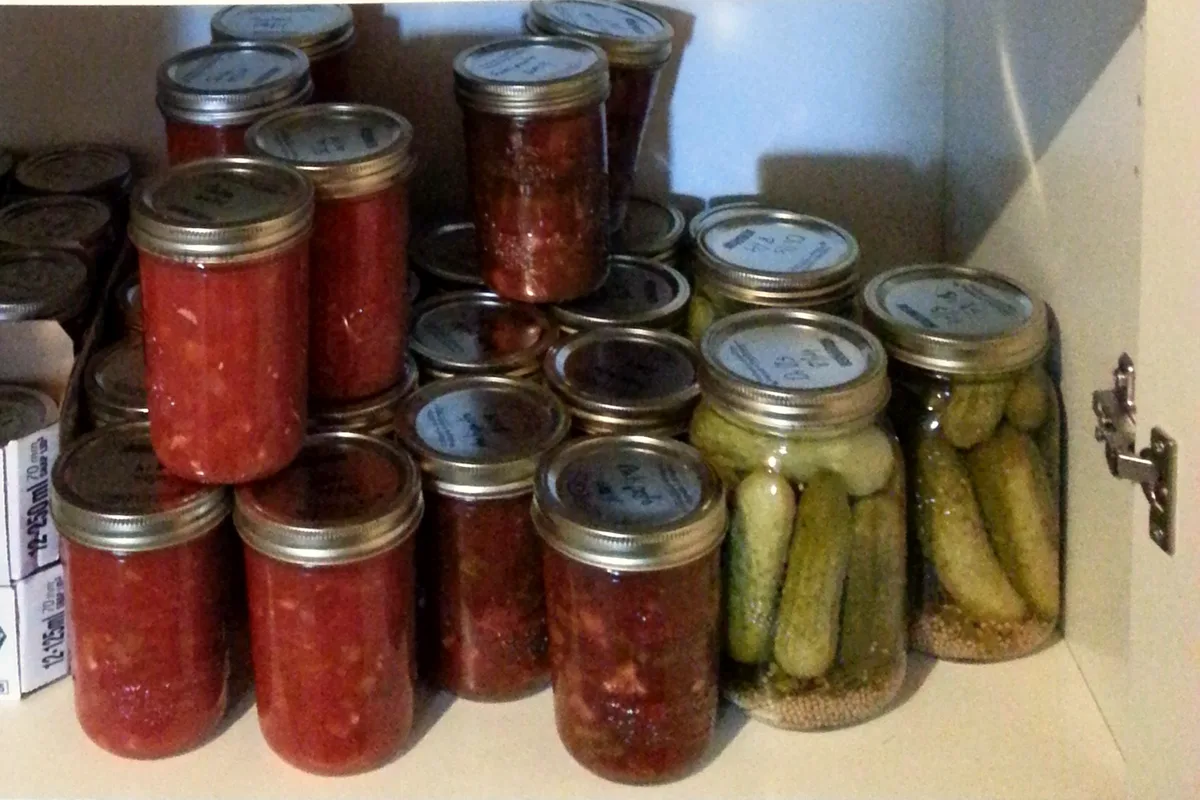
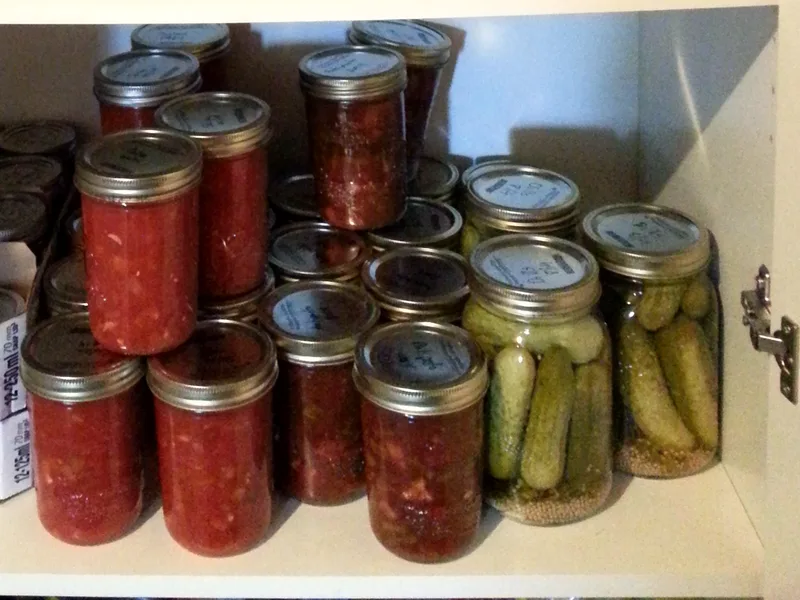
A jar of plain tomato sauce is the hardest-working thing on the pantry shelf - it becomes pasta sauce, pizza sauce, soup and braise all winter long, seasoned at the moment of use. The photograph shows exactly where this recipe is heading: a home canner's shelf of sealed jars, the red tomato sauce front and centre (our hero view is cropped to those jars). This is a deliberately plain base - tomatoes, lemon juice, a little salt, nothing else - because plain is what keeps it flexible, and plain is also what the tested processing times are built around.
Tomatoes sit close enough to the safe acidity line that modern guidance acidifies every jar, and this recipe follows that rule without exception: bottled lemon juice, in the tested amount, in every single jar. Bottled juice matters here - its acidity is standardized, while fresh lemons vary. If you are new to water-bath work, our easy peach jam walks through the same canner routine with a sweeter payoff, and the whole Canning & Preserving shelf follows the same USDA and National Center for Home Food Preservation patterns used here.
Choose tomatoes that taste like something - paste types such as Roma give a thicker sauce with less simmering, but any ripe, sound tomato works if you cook it down to the thickness you like. Do not can tomatoes from dead or frost-killed vines, and never thicken with flour or cornstarch before processing.
Acidification and processing times are the recipe
For plain tomato sauce, the tested water-bath times are 35 minutes for pints and 40 minutes for quarts at altitudes up to 1,000 feet, with 1 tablespoon of bottled lemon juice per pint or 2 tablespoons per quart added directly to each jar before filling. Add time with altitude: at 1,001 to 3,000 feet, process 40 minutes for pints and 45 for quarts; at 3,001 to 6,000 feet, 45 and 50 minutes; above 6,000 feet, 50 and 55 minutes. Time starts when the water returns to a full rolling boil with the jars covered by at least 1 inch of water. These figures follow the USDA Complete Guide pattern used across this site - if your altitude or jar size differs, check the current USDA or NCHFP table rather than guessing.
How thick should it be before jarring?
A sauce canned too thin stays thin forever, and a sauce reduced like paste risks scorching on the pot floor. Aim for a sauce that mounds briefly on a spoon and leaves a slow trail when you drag the spoon across the pot - roughly the body of a jarred pasta sauce. Simmering uncovered with frequent stirring near the end gets you there; expect about a third of the volume to cook away. Hot-pack the sauce while it is at a full simmer so the jars go into the canner hot, as the tested times assume.
Ingredients
- 9 pounds ripe tomatoes (4 kg)
- 6 tablespoons bottled lemon juice (90 ml)
- 1 1/2 teaspoons canning salt, optional (9 g)
- 6 pint canning jars with two-piece lids (500 ml)
Amounts are for the yield below. US customary measures first, grams in brackets for scale users.
Step-by-step instructions
- Prep the canner and jars. Fill a water-bath canner with water and start it heating. Wash the jars and keep them hot in the canner water or a low oven. Set the lids in warm - not boiling - water. Wash the tomatoes and remove any bruised or spoiled spots.
- Peel and core the tomatoes. Score a small X on the blossom end of each tomato, blanch in boiling water for 30 to 60 seconds until the skins split, then cool in cold water. Slip off the skins, cut out the cores, and quarter the tomatoes into a large pot, crushing the first layer with a spoon to release juice so nothing scorches.
- Cook the sauce down. Bring the tomatoes to a boil, stirring often, then simmer uncovered for 35 to 45 minutes, stirring more frequently as it thickens, until the sauce is reduced by roughly a third and mounds briefly on a spoon. Work it smooth with an immersion blender, or press it through a food mill for a seedless sauce.
- Acidify and fill the jars. Add 1 tablespoon of bottled lemon juice to each hot pint jar. Ladle the hot sauce in, leaving 1/2 inch (1.3 cm) of headspace. Add 1/4 teaspoon of canning salt per jar if using. Run a non-metal spatula around the inside to release bubbles, re-check the headspace, wipe the rims clean, and apply the lids and bands fingertip-tight.
- Process in the water bath. Lower the jars into the canner, ensure they are covered by at least 1 inch (2.5 cm) of water, cover, and bring to a full rolling boil. Process pints for 35 minutes at altitudes up to 1,000 feet, adjusting upward with altitude as described in the notes. Start timing only at the full boil.
- Cool and check the seals. Turn off the heat, wait 5 minutes, then lift the jars onto a towel and leave them undisturbed for 12 to 24 hours. Check that every lid is sealed and concave; label and date the jars. Refrigerate any jar that did not seal and use it within a week.
Nutrition estimate
| Nutrient | Per serving |
|---|---|
| Calories | 70 kcal |
| Protein | 3 g |
| Carbohydrates | 15 g |
| Fat | 1 g |
| Saturated fat | 0 g |
| Sodium | 210 mg |
| Fiber | 4 g |
| Sugar | 10 g |
Nutrition figures are estimates calculated from standard ingredient data for the yield stated. Your actual values will vary with brands, substitutions and portion sizes — treat them as a guide, not a guarantee.
Storage & reheating
Store sealed jars in a cool, dark place and use within 12 to 18 months for best quality. Once opened, refrigerate and use within 1 week. If a jar shows a bulging lid, spurting liquid, mould or an off smell at any point, discard it without tasting. Nutrition values are estimates per half-cup serving and will vary with tomato variety and how far the sauce is reduced.
Canning safety — read first
Home canning must follow tested processes exactly. The times on this page follow the structure of current USDA guidance for the stated jar size at 0-1,000 feet elevation; always confirm processing times and altitude adjustments in the USDA Complete Guide to Home Canning or the National Center for Home Food Preservation before you start. Never taste food from a jar with a failed seal, bulging lid or off odor — discard it.
Easy Canned Tomato Sauce for Canning
A plain, properly acidified tomato sauce base, jarred for the pantry shelf.
Ingredients
Tick ingredients off as you prep, and tap a step below to mark it done as you cook. Scaling adjusts the listed amounts - seasoning to taste stays your call.
Instructions
- Prep the canner and jars. Fill a water-bath canner with water and start it heating. Wash the jars and keep them hot in the canner water or a low oven. Set the lids in warm - not boiling - water. Wash the tomatoes and remove any bruised or spoiled spots.
- Peel and core the tomatoes. Score a small X on the blossom end of each tomato, blanch in boiling water for 30 to 60 seconds until the skins split, then cool in cold water. Slip off the skins, cut out the cores, and quarter the tomatoes into a large pot, crushing the first layer with a spoon to release juice so nothing scorches.
- Cook the sauce down. Bring the tomatoes to a boil, stirring often, then simmer uncovered for 35 to 45 minutes, stirring more frequently as it thickens, until the sauce is reduced by roughly a third and mounds briefly on a spoon. Work it smooth with an immersion blender, or press it through a food mill for a seedless sauce.
- Acidify and fill the jars. Add 1 tablespoon of bottled lemon juice to each hot pint jar. Ladle the hot sauce in, leaving 1/2 inch (1.3 cm) of headspace. Add 1/4 teaspoon of canning salt per jar if using. Run a non-metal spatula around the inside to release bubbles, re-check the headspace, wipe the rims clean, and apply the lids and bands fingertip-tight.
- Process in the water bath. Lower the jars into the canner, ensure they are covered by at least 1 inch (2.5 cm) of water, cover, and bring to a full rolling boil. Process pints for 35 minutes at altitudes up to 1,000 feet, adjusting upward with altitude as described in the notes. Start timing only at the full boil.
- Cool and check the seals. Turn off the heat, wait 5 minutes, then lift the jars onto a towel and leave them undisturbed for 12 to 24 hours. Check that every lid is sealed and concave; label and date the jars. Refrigerate any jar that did not seal and use it within a week.
Recipe by Ahsan ul Haq · FryDaily. Printing? This card is designed to print cleanly on its own.