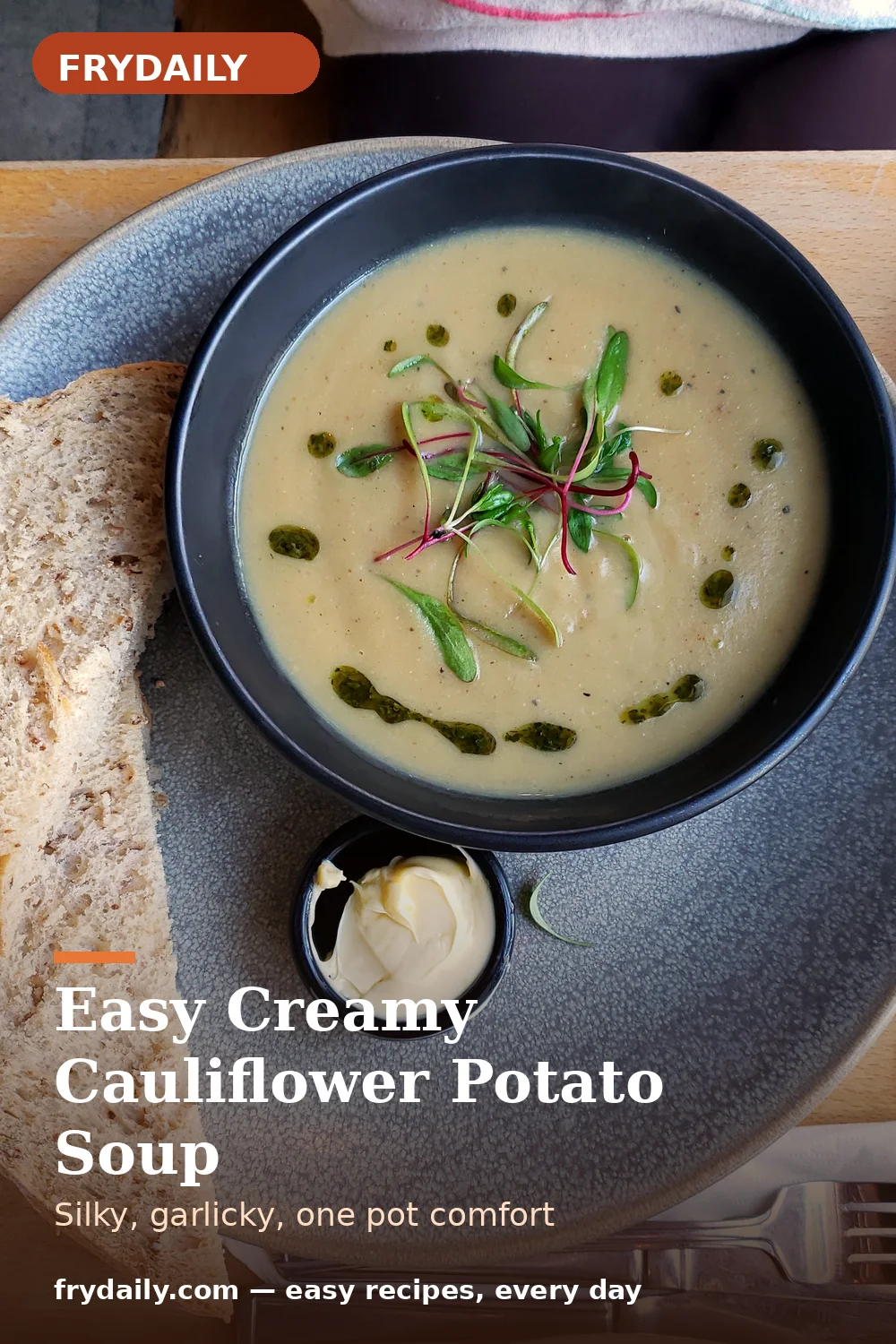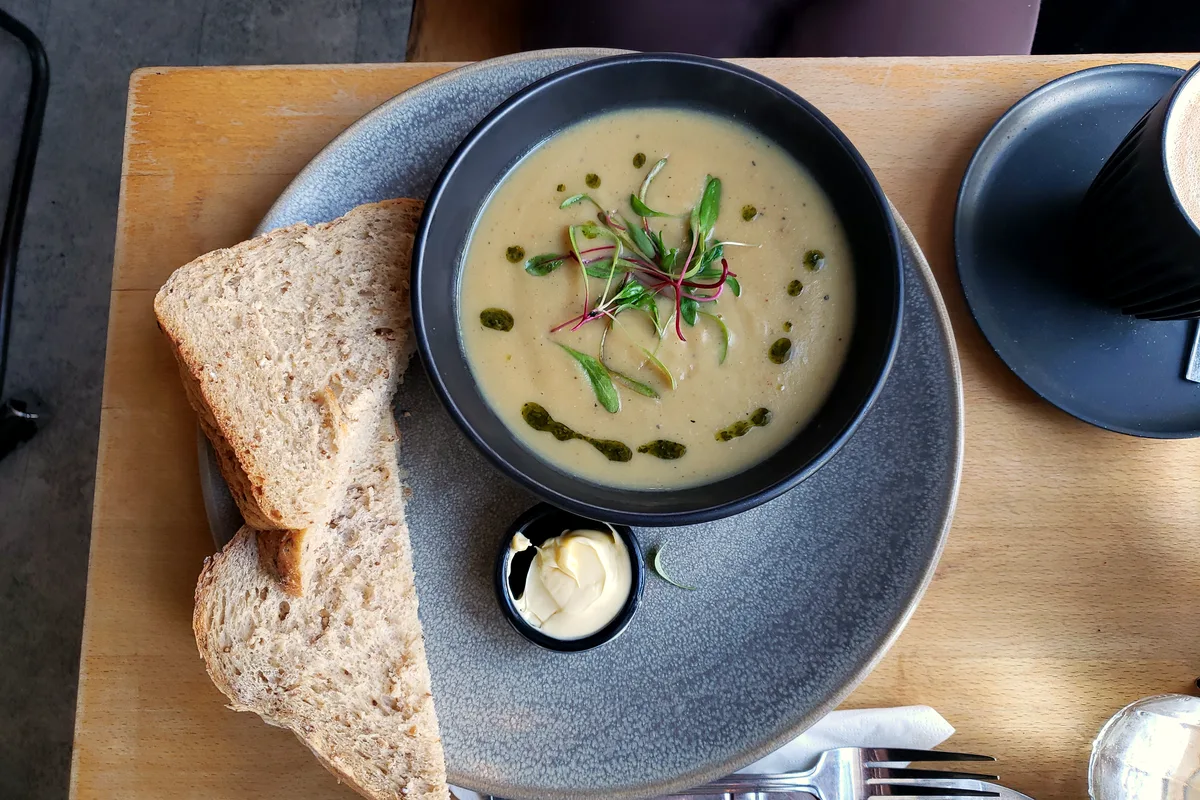
Cauliflower soup has a reputation problem, and most of it is earned: too many versions are thin, grey and faintly joyless, the kind of bowl that tastes like a health lecture. This one is different, and the difference is one potato. A single russet, simmered with the cauliflower and blended in, gives the soup the body and silk that cauliflower alone cannot quite manage — no jug of cream, no flour, no cheese mountain required. The result is the pale, velvety bowl in the photograph, glossy with a swirl of herb oil and scattered with microgreens, and it tastes like comfort food rather than a compromise.
The method is deliberately simple: onion and garlic softened in olive oil, cauliflower and potato simmered in vegetable broth until completely tender, then blended until smooth. There is no roasting tray, no second pot, and nothing to strain. The only technique that matters is blending long enough — a full two minutes with an immersion blender, or in batches in a jug blender — because silkiness here comes from time, not from fat. Season at the end, not the beginning, since the broth reduces a little and the salt concentrates as it goes.
It sits in our Healthy & Low-Carb collection next to our garlic mashed cauliflower, which uses the same vegetable in a completely different way, and our slow cooker butternut squash soup for cooks who want another November bowl with even less hands-on time. Serve it the way the photograph does — herb oil, microgreens, and crusty bread with butter for dunking.
The blender is the cream
Most creamy soups get their texture from dairy, and dairy is the most expensive way to thicken a pot. Here the potato starch does the work: as the diced potato breaks down in the simmering broth, it releases starch that turns the blended soup thick and glossy on its own, so a modest half-cup of milk is plenty to finish it. Blend the soup while it is still hot and completely tender — undercooked cauliflower blends grainy no matter how long you run the motor — and then taste before adding more liquid. A soup that looks a touch thick in the pot is exactly right, because it loosens a little as it sits and as the milk goes in.
Keep it light, or make it rich
As written, this is a light bowl: olive oil, vegetables, broth and a splash of milk. It stays that way without any sacrifice, which is the point. But the base welcomes richness when you want it — a handful of grated Parmesan stirred in at the end, a spoonful of cream cheese blended with the soup, or a scattering of crisped bacon or toasted hazelnuts over each bowl. The one addition to skip is extra potato: a second potato tips the balance from cauliflower soup with body into potato soup with cauliflower in it, and the fresh, slightly nutty character that makes this bowl interesting disappears.
Ingredients
- 1 large head cauliflower (about 2 lb / 900 g), cut into florets
- 1 medium russet potato (200 g), peeled and diced
- 2 tablespoons olive oil (30 ml)
- 1 medium yellow onion (150 g), chopped
- 3 cloves garlic, minced
- 4 cups low-sodium vegetable broth (960 ml)
- 1/2 cup whole milk (120 ml)
- 1 teaspoon fine sea salt (6 g)
- 1/2 teaspoon black pepper (1 g)
- 1/4 teaspoon ground nutmeg (0.5 g), optional
- 2 tablespoons herb oil or extra-virgin olive oil (30 ml), to serve
- 1 handful microgreens or chopped chives (10 g), to serve
- Crusty bread and butter, to serve, optional
Amounts are for the yield below. US customary measures first, grams in brackets for scale users.
Step-by-step instructions
- Soften the onion and garlic. Heat the olive oil in a large pot over medium heat. Add the chopped onion with a pinch of salt and cook for 5 to 6 minutes, stirring occasionally, until soft and translucent but not browned. Stir in the garlic and cook for 1 minute more, just until fragrant — garlic that browns here will turn the finished soup bitter.
- Add the vegetables and broth. Add the cauliflower florets and diced potato to the pot, pour in the vegetable broth, and bring to a boil over high heat. The liquid should just about cover the vegetables; if a few florets poke out, that is fine, as they will soften in the steam. Reduce the heat to a steady simmer.
- Simmer until completely tender. Cover the pot and simmer for 20 to 22 minutes, until both the cauliflower and the potato are completely soft — a fork should slide through a piece of potato with no resistance at all. This is the step not to rush: undercooked vegetables blend grainy, and no amount of extra blending fixes that texture.
- Blend until silky. Take the pot off the heat. Blend with an immersion blender for a full 2 minutes, moving it slowly through the pot so no chunks hide at the bottom, until the soup is completely smooth. If you use a jug blender instead, blend in two batches, filling the jug no more than half full and holding the lid down firmly with a folded towel — hot soup expands as it blends and can blow the lid off.
- Finish with milk and seasoning. Stir in the milk, salt, pepper and nutmeg if using. Warm gently over low heat for 2 minutes — do not let it boil hard after the milk goes in, or it can separate. Taste and adjust the salt; broth brands vary, and this soup needs proper seasoning to taste like itself rather than like boiled vegetables.
- Serve with herb oil and greens. Ladle into warm bowls and swirl a spoonful of herb oil or good olive oil over each serving, just like the photograph. Scatter over the microgreens or chives, grind over a little extra black pepper, and serve with crusty bread and butter alongside for dunking.
Nutrition estimate
| Nutrient | Per serving |
|---|---|
| Calories | 190 kcal |
| Protein | 6 g |
| Carbohydrates | 26 g |
| Fat | 7 g |
| Saturated fat | 2 g |
| Sodium | 520 mg |
| Fiber | 5 g |
| Sugar | 6 g |
Nutrition figures are estimates calculated from standard ingredient data for the yield stated. Your actual values will vary with brands, substitutions and portion sizes — treat them as a guide, not a guarantee.
Storage & reheating
Leftovers keep in a covered container in the refrigerator for up to 4 days; the soup thickens as it cools, so loosen it with a splash of broth or milk when reheating. Reheat gently over low heat, stirring often, and do not boil it hard after the milk is in. The soup freezes well for up to 3 months — freeze it before adding the milk if you can, then stir the milk in while reheating for the smoothest texture; thaw overnight in the refrigerator. The herb oil garnish is best added fresh each time. Nutrition figures are estimates per serving and vary with the size of the cauliflower and how much bread is served alongside; estimates vary.

Easy Creamy Cauliflower Potato Soup
Silky, garlicky, one pot — comfort without the cream overload
Ingredients
Tick ingredients off as you prep, and tap a step below to mark it done as you cook. Scaling adjusts the listed amounts - seasoning to taste stays your call.
Instructions
- Soften the onion and garlic. Heat the olive oil in a large pot over medium heat. Add the chopped onion with a pinch of salt and cook for 5 to 6 minutes, stirring occasionally, until soft and translucent but not browned. Stir in the garlic and cook for 1 minute more, just until fragrant — garlic that browns here will turn the finished soup bitter.
- Add the vegetables and broth. Add the cauliflower florets and diced potato to the pot, pour in the vegetable broth, and bring to a boil over high heat. The liquid should just about cover the vegetables; if a few florets poke out, that is fine, as they will soften in the steam. Reduce the heat to a steady simmer.
- Simmer until completely tender. Cover the pot and simmer for 20 to 22 minutes, until both the cauliflower and the potato are completely soft — a fork should slide through a piece of potato with no resistance at all. This is the step not to rush: undercooked vegetables blend grainy, and no amount of extra blending fixes that texture.
- Blend until silky. Take the pot off the heat. Blend with an immersion blender for a full 2 minutes, moving it slowly through the pot so no chunks hide at the bottom, until the soup is completely smooth. If you use a jug blender instead, blend in two batches, filling the jug no more than half full and holding the lid down firmly with a folded towel — hot soup expands as it blends and can blow the lid off.
- Finish with milk and seasoning. Stir in the milk, salt, pepper and nutmeg if using. Warm gently over low heat for 2 minutes — do not let it boil hard after the milk goes in, or it can separate. Taste and adjust the salt; broth brands vary, and this soup needs proper seasoning to taste like itself rather than like boiled vegetables.
- Serve with herb oil and greens. Ladle into warm bowls and swirl a spoonful of herb oil or good olive oil over each serving, just like the photograph. Scatter over the microgreens or chives, grind over a little extra black pepper, and serve with crusty bread and butter alongside for dunking.
Recipe by Ahsan ul Haq · FryDaily. Printing? This card is designed to print cleanly on its own.