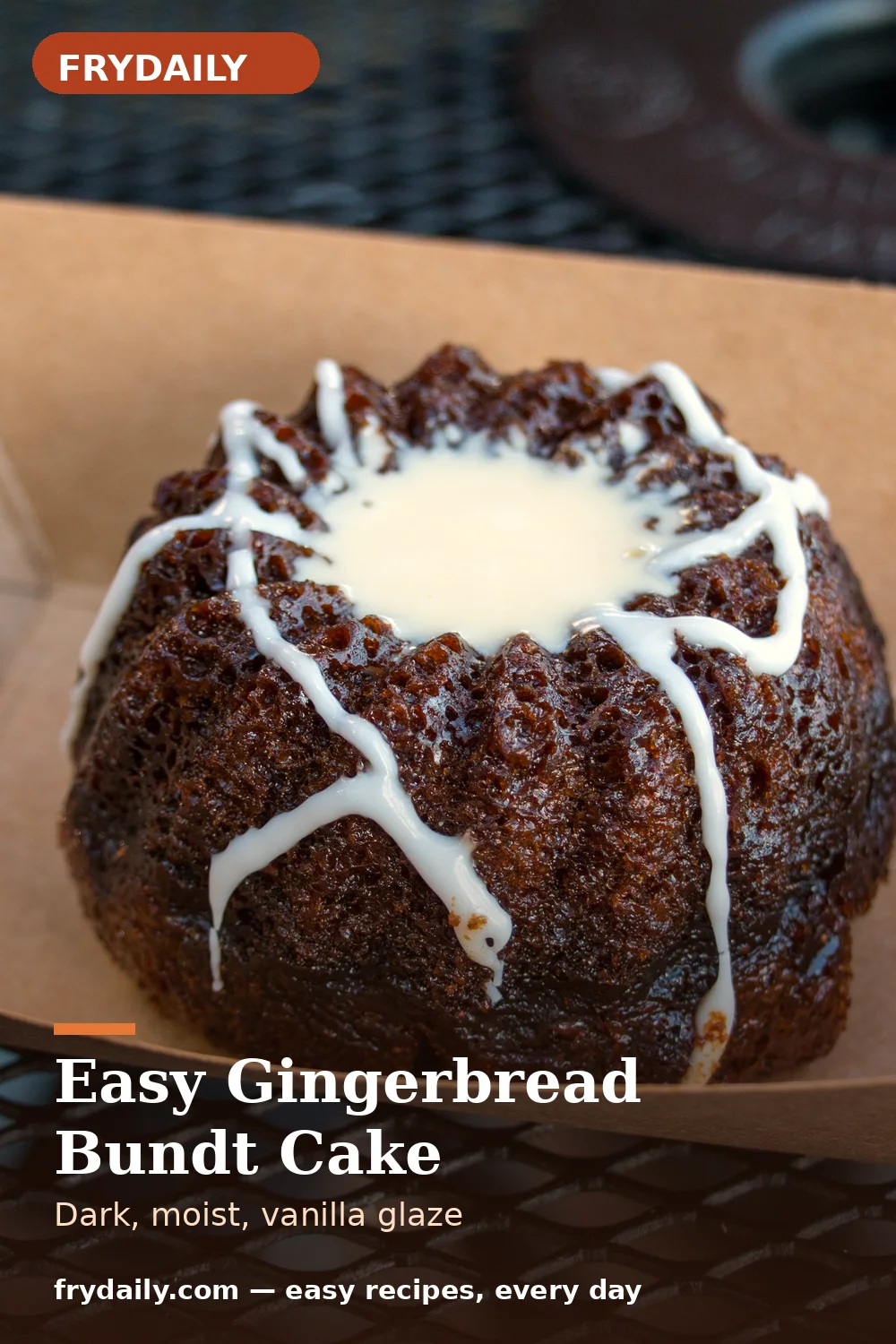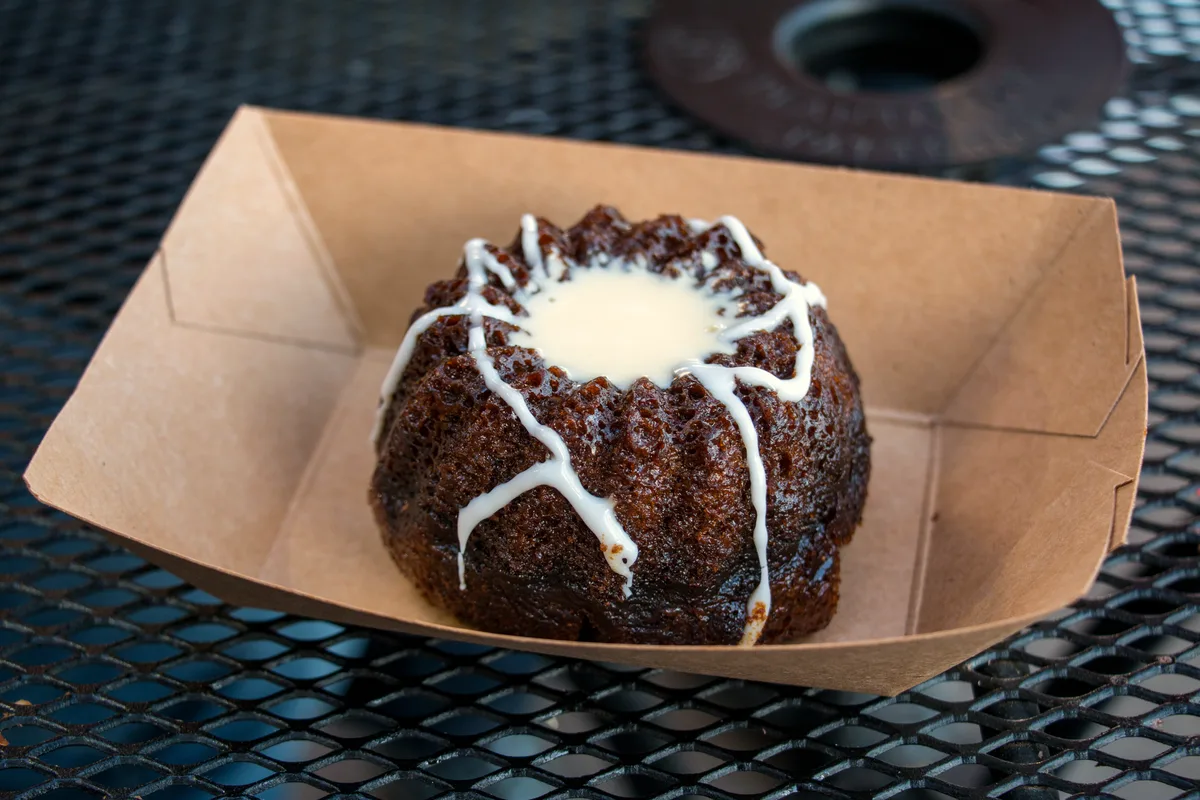
Gingerbread season starts earlier than December in our house, and this Bundt cake is why. It is dark, moist and properly spiced — ginger first, cinnamon behind it, molasses underneath — baked in one pan, with no layers to stack and no frosting to fuss over. The cake, with a thin vanilla glaze drizzled over the top like the one in the photograph, is the whole holiday in a single cake.
A Bundt is the right shape for gingerbread. The tube in the middle lets heat reach the center of a dense, molasses-heavy batter, so the cake bakes evenly instead of staying damp in the middle while the edges dry out. It also turns out looking finished — fluted edges, a golden-brown crust — so a simple glaze is all the decoration it needs. It sits in our Desserts collection beside our Easy Pumpkin Cheesecake with Gingersnap Crust and our Easy Cranberry Orange Nut Bread.
The batter uses pantry spices and a jar of molasses, nothing you have to hunt for. The glaze is optional — the cake is excellent plain, dusted with powdered sugar — but the orange and vanilla against the dark spice is what lifts it, and it takes about two minutes. Make it the day before; like most molasses cakes, it tastes better on day two.
Why molasses, not just sugar
Molasses is not just a sweetener here. It brings a bitter, almost smoky depth that brown sugar alone cannot reach, and it keeps the crumb moist for days. Use unsulphured molasses — the kind sold for baking, not blackstrap, which is far more bitter and will dominate the cake.
Getting a Bundt out cleanly
Bundt pans stick, and a stuck Bundt ruins the one thing the shape is for. Grease every flute with soft butter — baking spray alone misses the creases — then dust with flour and tap out the excess. Cool the cake in the pan for exactly 15 minutes: long enough to set, short enough that the sugars have not glued themselves to the pan. Invert onto a rack, and if it hesitates, give the pan a firm tap and wait a minute before lifting.
Ingredients
- 3 cups all-purpose flour (375 g)
- 2 teaspoons ground ginger (4 g)
- 1 1/2 teaspoons ground cinnamon (4 g)
- 1/2 teaspoon ground cloves (1 g)
- 1/2 teaspoon ground nutmeg (1 g)
- 1 teaspoon baking soda (5 g)
- 1/2 teaspoon fine sea salt (3 g)
- 1 cup unsalted butter (227 g), softened
- 1 cup dark brown sugar (220 g), packed
- 3 large eggs, at room temperature
- 1 cup molasses (328 g), unsulphured, not blackstrap
- 1 cup hot water (240 ml)
- 1 teaspoon vanilla extract (5 ml)
- 1 cup powdered sugar (120 g), for the glaze
- 2 tablespoons milk (30 ml), for the glaze
- 1 teaspoon vanilla extract (5 ml), for the glaze
Amounts are for the yield below. US customary measures first, grams in brackets for scale users.
Step-by-step instructions
- Whisk the dry ingredients. Heat the oven to 350°F (177°C). Butter a 10- or 12-cup Bundt pan thoroughly, getting into every flute, then dust with flour and tap out the excess. In a large bowl, whisk the flour, ginger, cinnamon, cloves, nutmeg, baking soda and salt until the spices are evenly distributed.
- Cream the butter and sugar. Beat the softened butter and dark brown sugar in a second large bowl until light and fluffy, about 3 minutes. Beat in the eggs one at a time, then beat in the molasses and vanilla. The mixture may look slightly curdled; that is normal, and it comes back together once the flour goes in.
- Finish the batter. Add the flour mixture in three parts, alternating with the hot water in two parts, beginning and ending with flour, mixing just until combined after each addition. Hot water blooms the spices and thins the molasses so the batter pours smoothly. Do not overmix once the flour is in — overbeating is what makes a Bundt tough.
- Bake until set. Pour the batter into the prepared pan and smooth the top. Bake for 50 to 60 minutes, until a skewer inserted near the center comes out with a few moist crumbs and the cake springs back lightly when pressed. The top will crack slightly; it becomes the bottom once the cake is inverted.
- Cool, invert and glaze. Cool the cake in the pan on a rack for 15 minutes, then invert it onto the rack and lift the pan away. Let it cool completely, at least 1 hour, before glazing. Whisk the powdered sugar, milk and vanilla until smooth and drizzle it over the top, letting it run down the flutes — the thin, glossy drizzle in the photograph, not a thick frosting. Slice with a serrated knife.
Nutrition estimate
| Nutrient | Per serving |
|---|---|
| Calories | 385 kcal |
| Protein | 5 g |
| Carbohydrates | 58 g |
| Fat | 15 g |
| Saturated fat | 9 g |
| Sodium | 280 mg |
| Fiber | 2 g |
| Sugar | 34 g |
Nutrition figures are estimates calculated from standard ingredient data for the yield stated. Your actual values will vary with brands, substitutions and portion sizes — treat them as a guide, not a guarantee.
Storage & reheating
The cake keeps, covered, at room temperature for up to 4 days, and it genuinely improves on day two as the molasses flavour settles. Refrigeration dries it out, so only refrigerate if your kitchen is very warm. Freeze unglazed slices, wrapped tightly, for up to 3 months; thaw at room temperature and glaze after thawing. Nutrition figures are estimates per serving; estimates vary.
Easy Gingerbread Bundt Cake
Dark, moist and warmly spiced — one bowl, holiday-ready
Ingredients
Tick ingredients off as you prep, and tap a step below to mark it done as you cook. Scaling adjusts the listed amounts - seasoning to taste stays your call.
Instructions
- Whisk the dry ingredients. Heat the oven to 350°F (177°C). Butter a 10- or 12-cup Bundt pan thoroughly, getting into every flute, then dust with flour and tap out the excess. In a large bowl, whisk the flour, ginger, cinnamon, cloves, nutmeg, baking soda and salt until the spices are evenly distributed.
- Cream the butter and sugar. Beat the softened butter and dark brown sugar in a second large bowl until light and fluffy, about 3 minutes. Beat in the eggs one at a time, then beat in the molasses and vanilla. The mixture may look slightly curdled; that is normal, and it comes back together once the flour goes in.
- Finish the batter. Add the flour mixture in three parts, alternating with the hot water in two parts, beginning and ending with flour, mixing just until combined after each addition. Hot water blooms the spices and thins the molasses so the batter pours smoothly. Do not overmix once the flour is in — overbeating is what makes a Bundt tough.
- Bake until set. Pour the batter into the prepared pan and smooth the top. Bake for 50 to 60 minutes, until a skewer inserted near the center comes out with a few moist crumbs and the cake springs back lightly when pressed. The top will crack slightly; it becomes the bottom once the cake is inverted.
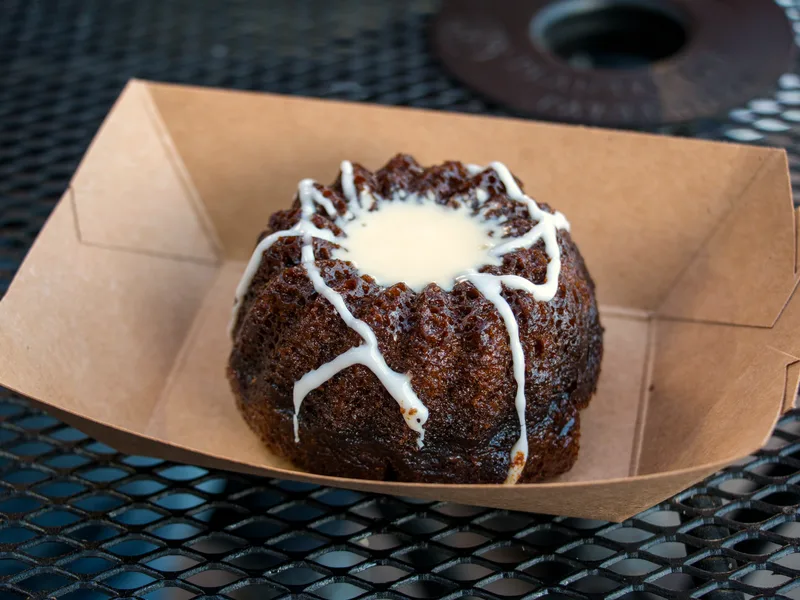
- Cool, invert and glaze. Cool the cake in the pan on a rack for 15 minutes, then invert it onto the rack and lift the pan away. Let it cool completely, at least 1 hour, before glazing. Whisk the powdered sugar, milk and vanilla until smooth and drizzle it over the top, letting it run down the flutes — the thin, glossy drizzle in the photograph, not a thick frosting. Slice with a serrated knife.
Recipe by Ahsan ul Haq · FryDaily. Printing? This card is designed to print cleanly on its own.