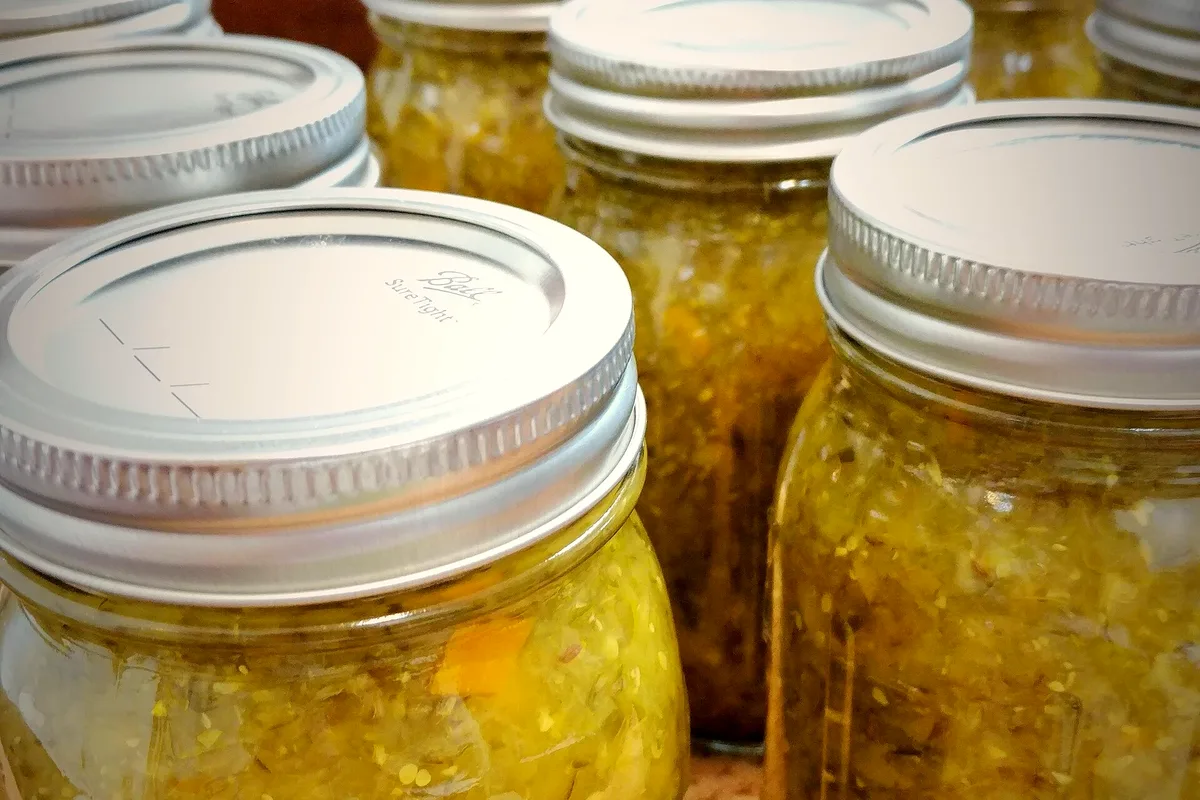
A jar of good pickle relish does quiet, useful work: it wakes up hot dogs and burgers, sharpens tuna and egg salads, and turns a plain grilled sausage into something people go back for. This refrigerator version is finely diced and properly crunchy, with a sweet-tangy brine, mustard seed warmth and just enough turmeric for that classic golden-green color — and it asks for no canning equipment at all.
One honest label, in the same spirit as our Refrigerator Dill Pickle Spears: this relish is not processed and is not shelf-stable. It lives in the refrigerator for its whole life, which is exactly why it stays crisp. For pantry jars, follow a tested water-bath recipe exactly, as set out in our Canning and Preserving collection. What the fridge method gives you in return is a small batch you can make on a Tuesday and eat all month.
The one step that decides the texture is salting and draining the chopped vegetables before the brine goes on. Cucumbers are mostly water; pull some of it out first and the relish stays spoonable and crunchy instead of swimming in its own juice by day three.
Dice small and even
Relish is a condiment, not a salad, so the dice should be small — about 1/4 inch — and as even as you can manage. Small pieces distribute through every bite instead of dropping off the hot dog in chunks, and they absorb the brine at the same rate, so no piece tastes raw while its neighbor tastes pickled. A food processor can do the chopping, but pulse in short bursts and stop early: two pulses too many and you have cucumber puree, which no amount of draining will turn back into relish.
Let it rest a full day before judging
Freshly made relish tastes sharp and unfinished, because the vinegar is still sitting on the surface instead of seasoning the vegetables through. After 24 hours in the fridge the flavors marry — the sweetness rounds out, the mustard seed blooms, and the crunch settles in. Taste it on day two, not day one, before you decide it needs more sugar or salt; most batches that seem too sharp on the first night are exactly right by the second.
Ingredients
- 3 large cucumbers (about 900 g), finely diced
- 1 medium yellow onion (about 150 g), finely diced
- 1 medium red bell pepper (about 150 g), finely diced
- 1 tablespoon kosher salt (18 g), for drawing out moisture
- 3/4 cup apple cider vinegar (180 ml)
- 1/2 cup granulated sugar (100 g)
- 1 teaspoon mustard seeds (3 g)
- 1/2 teaspoon celery seeds (1 g)
- 1/2 teaspoon ground turmeric (1.5 g)
- 1/4 teaspoon black pepper (0.8 g)
Amounts are for the yield below. US customary measures first, grams in brackets for scale users.
Step-by-step instructions
- Chop the vegetables. Dice the cucumbers, onion and bell pepper into small, even pieces about 1/4 inch across. Leave the cucumber skin on for color, but scoop out any large, watery seed pockets from overgrown cucumbers, since those pieces turn soft first.
- Salt and drain. Toss the chopped vegetables with the kosher salt in a colander set over a bowl. Leave for 1 hour, stirring once or twice, then rinse briefly under cold water and drain very well, pressing gently with a spoon to push out the last of the liquid.
- Make the brine. Combine the vinegar, sugar, mustard seeds, celery seeds, turmeric and black pepper in a medium saucepan. Bring to a simmer over medium heat, stirring, until the sugar has fully dissolved — about 2 minutes.
- Simmer the relish briefly. Add the drained vegetables to the brine and simmer for 3 to 4 minutes, just until the cucumber turns from bright green to a deeper olive shade. Do not boil it longer: this short simmer sets the flavor without cooking out the crunch.
- Jar it up. Spoon the hot relish and its brine into clean glass jars, leaving about 1/2 inch of headspace. Let the jars cool to room temperature, then seal and refrigerate.
- Rest before serving. Chill for at least 24 hours before serving so the flavors marry and the crunch settles. Spoon it over hot dogs, burgers and grilled sausages, or stir it into tuna, egg and potato salads.
Nutrition estimate
| Nutrient | Per serving |
|---|---|
| Calories | 25 kcal |
| Protein | 0 g |
| Carbohydrates | 6 g |
| Fat | 0 g |
| Saturated fat | 0 g |
| Sodium | 290 mg |
| Fiber | 1 g |
| Sugar | 5 g |
Nutrition figures are estimates calculated from standard ingredient data for the yield stated. Your actual values will vary with brands, substitutions and portion sizes — treat them as a guide, not a guarantee.
Storage & reheating
Keep the relish refrigerated at all times in its sealed jar and use it within 3 weeks; always lift it out with a clean spoon so the brine stays fresh. It is not shelf-stable and must never be stored at room temperature. The relish can be frozen for up to 2 months, though the vegetables soften noticeably on thawing and are then best stirred into salads and sauces rather than spooned over hot dogs. Nutrition figures are estimates from standard ingredient data and vary with brands and substitutions.
Canning safety — read first
Home canning must follow tested processes exactly. The times on this page follow the structure of current USDA guidance for the stated jar size at 0-1,000 feet elevation; always confirm processing times and altitude adjustments in the USDA Complete Guide to Home Canning or the National Center for Home Food Preservation before you start. Never taste food from a jar with a failed seal, bulging lid or off odor — discard it.
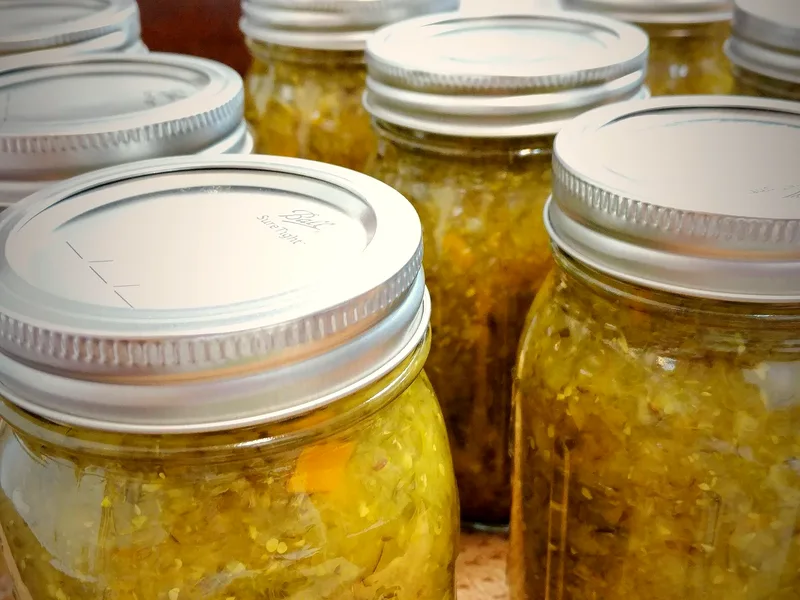
Easy Refrigerator Pickle Relish
Sweet, tangy and crunchy — the hot-dog and burger relish that lives in the fridge.
Ingredients
Tick ingredients off as you prep, and tap a step below to mark it done as you cook. Scaling adjusts the listed amounts - seasoning to taste stays your call.
Instructions
- Chop the vegetables. Dice the cucumbers, onion and bell pepper into small, even pieces about 1/4 inch across. Leave the cucumber skin on for color, but scoop out any large, watery seed pockets from overgrown cucumbers, since those pieces turn soft first.
- Salt and drain. Toss the chopped vegetables with the kosher salt in a colander set over a bowl. Leave for 1 hour, stirring once or twice, then rinse briefly under cold water and drain very well, pressing gently with a spoon to push out the last of the liquid.
- Make the brine. Combine the vinegar, sugar, mustard seeds, celery seeds, turmeric and black pepper in a medium saucepan. Bring to a simmer over medium heat, stirring, until the sugar has fully dissolved — about 2 minutes.
- Simmer the relish briefly. Add the drained vegetables to the brine and simmer for 3 to 4 minutes, just until the cucumber turns from bright green to a deeper olive shade. Do not boil it longer: this short simmer sets the flavor without cooking out the crunch.
- Jar it up. Spoon the hot relish and its brine into clean glass jars, leaving about 1/2 inch of headspace. Let the jars cool to room temperature, then seal and refrigerate.
- Rest before serving. Chill for at least 24 hours before serving so the flavors marry and the crunch settles. Spoon it over hot dogs, burgers and grilled sausages, or stir it into tuna, egg and potato salads.
Recipe by Shahid Imran · FryDaily. Printing? This card is designed to print cleanly on its own.